Analyzing New UK Energy Policy and Multi-Tech Savings Data
An analysis of late July 2026 UK home energy developments, covering plug-in solar rules, heat pump tariff economics, and integrated system savings.
- Written by
- Net Zero Home Scheme editorial team
- Last updated
- Topic
- news analysis, solar pv, heat pumps

Recent developments in late July 2026 have brought renewed attention to how British households generate and consume energy. A series of regulatory announcements and technical reports published between 17 July and 28 July 2026 outline significant updates for home generation, heating efficiency, and grid integration. Key developments include updated regulatory guidance for plug-in solar units coming into force in August 2026, fresh economic data on multi-technology integration, and ongoing scrutiny of heat pump running costs relative to grid electricity tariffs. Understanding these changes requires examining the technical standards, regulatory frameworks, and running cost economics that govern low-carbon home technology in England, Scotland, and Wales.
What was announced in recent home energy reports?
On 26 July 2026, news outlets including AOL reported that updated regulatory guidance for plug-in solar panel systems will take effect across the UK in August 2026. Complementing analysis from the Energy Saving Trust published on 24 July 2026, these updates clarify the compliance pathways for micro-generation devices connected via standard wall sockets. The guidance aims to establish clearer safety parameters under BS 7671 wiring regulations while maintaining streamlined Distribution Network Operator (DNO) notification requirements under Engineering Recommendation G98.
Parallel data published by Energy Live News on 20 July 2026 highlighted the economic impact of combining multiple low-carbon technologies. The research indicated that households integrating heat pumps, solar photovoltaics (PV), and battery storage can achieve energy bill reductions exceeding 80% compared to standard gas-heated homes on default tariffs. However, achieving these reductions depends on optimal system sizing, building heat loss characteristics, and smart tariff selection.
Meanwhile, reporting by Yahoo News UK on 20 July 2026 focused on the operational costs of air source heat pumps. The analysis examined why some households experience higher than expected electricity bills following heat pump installations. The primary driver identified was the UK spark spread, which is the ratio between electricity and gas unit prices set under Ofgem price cap limits. When a heat pump operates at a low Seasonal Coefficient of Performance (SCOP) or on a flat-rate electricity tariff, high unit prices can erode expected operational savings despite the high thermodynamic efficiency of the unit.
How do plug-in solar regulations affect UK households?
Plug-in solar devices, often called balcony solar or plug-and-play kits, typically consist of one or two solar PV panels with a total output between 300 W and 800 W peak (0.3 kWp to 0.8 kWp), connected directly to an internal ring main via a micro-inverter and a standard three-pin plug.
While these systems offer a lower entry cost than traditional rooftop solar PV arrays, they operate under strict technical constraints:
- Electrical safety compliance: Under BS 7671, connecting generation equipment directly to a final socket circuit requires dedicated circuit protection, residual current devices (RCDs), and anti-islanding protection in the micro-inverter to prevent backfeeding into the grid during a local outage.
- Grid notification: Even small plug-in devices must comply with Energy Networks Association (ENA) rules. Under Engineering Recommendation G98, micro-generation equipment rated up to 16 A per phase (approximately 3.68 kW single-phase) must be registered with the local Distribution Network Operator within 28 days of commissioning.
- Output limits: Plug-in units are designed primarily to cover baseline home electrical loads, such as broadband routers, refrigeration, and standby appliances. They lack the capacity to meet high instantaneous power demands from electric vehicle chargers or heat pumps.
For larger energy demands, permanently wired rooftop solar PV systems installed by Microgeneration Certification Scheme (MCS) accredited installers remain the standard approach for maximizing self-consumption and securing export payments under the Smart Export Guarantee (SEG).
Why technology stacking alters home running costs

The economics of home decarbonisation depend on how different technologies interact. A standalone air source heat pump replacing a gas boiler converts one unit of electricity into three to four units of heat, yielding an average SCOP of 3.0 to 4.0. However, because electricity in Great Britain costs roughly four times more per kilowatt-hour (kWh) than natural gas under typical tariff structures, a heat pump operating at an average SCOP of 3.0 on a flat-rate electricity tariff produces space heating at a similar per-unit heat cost to a modern condensing gas boiler operating at 92% efficiency.
Stacking complementary technologies fundamentally changes this balance:
- Solar PV integration: A 4 kWp rooftop solar array generates roughly 3,400 kWh to 4,000 kWh of electricity annually in southern and central Britain. Directing daytime solar generation to run a heat pump or top up a hot water cylinder eliminates grid electricity purchases for that heat load.
- Battery storage optimisation: Adding a home battery with a capacity between 5 kWh and 13.5 kWh allows householders to capture excess daytime solar generation or charge from the grid during off-peak periods when dynamic electricity tariffs drop to lower rates.
- Automated controls: Advanced home energy management systems orchestrate power flows between the solar array, battery, heat pump, and grid based on weather forecasts and day-ahead electricity prices.
| Technology Stack | Typical Hardware Scope | Key Compliance Standard | Operational Focus |
|---|---|---|---|
| Standalone Plug-in Solar | 0.3 kWp to 0.8 kWp micro-inverter kit | BS 7671, G98 notification | Offsetting daytime baseline standby power |
| Rooftop Solar PV & Battery | 4 kWp to 8 kWp PV, 5 kWh to 13.5 kWh battery | MCS, G98/G99 approval, RECC | Maximising self-consumption and off-peak charging |
| Heat Pump & Smart Tariff | 5 kW to 12 kW ASHP, thermal store cylinder | MCS, TrustMark, HIES, Building Regs Part L | Space heating at low flow temperatures (35°C to 45°C) |
| Fully Integrated System | Solar PV, battery, ASHP, EV charger, optimization software | MCS, NICEIC, G98/G99, BS 7671 | Load shifting and automated smart tariff optimization |
What this means for you
For UK homeowners and employers evaluating energy upgrades, recent developments highlight the importance of thorough planning rather than isolated hardware purchases.
If you are evaluating home energy technologies, follow these practical steps:
- Review your energy consumption: Examine smart meter data to understand your baseload electricity demand in watts and your total annual consumption in kWh.
- Assess property heat loss: Before installing a heat pump, ensure a heat loss calculation is performed in accordance with CIBSE guidelines to size the unit correctly and lower required flow temperatures to 35°C or 45°C.
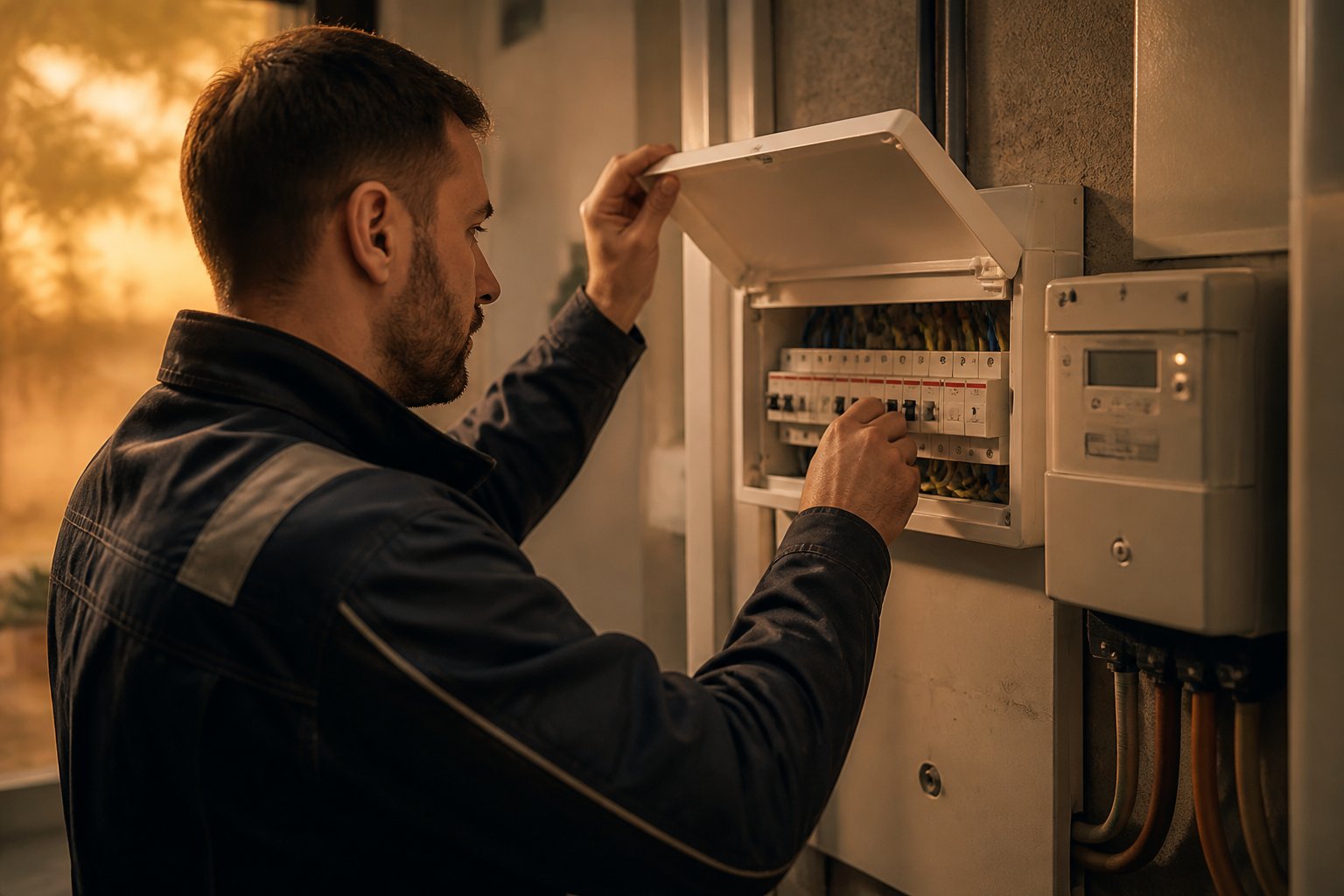
- Check electrical infrastructure: Ensure your consumer unit has adequate space and residual current protection, and verify whether your local DNO requires prior approval (G99) or post-installation notification (G98).
- Choose certified professionals: Always work with installers accredited by MCS and registered with consumer protection bodies such as TrustMark, RECC, or HIES, ensuring electrical work is certified by an approved competent person scheme like NICEIC.
- Explore workplace benefits: Employers can support workforce decarbonisation through schemes like the Net Zero Home Scheme, an employee-benefit scheme delivered by Net Zero Benefits alongside The Electric Car Scheme that provides member pricing on solar, batteries, and heat pumps with no salary sacrifice and no payroll deduction.
Frequently asked questions
Do plug-in solar systems replace standard rooftop solar PV?
No. Plug-in solar systems generate between 300 W and 800 W, which is intended solely to reduce baseline daytime electricity consumption. Standard rooftop solar PV arrays are typically sized between 3 kWp and 8 kWp, generating enough electricity to power larger household appliances, charge home batteries, and feed excess power back to the grid under the Smart Export Guarantee.
Why does electricity price matter more than heat pump efficiency alone?
In the UK, grid electricity costs significantly more per kWh than natural gas under standard price cap rates. Because of this spark spread, an air source heat pump must achieve a Seasonal Coefficient of Performance (SCOP) above 3.0 to be cheaper to run than an efficient gas boiler when using standard flat-rate electricity. Utilizing smart time-of-use tariffs significantly lowers the effective electricity cost.
Do I need DNO permission before installing home energy equipment?
For systems generating up to 16 A per phase (approx 3.68 kW single-phase), installation can proceed under Engineering Recommendation G98, which requires notification to the Distribution Network Operator within 28 days post-commissioning. For larger installations, including systems with high-capacity batteries or larger heat pumps, prior approval under Engineering Recommendation G99 is mandatory before connecting to the grid.
Sources
- New plug-in solar panel rules come into force in August across the UK, AOL.co.uk
- Plug-in solar panels and the rooftop revolution, Energy Saving Trust
- Combining low-carbon technologies could cut household energy bills by more than 80%, Energy Live News
- Why your heat pump isn’t saving you money – and what could change that, Yahoo News UK