How to Plan and Install a Home Battery Storage System
A step-by-step practical guide to planning, costing, and installing a home battery storage system safely in Great Britain.
- Written by
- Net Zero Home Scheme editorial team
- Last updated
- Topic
- battery storage, home energy, mcs accreditation
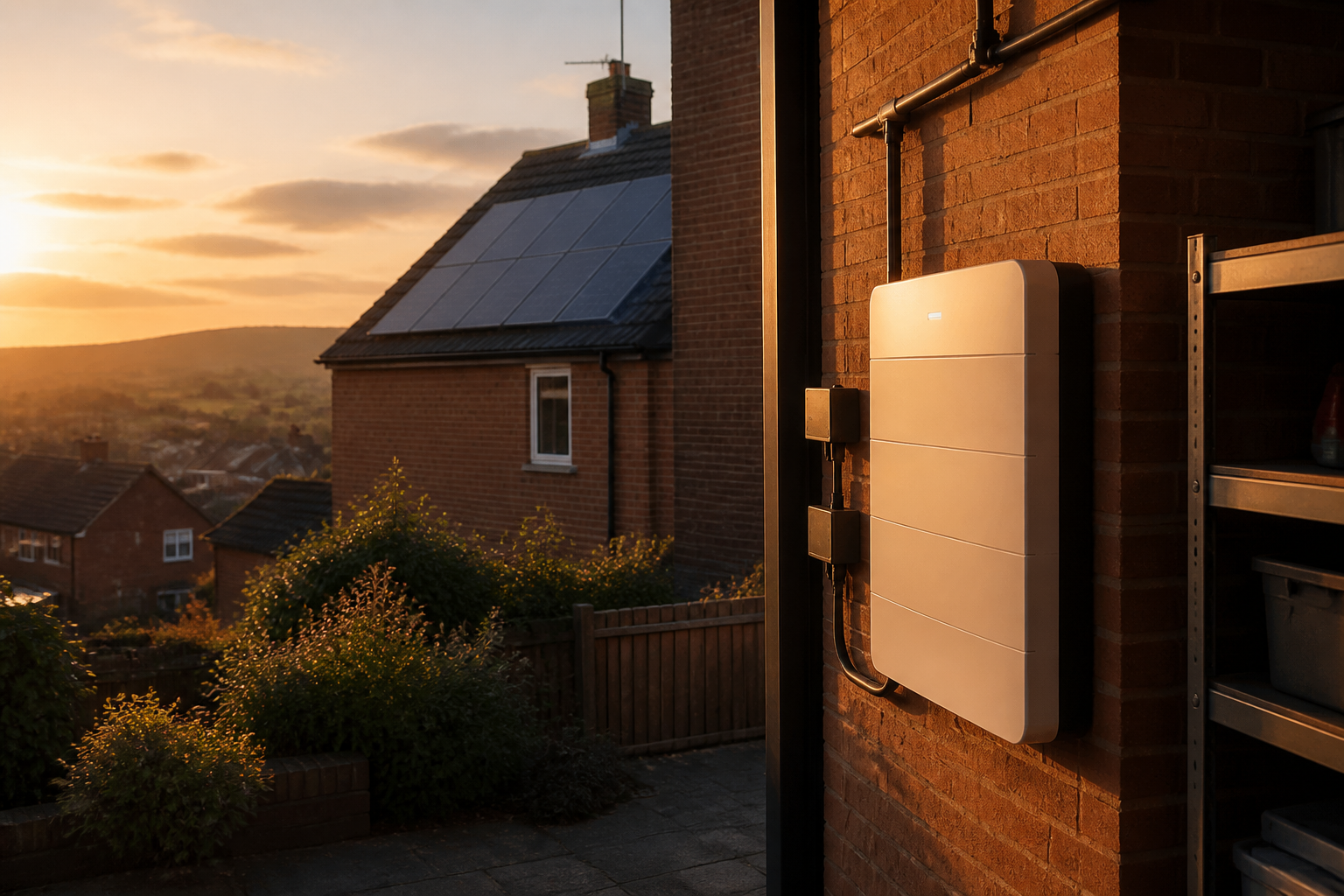
Home battery storage systems have moved from a niche addition to a standard component of residential energy upgrades in Great Britain. By storing electricity generated from rooftop solar panels or drawn from the grid during cheaper off-peak hours, a home battery allows you to power appliances during expensive peak evening periods. However, choosing the right battery, ensuring safe installation, and understanding realistic financial payback requires systematic planning.
This guide outlines the concrete steps, standards, and costs involved in specifying and installing a home energy battery system for your property.
Step 1: Assess your home energy usage and location
Before contacting installers, gather your annual electricity consumption data from your energy bills or smart meter display. According to typical domestic energy consumption figures published by Ofgem, a medium UK household consumes approximately 2,700 kWh of electricity per year, or roughly 7.4 kWh per day. Your daily usage profile determines the capacity you need.
Next, identify potential mounting locations. Modern lithium-ion batteries are heavy, weighing between 50 kg and 120 kg depending on capacity, and require solid wall mounting or stable floor positioning. Fire safety standards, including guidance set out in British Standard PAS 63100, recommend installing batteries in dedicated non-habitable spaces such as utility rooms, attached garages, or external walls. Installing batteries in lofts or along primary escape routes is generally discouraged due to thermal management and emergency access considerations.
You must also confirm whether your electrical setup is single-phase or three-phase. The vast majority of UK homes have a single-phase supply, which caps maximum continuous charging and discharging rates on standard domestic connections.
Step 2: Understand sizing, system types, and costs
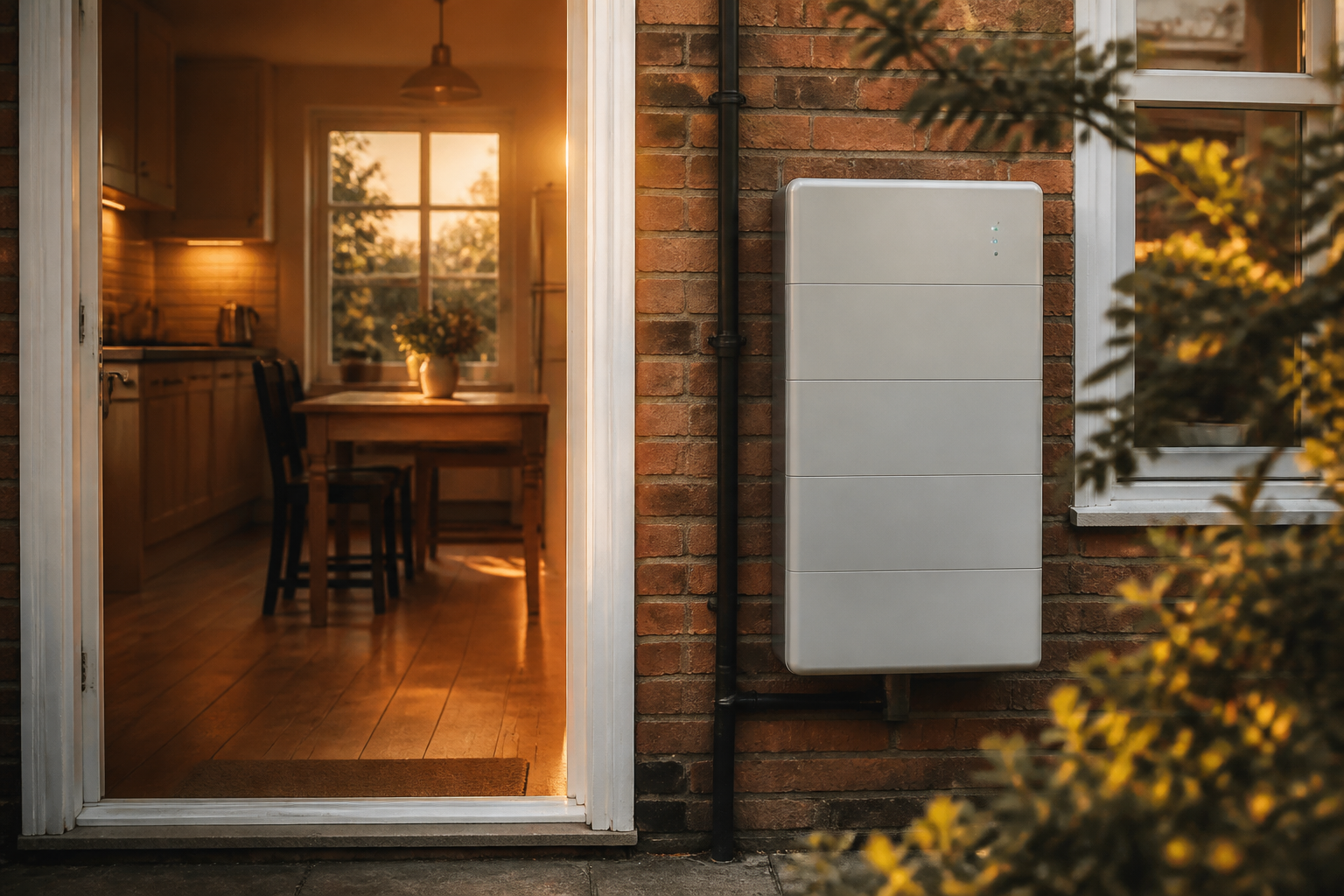
Battery storage systems come in two main technical configurations:
- DC-coupled systems: The battery connects directly to the solar panel array before the inverter converts power to AC for your home. This is efficient for new combined solar-and-battery installations.
- AC-coupled systems: The battery has its own standalone inverter and connects directly to your home electrical distribution board. This is ideal if you are adding storage to an existing solar PV installation or installing a battery without solar panels to take advantage of flexible grid tariffs.
System capacity is measured in kilowatt-hours (kWh). Most UK residential installations range from 5 kWh to 13.5 kWh of usable capacity. According to market data published by the Energy Saving Trust, a standalone 5 kWh battery installation typically costs between £4,500 and £6,000 including installation and VAT, while larger 10 kWh systems range between £7,000 and £9,000.
In Great Britain, energy storage installations in residential properties benefit from a 0% VAT rate, which applies to both standalone battery installations and joint solar-plus-storage projects.
Step 3: Verify installer accreditations and consumer protections
To ensure your installation is safe, compliant with building regulations, and eligible for smart export tariffs, you must use appropriately certified trade professionals.
Always verify that your installer holds the following credentials before paying a deposit:
- MCS Certification: The Microgeneration Certification Scheme (MCS) sets technical standards for low-carbon equipment and installers. MCS certification is required by most energy suppliers if you intend to register for Smart Export Guarantee (SEG) payments.
- Consumer Code Membership: Installers should belong to a Chartered Trading Standards Institute (CTSI) approved consumer code, such as the Renewable Energy Consumer Code (RECC) or the Home Insulation and Energy Systems Quality Assured Contractors Scheme (HIES). This provides deposit protection and access to independent dispute resolution.
- Electrical Competent Person Scheme: Installers must be registered with an approved body such as NICEIC, NAPIT, or SELECT (in Scotland) to self-certify that electrical work complies with Part P of the Building Regulations.
- TrustMark Registration: TrustMark is the government-endorsed quality scheme that confirms an installer meets recognised trade standards.
Installer evaluation checklist
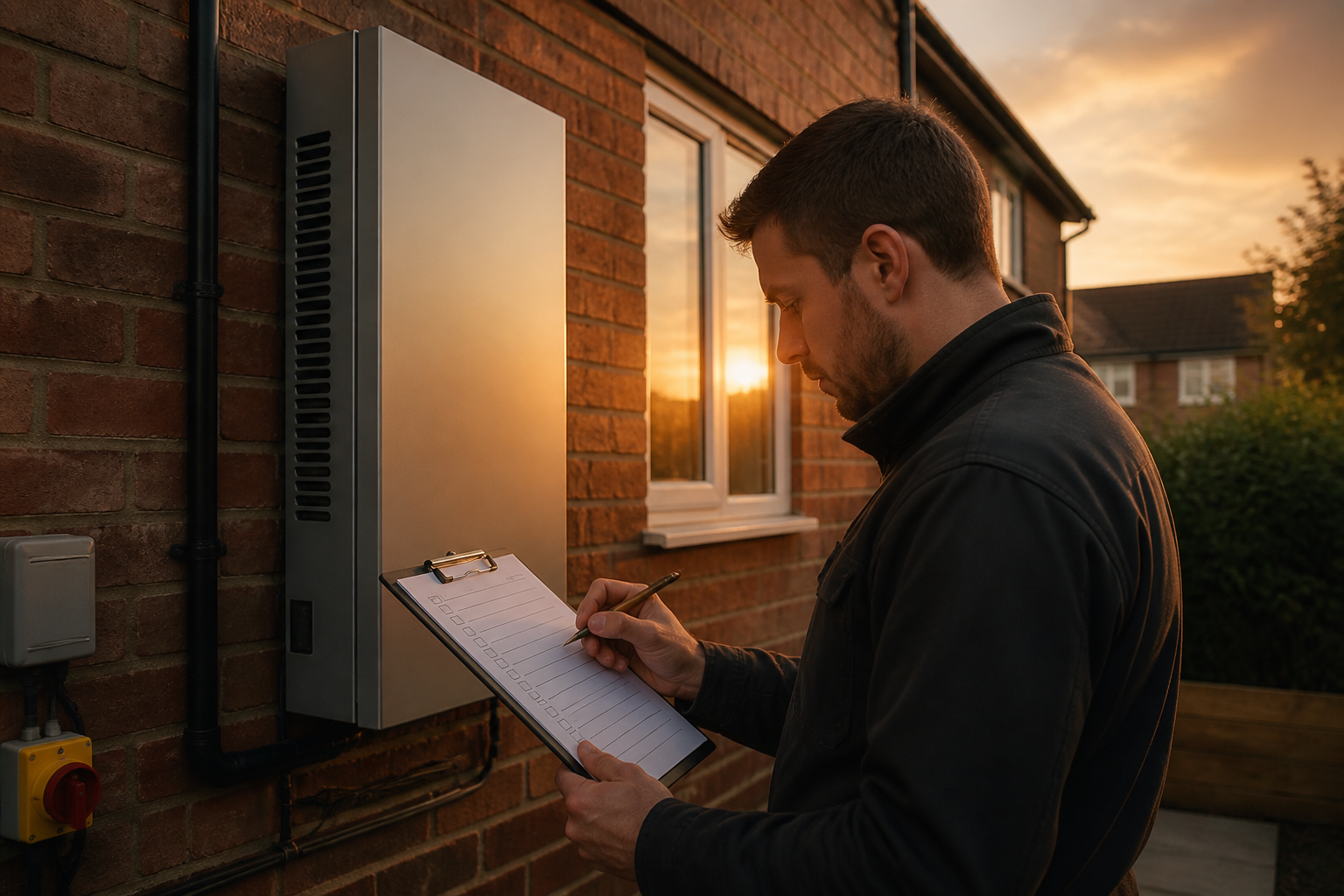
Use this checklist to compare quotes and evaluate prospective installation companies:
| Item to check | Requirement or target standard | Why it matters |
|---|---|---|
| MCS Registration | Valid installer certificate number | Ensures compliance and export tariff eligibility |
| Electrical Safety | Part P / NICEIC / NAPIT registered | Confirms compliance with UK wiring regulations (BS 7671) |
| Grid Application | G98 notification or G99 prior approval | Legal requirement to connect storage to the local network |
| Battery Chemistry | Lithium Iron Phosphate (LFP) preferred | LFP offers higher thermal stability and longer cycle life |
| Degradation Warranty | At least 10 years or 6,000 cycles to 70% capacity | Guarantees minimum performance standard over time |
| Fire Safety | PAS 63100 compliance assessment | Ensures safe physical placement and smoke detection |
Step 4: Manage the grid permission and installation timeline
Connecting a battery storage system to the electricity distribution network requires formal communication with your local Distribution Network Operator (DNO), such as National Grid Electricity Distribution, UK Power Networks, or Scottish Power Energy Networks.
There are two main grid connection pathways:
- G98 Notification: If the combined export capacity of your inverter setup is 3.68 kW or less on a single-phase supply, the installer can fit the system first and submit a G98 notification to the DNO within 28 days of commissioning.
- G99 Application: If your inverter export capacity exceeds 3.68 kW, or if local network constraints exist, your installer must submit a G99 application and wait for explicit DNO approval before installation begins. Approval typically takes between 2 and 8 weeks.
A typical installation process follows this timeline:
- Week 1-2: Site survey, energy consumption review, and formal quote acceptance.
- Week 3-6: DNO application submitted (if G99 required) and equipment ordered.
- Week 7: Physical installation on site, which typically takes 1 day for a standalone battery or 2 days for a combined solar and battery system.
- Week 8: System commissioning, hand-over pack issued, MCS certificate generated, and DNO notification finalized.
What this means for you
A home battery storage system provides effective control over your household energy costs, especially when paired with a dynamic or time-of-use tariff. However, storage systems are an investment in flexibility rather than a route to total independence from the electricity grid. Winter solar yields are significantly lower in Great Britain, meaning batteries rely primarily on cheap off-peak grid charging during colder months.
If your employer participates in the Net Zero Home Scheme, you can access trade-accredited battery storage installers and member pricing without salary sacrifice or payroll deductions.
Frequently asked questions
Do I need solar panels to install a home battery?
No, you can install an AC-coupled battery as a standalone system. You can charge the battery during off-peak hours using flexible grid tariffs and use that stored power during peak hours to lower your overall electricity bill.
Where can a battery storage system be safely installed in a home?
Batteries should be placed in well-ventilated, non-habitable spaces such as utility rooms, ground-floor garages, or on sheltered external walls. Guidance under PAS 63100 advises against installing battery storage in lofts or rooms that form sole escape routes in the event of a fire.
How long does a home energy battery last before needing replacement?
Most modern Lithium Iron Phosphate (LFP) home batteries are designed to last between 10 and 15 years. Manufacturers typically offer warranties covering 10 years or a specific throughput volume, guaranteeing that the battery will retain at least 70% of its original usable capacity at the end of the warranty period.
Sources
- A buyer's guide to solar panels and storage, Energy Saving Trust
- MCS Installer and Product Standards, Microgeneration Certification Scheme
- Average gas and electricity usage, Ofgem
- TrustMark Government Endorsed Quality Standard, TrustMark