Analyzing Home Energy Running Costs Under Current UK Tariffs
An analysis of recent news on heat pump running costs, the spark spread, and how smart tariffs determine household savings in the UK.
- Written by
- Net Zero Home Scheme editorial team
- Last updated
- Topic
- heat pumps, energy tariffs, solar pv
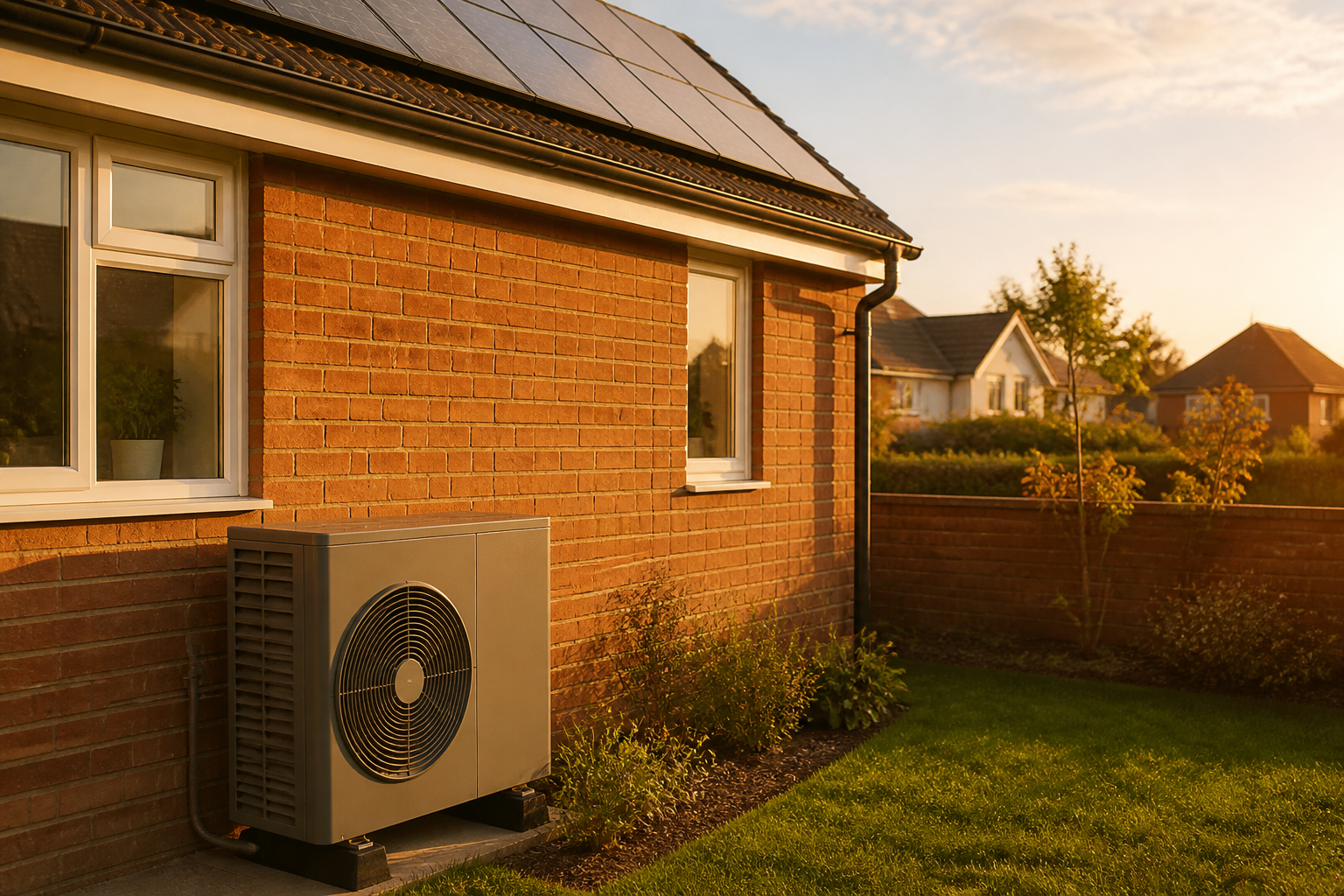
Recent coverage across UK media has highlighted an ongoing discussion surrounding the operational economics of home decarbonisation technology. On 20 July 2026, Yahoo News UK published an analysis detailing why some heat pump owners are not seeing expected reductions on their monthly energy bills. On 28 July 2026, wealth manager Lombard Odier released research showing that residential solar PV continues to offer reliable protection against retail energy price volatility.
These reports reflect a crucial reality of the UK energy market: while hardware performance has steadily improved, operational savings are heavily determined by tariff structures, system design, and the ratio between grid electricity and natural gas unit rates. Understanding these mechanics allows householders to evaluate low-carbon technology on realistic terms rather than relying on generic payback claims.
Why heat pump running costs depend on the spark spread
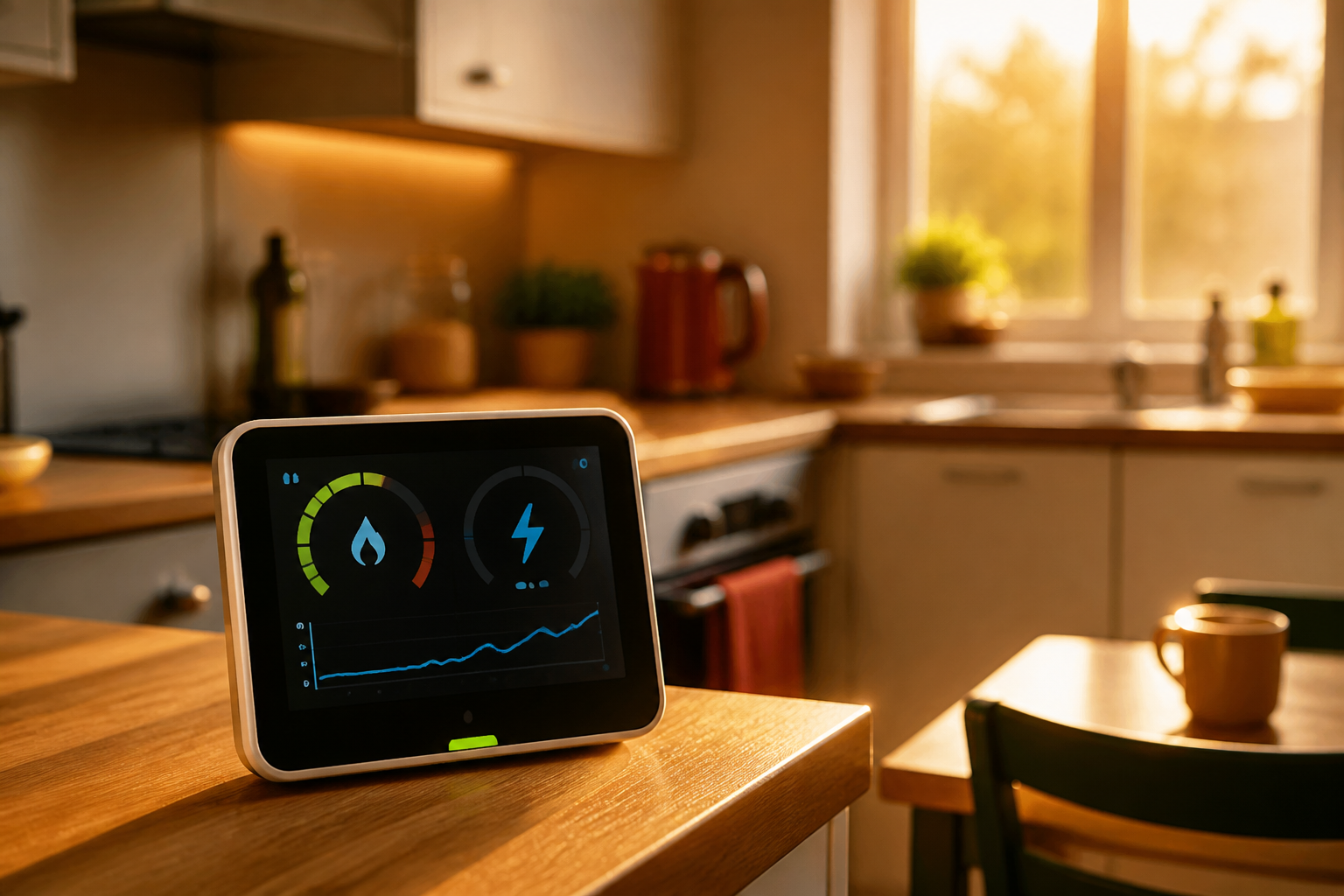
The financial comparison between a conventional gas boiler and an air source heat pump is governed by the spark spread. The spark spread is the numerical ratio between the price of grid electricity per kilowatt-hour (kWh) and the price of natural gas per kWh.
Under Ofgem price cap figures in mid-2026, standard variable electricity unit rates sit at approximately four times the cost of natural gas per kWh. Because a modern condensing gas boiler operates at around 85% to 92% efficiency, an air source heat pump must achieve a Seasonal Coefficient of Performance (SCOP) of roughly 3.5 to match or slightly beat the raw fuel cost of a gas boiler on a standard flat-rate tariff.
If an air source heat pump operates at a lower SCOP, for example 2.8 due to elevated flow temperatures or undersized radiators, its running costs on a standard flat tariff will exceed those of a gas boiler. Conversely, when an installation achieves a SCOP of 3.8 or higher, lower carbon emissions are accompanied by tangible reductions in heating bills.
How smart time-of-use tariffs alter the equation
The analysis published by Yahoo News UK on 20 July 2026 emphasised that flat-rate tariffs often obscure the economic benefits of heat pumps and battery storage. UK energy suppliers now offer dedicated time-of-use and dynamic tariffs that significantly lower the effective cost per kWh for flexible electrical loads.
Time-of-use tariffs offer reduced unit rates during off-peak hours, often overnight between 00:00 and 07:00, or dynamic rates tied directly to wholesale market fluctuations. When a heat pump is paired with a hot water cylinder or buffer tank, thermal energy can be generated and stored during lower-cost rate windows.
Similarly, pairing home storage batteries with solar PV allows households to charge from the grid at off-peak rates during winter months, discharging stored power during peak evening hours when standard grid electricity rates apply. Research published by Energy Live News on 20 July 2026 indicates that combining solar PV, home storage, and smart heat controls can reduce total household energy expenditure substantially compared to standard grid reliance.
Comparing estimated annual space heating costs
The table below outlines estimated annual running costs for heating a typical UK semi-detached house requiring 12,000 kWh of thermal energy per year, across different technologies and tariff structures.
| System Type | Efficiency / SCOP | Tariff Structure | Estimated Annual Heating Cost |
|---|---|---|---|
| Standard Gas Boiler | 88% efficiency | Standard Variable Gas (6.2p/kWh) | £845 |
| Air Source Heat Pump | SCOP 2.8 | Standard Variable Electricity (24.5p/kWh) | £1,050 |
| Air Source Heat Pump | SCOP 3.6 | Standard Variable Electricity (24.5p/kWh) | £816 |
| Air Source Heat Pump | SCOP 3.6 | Smart Time-of-Use Tariff (Blended 16p/kWh) | £533 |
| Heat Pump + Solar & Battery | SCOP 3.8 | Smart Time-of-Use Tariff (Blended 11p/kWh) | £347 |
Figures are based on 12,000 kWh annual thermal demand, standard price cap baseline figures from mid-2026, and typical off-peak tariff blending. Actual costs vary based on insulation levels, outdoor weather conditions, and specific installer design.
What the technology does and does not change
Upgrading home energy infrastructure changes how energy is purchased and consumed, but it does not remove basic thermodynamic rules.
What it does change
- Direct reliance on fossil gas for space heating and domestic hot water is removed.
- Operational carbon emissions from heating fall by up to 70% to 80% on the current UK grid mix.
- Exposure to retail gas market price spikes is mitigated, particularly when paired with self-generation as highlighted by Lombard Odier.
- Homeowners gain access to specialized smart tariffs that reward flexible electricity usage.
What it does not change
- Heat pumps do not compensate for severe building fabric heat loss; an uninsulated home will still require substantial energy input regardless of the heat source.
- Standard flat-rate tariffs will not automatically deliver large bill cuts unless the system SCOP exceeds 3.5.
- Solar PV generation remains highly seasonal, producing the vast majority of its annual output between April and September, which aligns inversely with peak winter space heating demand.
What this means for you
If you are evaluating an upgrade from a gas or oil boiler to a low-carbon heating system, consider taking these operational steps before committing to an installation:
- Obtain an up-to-date room-by-room heat loss calculation conducted to CIBSE Guide S standards by an MCS-accredited installer.
- Audit existing radiators to confirm they are sized for low flow temperatures, ideally 45°C or lower, to achieve high heat pump efficiency.
- Review your current energy supplier and evaluate heat pump or EV smart tariffs that offer dedicated off-peak windows.
- Consider integrating home battery storage alongside solar PV to store lower-cost off-peak electricity for daytime use during winter.
- Ensure all work is performed by installers registered with recognized industry bodies including MCS, TrustMark, and RECC or HIES.
If your employer offers access to the Net Zero Home Scheme, you can access member pricing on accredited solar, heat pump, and battery storage installations across England, Scotland, and Wales without salary sacrifice or payroll deductions.
Frequently asked questions
Why are electricity unit rates higher than gas prices in the UK?
UK wholesale electricity prices are frequently set by the marginal cost of gas-fired generation, while retail electricity bills also carry policy levies and network distribution costs that are less heavily applied to natural gas unit rates.
Can a heat pump operate efficiently in an older UK property?
Yes, provided the system is designed correctly with appropriately sized heat emitters. A heat pump can maintain comfort in older properties if flow temperatures are kept low and building heat loss is accurately calculated during system specification.
Do I need to install solar panels before getting a heat pump?
No. An air source heat pump operates independently using grid electricity. While solar panels help offset summer hot water heating and baseload electricity demand, heat pumps consume the majority of their annual energy during winter months when solar output is at its lowest.