UK Home Energy News: Heat Pump Costs and System Stacking
A news analysis of recent UK developments in heat pump running costs, multi-technology system integration, and home solar safety guidance.
- Written by
- Net Zero Home Scheme editorial team
- Last updated
- Topic
- heat pumps, solar pv, battery storage
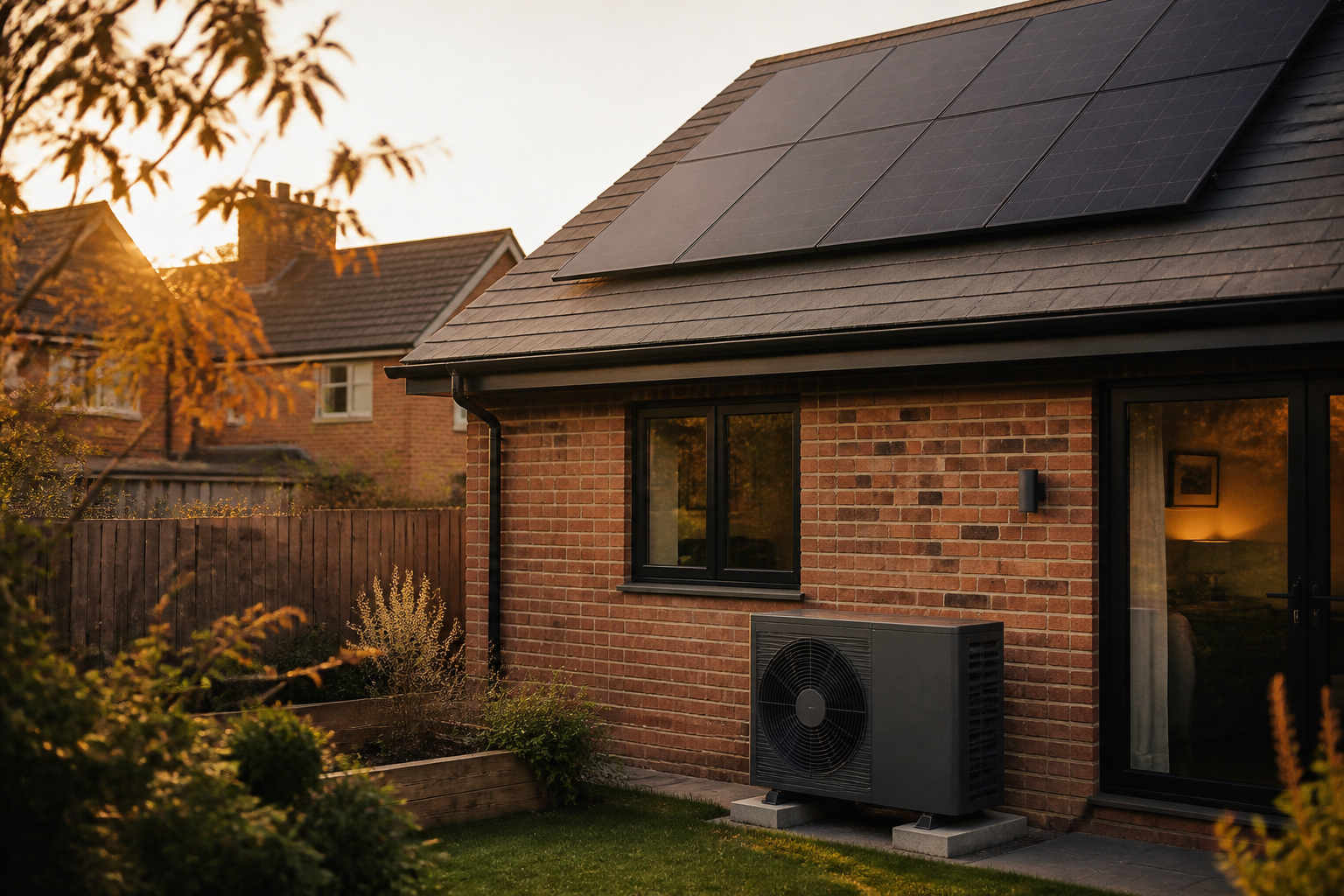
Recent announcements and industry analyses published in July 2026 have highlighted the changing landscape for UK residential energy. Reports from the Energy Saving Trust, Energy Live News, and national news outlets have focused on three core areas: heat pump running costs relative to gas, the financial impact of combining multiple green technologies, and updated guidance for low-carbon generation. Understanding these developments helps householders evaluate whether upgrading home energy systems aligns with their property type, heating requirements, and budget.
Why heat pump running costs remain a central debate
A news report published by Yahoo News UK on 20 July 2026 examined why some UK households do not see immediate bill reductions after installing an air source heat pump. The core factor remains the ratio between electricity and gas prices, often referred to as the spark spread. Historically in the UK, electricity costs roughly three to four times more per kilowatt-hour (kWh) than mains gas. Because legacy policy levies and network charges sit heavily on electricity rates, an air source heat pump must achieve high operational efficiency just to break even on running costs against a modern condensing gas boiler.
Efficiency in heat pumps is measured by the Seasonal Coefficient of Performance (SCOP). A SCOP of 3.5 means that for every 1 kWh of electricity consumed, the system generates 3.5 kWh of heat. If mains gas costs 6p per kWh and electricity costs 24p per kWh, a heat pump requires a SCOP of at least 4.0 to match the raw fuel cost of an 85% efficient gas boiler.
Achieving a high SCOP depends heavily on system design and installation standards:
- Flow temperatures: Running heat pumps at lower flow temperatures, such as 35°C to 45°C rather than 60°C, significantly improves SCOP.
- Emitter sizing: Larger radiators or underfloor heating circuits allow lower water flow temperatures while maintaining indoor comfort.
- MCS compliance: Installations accredited by the Microgeneration Certification Scheme (MCS) follow detailed heat loss calculations for each room, ensuring correct sizing.
Industry commentators continue to call for energy tariff restructuring to shift fixed policy costs away from electricity, which would reduce running costs for heat pump owners across England, Scotland, and Wales.
How stacking technologies changes household energy economics
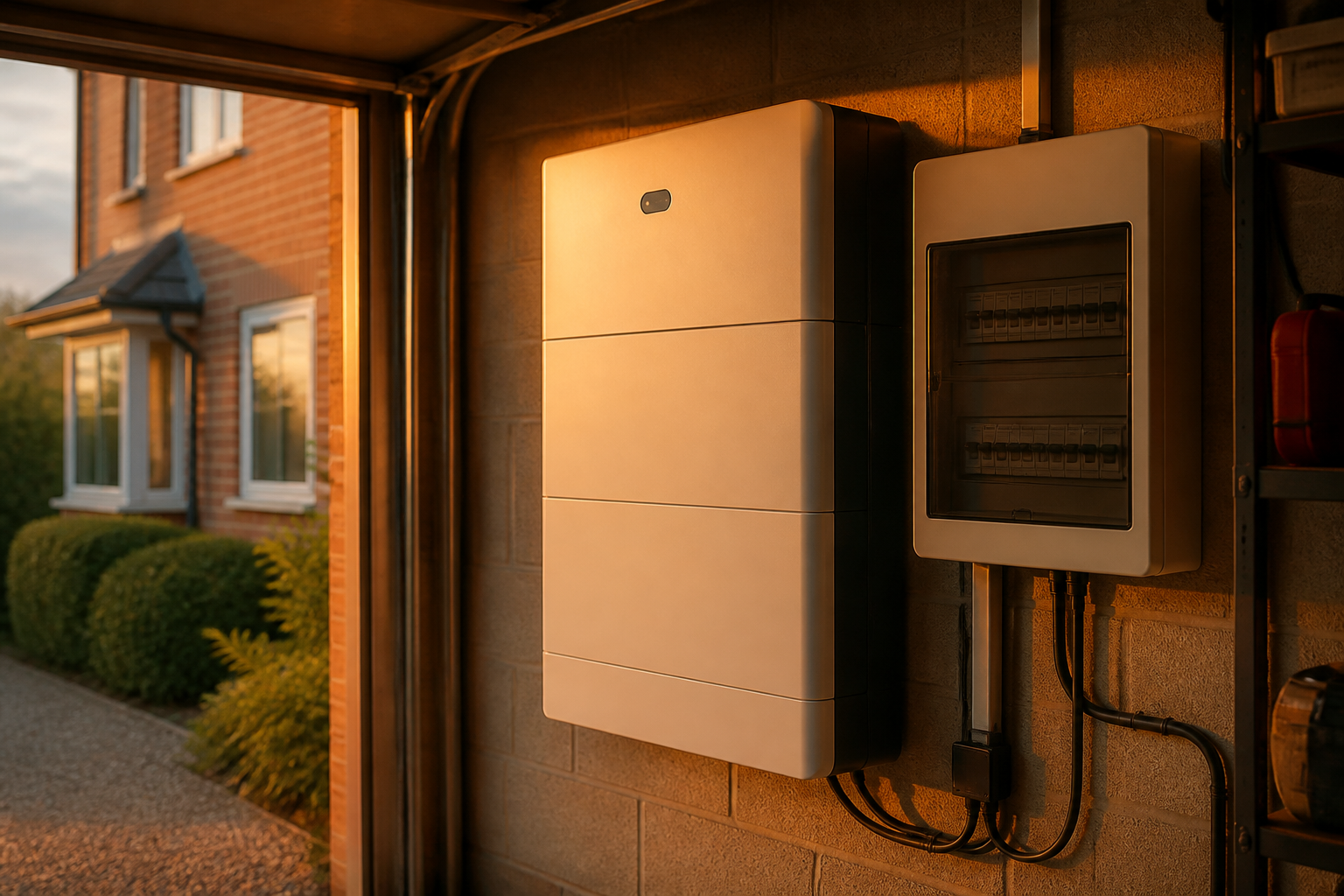
While a standalone heat pump relies entirely on grid electricity, multi-technology systems alter the economic calculation. Analysis published by Energy Live News on 20 July 2026 highlighted that combining low-carbon technologies can reduce household energy bills by up to 80% compared to standard tariff rates.
This reduction relies on integrating three primary components:
- Solar photovoltaic (PV) arrays: Generating local generation during daylight hours, measured in kilowatt-peak (kWp) potential.
- Battery storage: Storing excess daytime solar power or low-cost off-peak grid electricity in kilowatt-hours (kWh).
- Smart heat pump control: Running space heating and hot water cycles during hours when stored or local power is available.
When paired with time-of-use tariffs that offer cheaper overnight electricity rates, householders can charge home batteries overnight during winter months and run heat pumps using lower-cost power during peak morning hours. In summer and shoulder months, solar PV panels supply direct power to heat domestic hot water tanks, minimizing grid draw.
A market overview published by Lombard Odier on 28 July 2026 similarly noted that home solar installations provide household resilience against volatile global energy prices, provided system capacities match actual household consumption patterns.
Regulations and standards for home solar installations
Regulatory clarity around small-scale solar generation has also gained traction. Articles published by the Energy Saving Trust and AOL.co.uk in late July 2026 outlined safety guidelines and network requirements for plug-in solar equipment. Plug-in solar systems consist of one or two solar panels connected to a micro-inverter that plugs directly into a standard 13-amp wall socket.
While plug-in systems offer lower upfront entry costs, industry guidance emphasizes key technical boundaries:
- Network notification: Under Engineering Recommendation G98, any grid-tied inverter system connected to the mains network must be formally notified to the local Distribution Network Operator (DNO).
- Wiring safety: Dedicated direct-wired spur circuits installed by a qualified electrician registered with NICEIC or NAPIT reduce risks associated with overloading standard ring main sockets.
- Export limitations: Small plug-in systems rarely qualify for Smart Export Guarantee (SEG) payments unless installed and certified under MCS regulations.
For roof-mounted solar PV systems, professional installation guarantees compliance with Building Regulations (Part P for electrical safety and Part A for structural loading) and ensures eligibility for export tariffs.
Comparing home energy system configurations
The table below outlines how different equipment combinations perform across operational metrics, standards, and grid dependency.
| System Setup | Primary Equipment | Typical Grid Dependency | Key Standards & Frameworks | Primary Financial Driver |
|---|---|---|---|---|
| Standalone Heat Pump | Air source heat pump (ASHP) | High (100% grid power) | MCS, Building Regs Part L, TrustMark | SCOP efficiency and smart heating tariffs |
| Heat Pump + Solar PV | ASHP + rooftop solar array (3-5 kWp) | Moderate (seasonal generation) | MCS, DNO G98/G99 notification, RECC | Daytime self-consumption during spring/summer |
| Stacking System | ASHP + solar PV + battery storage (5-10 kWh) | Low to Moderate | MCS, Flexi-Orb, DNO approval, HIES | Off-peak tariff arbitrage and battery discharge |
| Plug-in Solar Kit | 1-2 balcony/patio panels + micro-inverter | High (baseline reduction only) | G98 notification, BS 7671 electrical standards | Offsetting continuous background electricity load |
What this means for you
If you are planning to upgrade your home energy system, recent news and regulatory updates suggest several practical steps:
- Evaluate your heating distribution: Before replacing a gas boiler, arrange a heat loss assessment from an MCS-certified installer to verify whether your existing radiators need upgrading for low flow temperatures.
- Check tariff options: Ensure your energy supplier offers a dedicated heat pump or EV/battery dynamic tariff with cheap off-peak rates to maximize operational savings.
- Plan system sizing carefully: Installing solar PV without battery storage may leave excess summer generation uncaptured, while undersized batteries will struggle to support heat pump loads during winter peaks.
- Verify accreditation: Ensure installers hold certification with recognized bodies such as MCS, TrustMark, RECC, or HIES to maintain warranty validity and access government grants like the Boiler Upgrade Scheme.
For UK householders exploring installation pathways, schemes such as the Net Zero Home Scheme give employees member pricing on heat pumps, solar PV, and battery storage installed by accredited engineers without requiring salary sacrifice or payroll deductions.
Frequently asked questions
Will installing an air source heat pump immediately lower my energy bills?
It depends on your current heating fuel and how the heat pump is configured. Replacing an old, inefficient oil or LPG boiler with a heat pump running at a high SCOP usually yields immediate operational savings. Replacing a modern mains gas boiler may result in similar running costs unless paired with a smart tariff, solar PV, or home battery storage to offset grid electricity costs.
Do I need permission from my Distribution Network Operator to install solar panels?
Yes. All grid-connected solar installations, including micro-inverter plug-in kits, must comply with DNO regulations. Systems up to 3.68 kW per phase fall under Engineering Recommendation G98, which requires notification to the DNO within 28 days of commissioning. Larger systems require prior approval under Engineering Recommendation G99 before installation can begin.
What size battery do I need to run a heat pump alongside solar PV?
A typical UK home with an air source heat pump consumes between 10 kWh and 25 kWh of electricity daily during winter months. While a standard 5 kWh to 10 kWh battery cannot power space heating for an entire winter day, it allows you to store cheap overnight grid electricity or excess daytime solar generation, significantly reducing peak-rate energy usage.
Sources
- Why your heat pump isn’t saving you money – and what could change that, Yahoo News UK
- Combining low-carbon technologies could cut household energy bills by more than 80%, Energy Live News
- Home solar beats the heat and energy shocks, Lombard Odier
- Plug-in solar panels and the rooftop revolution, Energy Saving Trust
- New plug-in solar panel rules come into force in August across the UK, AOL.co.uk