UK Home Tech News: How Stacking Systems Cuts Bills
Recent research shows how combining heat pumps, solar PV, and battery storage alongside updated grid rules changes home energy economics.
- Written by
- Net Zero Home Scheme editorial team
- Last updated
- Topic
- home energy, solar pv, heat pumps
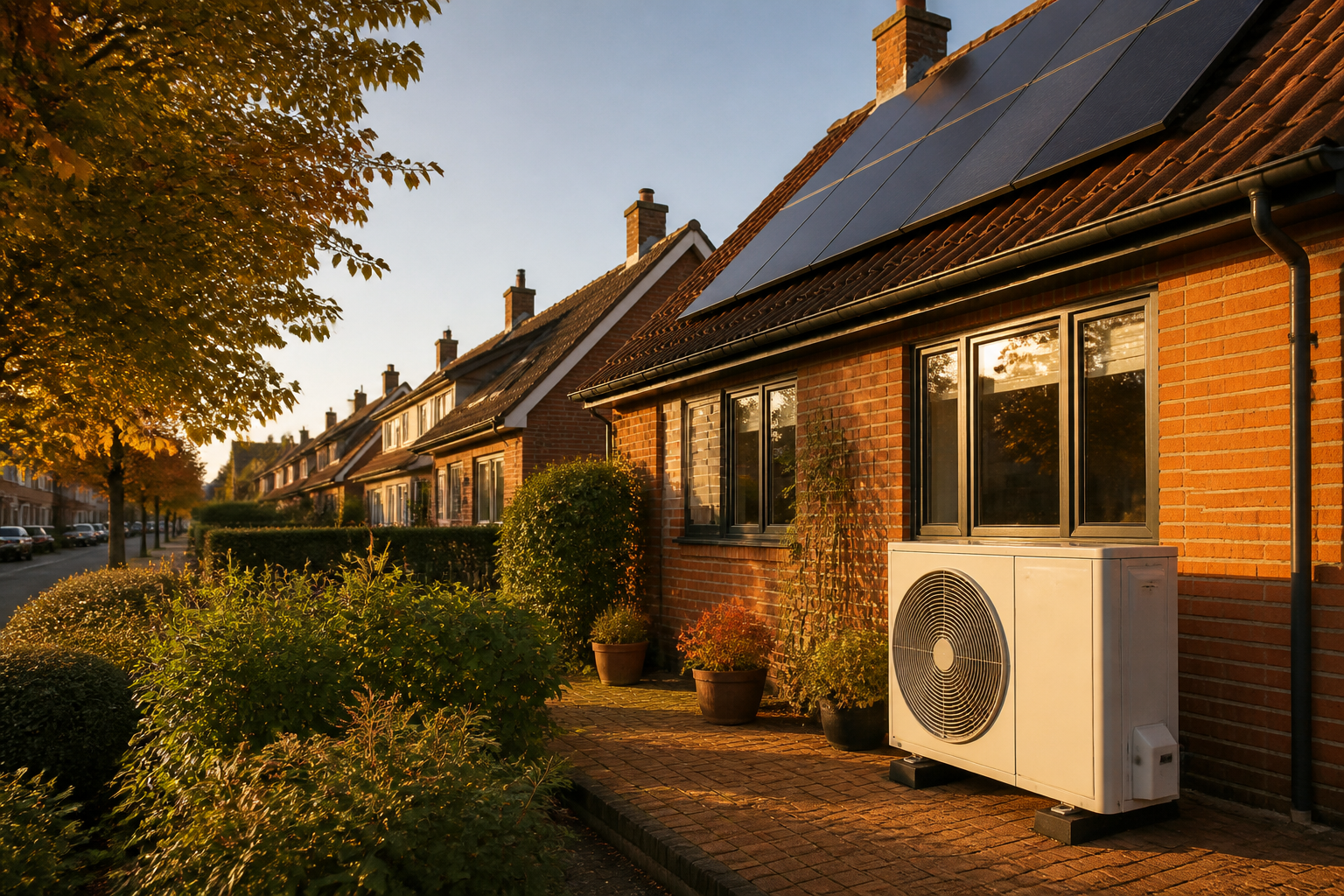
In July 2026, a series of industry reports and regulatory updates shed light on the evolving landscape of UK residential green technology. Findings published by Energy Live News on 20 July 2026 highlighted that combining multiple low-carbon systems, such as solar photovoltaic (PV) arrays, home battery storage, and heat pumps, can reduce standard household energy bills by more than 80% when paired with dynamic smart tariffs. Simultaneously, reporting from Yahoo News UK on 20 July 2026 examined why standalone heat pump installations sometimes fail to deliver anticipated running cost reductions due to the price ratio between UK electricity and mains gas.
Further guidance issued by the Energy Saving Trust on 24 July 2026 detailed upcoming framework updates for small-scale domestic generation and micro-renewable technologies. Together, these releases emphasize that while hardware costs have stabilized, achieving maximum financial and carbon benefits depends heavily on system integration, tariff optimization, and adherence to established UK installation standards.
What recent industry reports reveal about technology stacking
The term technology stacking refers to the deliberate combination of complementary low-carbon devices within a single property. According to research cited by Energy Live News on 20 July 2026, isolated upgrades yield useful carbon savings, but integrated systems unlock exponentially higher bill reductions.
When a standard semi-detached UK household relies solely on grid electricity and a gas boiler, energy costs are dictated entirely by retail unit rates. Installing a 4 kWp solar PV system generates roughly 3,400 kWh to 3,800 kWh of clean electricity annually across England, Scotland, and Wales. However, without a battery, a typical household directly consumes only 30% to 40% of that daytime generation because peak household demand occurs in the early morning and evening.
Adding a 5 kWh to 10 kWh lithium iron phosphate (LFP) home battery captures excess daytime solar generation for use during peak evening hours. When an air source heat pump is introduced to replace gas heating, the system dynamic shifts again. Air source heat pumps operate with a Seasonal Coefficient of Performance (SCOP) between 3.0 and 3.8, meaning each kilowatt-hour of electricity consumed generates 3.0 to 3.8 kilowatt-hours of heat energy.
When controlled by intelligent home energy management software, the battery can charge from cheap off-peak grid electricity overnight during winter months, supplying the heat pump when outdoor temperatures drop without drawing expensive peak grid power. This multi-technology synergy is what enables the high percentage bill reductions documented in recent industry findings.
Running costs and the electricity to gas price spark spread
Despite the high thermal efficiency of modern heat pumps, some householders report modest energy bill savings after replacing a gas boiler. As detailed in news analysis published by Yahoo News UK on 20 July 2026, this outcome is driven primarily by the structural price disparity between retail electricity and mains gas in Great Britain, often referred to as the spark spread.
Historically, retail electricity prices per kilowatt-hour have been three to four times higher than gas prices. Because a condensing gas boiler operates at around 85% to 92% efficiency, an air source heat pump with a SCOP of 3.0 delivers thermal energy at roughly the same direct fuel cost if electricity is four times more expensive than gas per unit.
To achieve significant financial savings on heating, two key operational factors must align:
- High installation efficiency: Heat pump flow temperatures must be designed low, ideally between 35°C and 45°C, requiring correctly sized radiators or underfloor heating to maintain high SCOP performance.
- Smart tariff integration: Householders must utilize time-of-use or dynamic energy tariffs that offer low overnight unit rates, typically ranging between 7p and 12p per kWh, compared to standard day rates.
Without dynamic tariffs or solar and battery integration, a heat pump running on a single flat-rate tariff primarily delivers operational carbon reductions rather than dramatic immediate bill drops.
Updated guidelines for small scale microgeneration
As small-scale renewable adoption grows, energy regulators and distribution network operators (DNOs) continue to refine connection rules. Analysis published by the Energy Saving Trust on 24 July 2026 highlighted key procedural steps for homeowners adding generation assets to the low-voltage grid.
Under Engineering Recommendation G98 issued by the Energy Networks Association, micro-generation systems up to 16 amperes per phase (equivalent to 3.68 kW single-phase or 11.04 kW three-phase) can be installed using a notify-and-issue procedure. The installer fits the equipment and notifies the regional DNO within 28 days of commissioning.
For larger systems, such as a combined 5 kW solar inverter and high-capacity battery, installers must submit a prior approval application under Engineering Recommendation G99 before commissioning. DNO approval ensures the local grid sub-station can handle potential reverse power flows during low-demand periods. In addition, updated guidance on plug-in solar devices emphasizes that any unit feeding power into a home electrical circuit must comply with strict isolation, earthing, and safety criteria to avoid back-feeding into the grid during power outages.
Summary of key low carbon technologies and regulatory standards
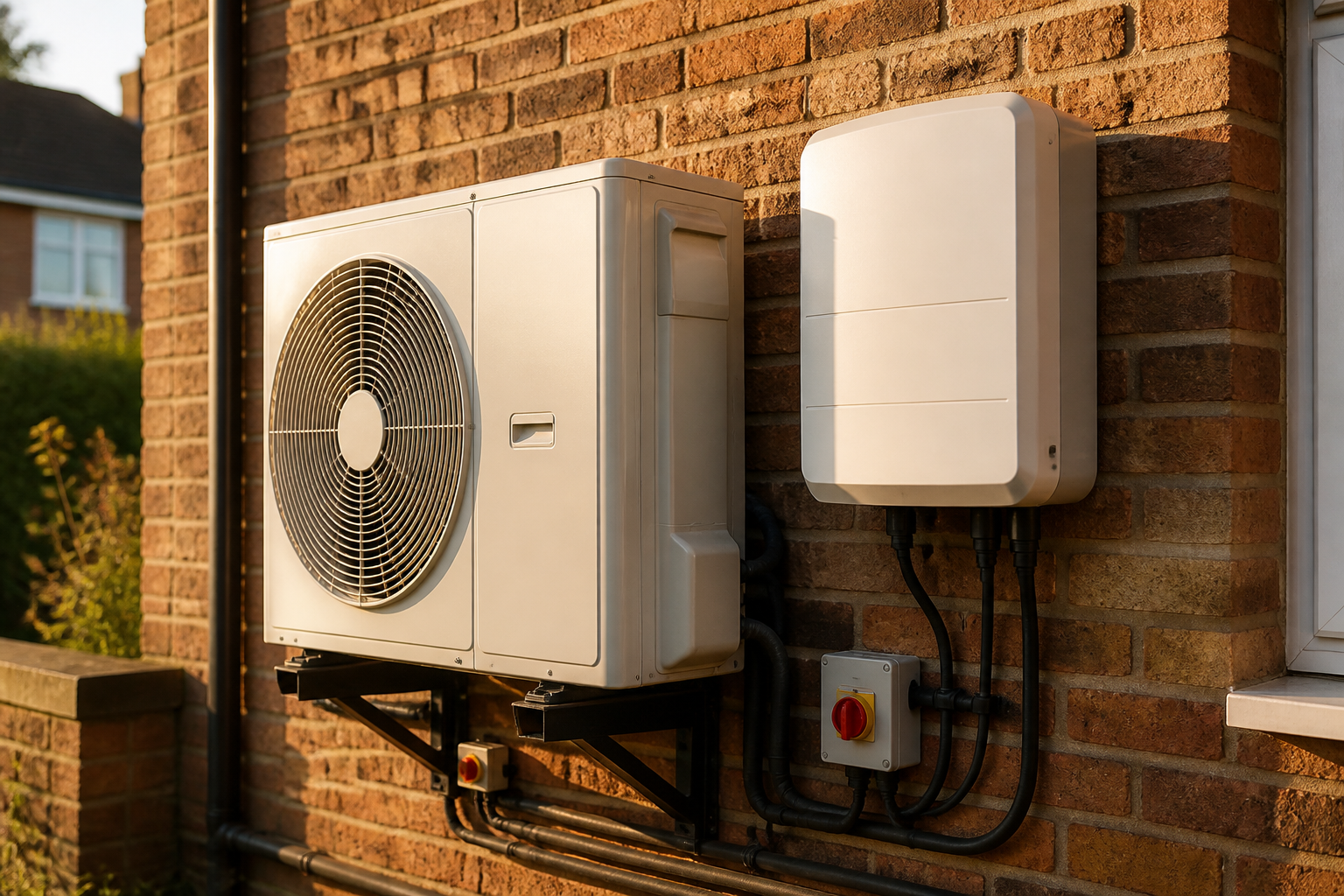
| Technology | Typical Sizing / Specification | Key Standard or Accreditation | Grid Notification Process | Primary System Role |
|---|---|---|---|---|
| Solar PV | 3 kWp to 6 kWp array | MCS, RECC, HIES | DNO G98 (up to 3.68 kW) or G99 | Zero-carbon daytime generation |
| Battery Storage | 5 kWh to 13.5 kWh capacity | MCS, NICEIC, TrustMark | DNO G98 / G99 application | Energy shifting and off-peak charging |
| Air Source Heat Pump | 5 kW to 12 kW thermal output | MCS, TrustMark, Building Regs Part L | DNO notification (heat pump check) | Low-carbon space heating and hot water |
| Smart Tariff Software | Dynamic automation app | OFGEM regulated supplier | Direct integration via smart meter | Automated schedule optimization |
What this means for you
If you are planning home energy improvements based on these latest policy and market developments, taking a structured approach ensures safety, grid compliance, and financial returns.
First, conduct an energy audit of your property. Review your annual electricity and gas usage in kilowatt-hours via your smart meter statements. Upgrading loft insulation to a minimum depth of 270 mm and cavity wall insulation where applicable reduces total heat demand, allowing you to install a smaller, lower-capacity heat pump that operates at peak efficiency.
Second, verify the credentials of any contractor you hire. Installers must hold Microgeneration Certification Scheme (MCS) accreditation for solar PV, heat pumps, and battery systems, alongside registration with consumer code protection bodies such as RECC or HIES and quality standards like TrustMark. MCS certification remains a mandatory requirement to claim government support, such as the £7,500 Boiler Upgrade Scheme grant for heat pumps in England and Wales.
Third, match your hardware with appropriate smart tariffs. An integrated setup functions best when configured to automatically charge batteries or pre-heat water cylinders during low-cost tariff windows.
For employers looking to assist their workforce with these technical choices, the Net Zero Home Scheme provides employees with member pricing on accredited solar, heat pump, battery storage, and plug-in systems, installed by certified UK contractors without salary sacrifice or payroll deductions.
Frequently asked questions
Do I need planning permission to install solar panels or a heat pump in Great Britain?
In most parts of England, Scotland, and Wales, solar panels and air source heat pumps are covered under Permitted Development Rights, provided specific conditions are met. Solar PV panels must not project more than 200 mm from the roof plane or extend above the highest point of the roofline. For air source heat pumps, the compressor unit must generally be located at least one metre from property boundaries and comply with noise limit standards set out in Microgeneration Certification Scheme MCS 020. Conservation areas and listed buildings usually require full planning approval from your local authority.
How does the spark spread impact my energy bill when switching to a heat pump?
The spark spread is the ratio between the unit cost of electricity and mains gas. If electricity costs 28p per kWh and gas costs 7p per kWh, electricity is four times more expensive. A heat pump operating at an average SCOP of 3.0 produces three units of heat for every unit of electricity consumed. At a 4:1 price ratio, heating costs will be roughly equal to a 90% efficient gas boiler. To secure substantial bill savings, you need to raise the heat pump efficiency by lowering flow temperatures or shift electricity consumption to cheap off-peak overnight rates using dynamic smart tariffs.
Why is MCS certification required for domestic renewable installations?
Microgeneration Certification Scheme (MCS) accreditation provides assurance that installers and products meet rigorous quality and safety criteria. In the UK, MCS certification is required to qualify for government incentives such as the £7,500 Boiler Upgrade Scheme grant, as well as accessing Smart Export Guarantee (SEG) tariffs from energy suppliers that pay homeowners for excess solar electricity exported back to the grid. Installing through an MCS and TrustMark registered professional ensures compliance with Building Regulations and electrical safety standards enforced by bodies like NICEIC.
Sources
- Combining low-carbon technologies could cut household energy bills by more than 80%, Energy Live News
- Why your heat pump isn’t saving you money – and what could change that, Yahoo News UK
- Plug-in solar panels and the rooftop revolution, Energy Saving Trust