AC vs DC Battery Storage: Physics, Efficiency and Economics
Understand how AC and DC battery coupling affect conversion efficiency, installation costs, and long-term performance for UK home solar installations.
- Written by
- Net Zero Home Scheme editorial team
- Last updated
- Topic
- battery storage, solar pv, home energy
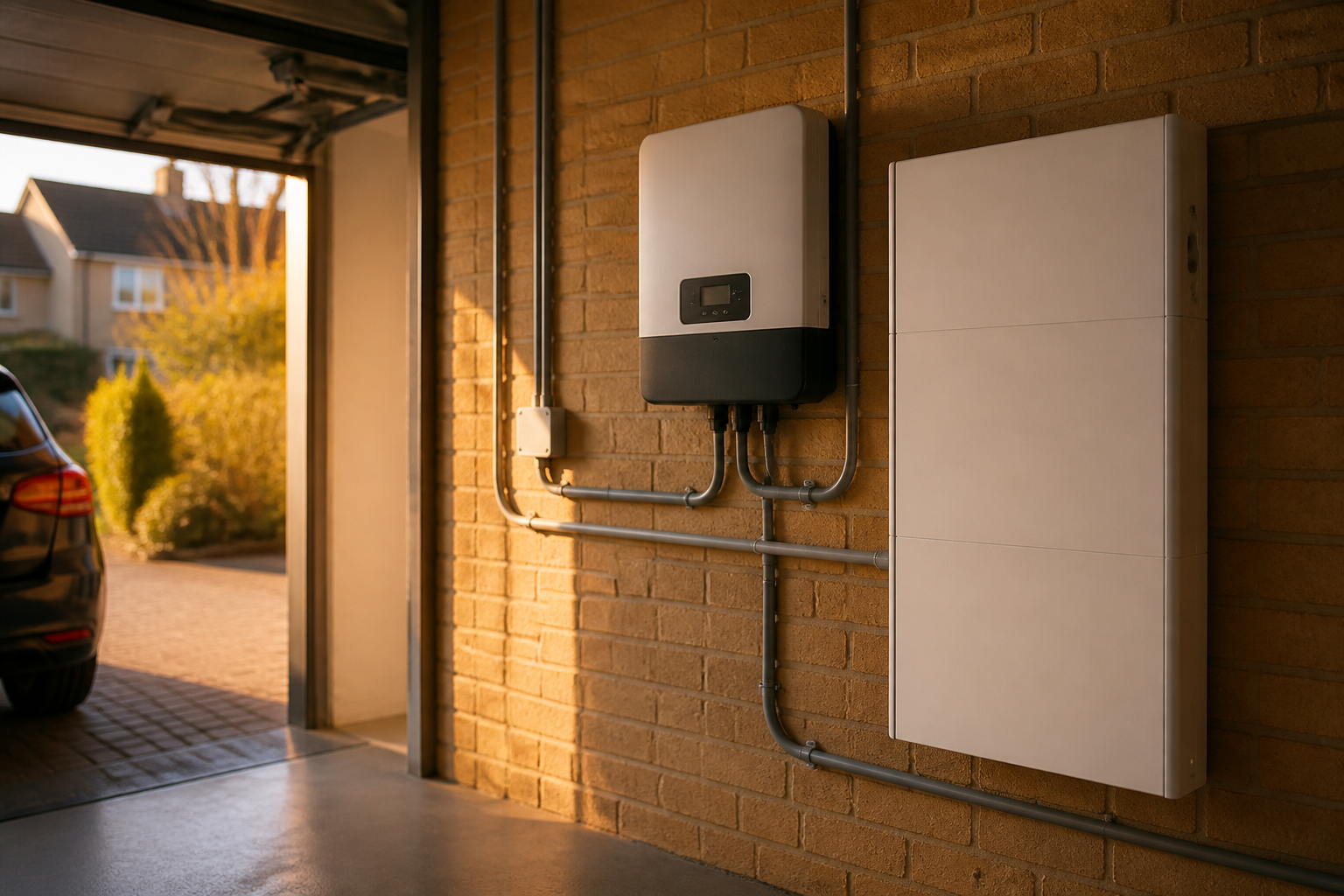
When adding battery storage to a residential solar photovoltaic (PV) system in the UK, one of the most fundamental engineering choices is system coupling: whether energy flows between components via Direct Current (DC) or Alternating Current (AC). This architectural decision determines conversion efficiency, initial installation cost, hardware lifespan, and how effectively you can charge your battery from cheap grid tariffs.
Understanding the physical principles of electrical conversion and the lifetime financial trade-offs helps homeowners and installers specify the right architecture for both retrofits and new installations.
The physics of conversion losses in AC and DC systems
Solar PV panels generate power in Direct Current (DC). Domestic electrical appliances and the national electricity grid operate on Alternating Current (AC) at 230 volts and 50 Hertz. Household batteries store and discharge energy in DC. Converting electricity between DC and AC relies on semiconductor power electronics, specifically inverters and rectifiers, and every conversion step generates thermal losses, reducing overall system efficiency.
In a direct-current coupled (DC-coupled) system, the solar panels feed DC power directly into a charge controller or hybrid inverter, which charges the DC battery storage unit directly. Electricity undergoes a single conversion from DC to AC only when power is dispatched from the solar array or battery into household circuits or exported to the grid. According to efficiency testing standards maintained by the Microgeneration Certification Scheme (MCS), direct DC-to-DC battery charging typically achieves round-trip efficiencies between 92% and 96%, as losses from intermediate AC conversion stages are eliminated.
In an alternating-current coupled (AC-coupled) system, solar PV generation is converted from DC to AC by a dedicated solar string inverter. To store excess solar power in the battery, an AC-coupled battery unit must convert that AC power back into DC using an internal rectifier or bi-directional inverter. When the household requires that stored energy later, the battery converts the DC power back into AC once more. This creates a triple-conversion pathway for solar generation stored in the battery: DC to AC, AC to DC, and finally DC to AC. Guidance published by the Energy Saving Trust notes that each conversion step loses between 2% and 4% of energy as waste heat, resulting in an overall round-trip efficiency for AC-coupled solar storage ranging from 85% to 89%.
Grid charging economics and tariff dynamics
While DC coupling holds a clear physics advantage for storing daytime solar energy, the economic calculation changes when integrating off-peak grid electricity tariffs. UK energy suppliers offer smart time-of-use tariffs that provide low-cost electricity during overnight periods.
When charging a battery directly from the grid during cheap off-peak hours, both AC-coupled and DC-coupled systems perform a single AC-to-DC conversion step. In this specific operational mode, the conversion losses are identical between the two architectures, with both systems operating at roughly 88% to 92% efficiency.
The practical distinction between the two architectures then shifts to inverter power ratings and output limits. Many hybrid inverters used in DC-coupled installations share a single grid output limit, such as 3.68 kW under G98 grid connection regulations, between the solar array and the battery storage system. If solar panels generate 3 kW while the household requires 3 kW from the battery, a standard 3.68 kW hybrid inverter cannot supply 6 kW simultaneously; it clips output to its maximum rated capacity. Conversely, an AC-coupled setup pairs an existing solar string inverter with a separate battery inverter. Because each unit has its own AC connection, an AC-coupled system can simultaneously supply power from solar generation and battery discharge up to the combined limits approved by your local Distribution Network Operator (DNO).
System architecture comparison
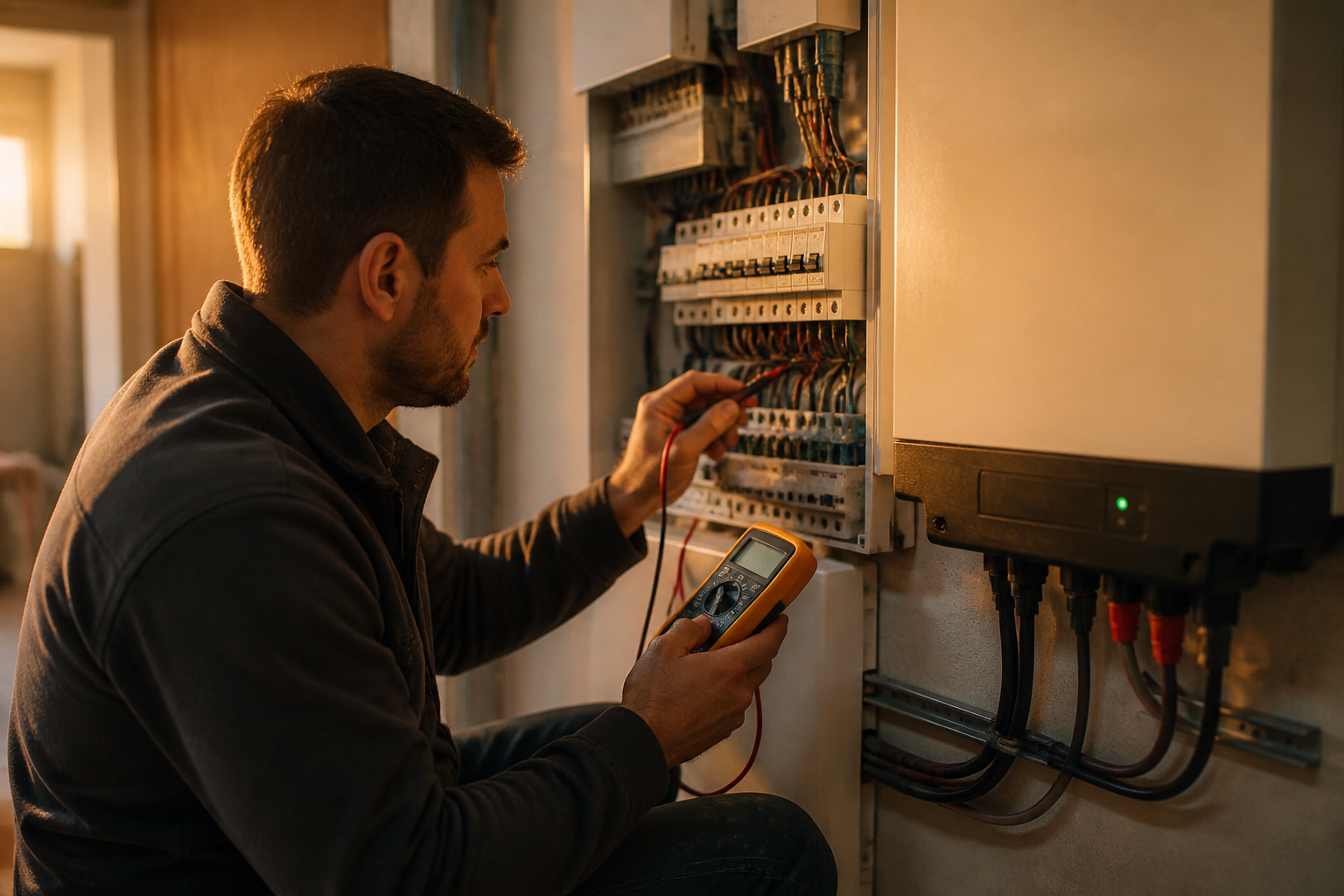
| Feature | DC-Coupled System | AC-Coupled System |
|---|---|---|
| Direct solar charging efficiency | 92% to 96% (Single conversion step) | 85% to 89% (Triple conversion step) |
| Off-peak grid charging efficiency | 88% to 92% (Single conversion step) | 88% to 92% (Single conversion step) |
| Retrofit installation complexity | High (Requires replacing solar inverter) | Low (Sits independently on the home AC bus) |
| Simultaneous power output | Restricted by single hybrid inverter rating | Combined output of independent solar and battery inverters |
| Single point of failure risk | Higher (Hybrid inverter failure stops solar and battery) | Lower (Solar and battery operate independently) |
Financial lifetime trade-offs and hardware replacement
The financial return on investment for home battery storage depends on capital expenditure, operational efficiency, and component longevity.
For a new installation where solar panels and battery storage are fitted simultaneously, a DC-coupled system usually offers lower upfront equipment costs. Purchasing a single hybrid inverter costs substantially less than buying two separate units. Consumer data from the Renewable Energy Consumer Code (RECC) indicates that hybrid hardware integration reduces initial equipment costs by roughly 15% to 25% compared to equivalent dual-inverter AC setups.
However, component replacement schedules across a 20 to 25 year system lifespan introduce counterbalancing economics. Lithium iron phosphate (LiFePO4) battery cells are typically warrantied for 6,000 cycles or 10 years, while solar panels routinely perform for 25 years. Centralised hybrid inverters undergo continuous electrical stress, handling high DC voltages from solar panels by day and managing battery cycles by night. As noted in technical guidance from the Institution of Engineering and Technology (IET), inverters often require replacement every 10 to 12 years. Replacing a complex hybrid inverter mid-way through a system's lifespan incurs higher hardware replacement costs than replacing a single standalone solar inverter.
For existing solar owners looking to retrofit storage, AC coupling avoids discarding a functional solar string inverter. Retaining existing, warrantied solar hardware reduces upfront labour and component disposal, offsetting the 5% to 7% solar charging efficiency penalty over the remaining operational life of the original inverter.
What this means for you
When deciding between AC-coupled and DC-coupled battery storage, evaluate your existing installation, household electrical demand, and long-term plans:
- Assess existing hardware: If you already have a functional solar array under 10 years old, an AC-coupled battery is usually the most cost-effective retrofit.
- Evaluate new installations: If installing solar and storage together from scratch, a DC-coupled hybrid inverter provides higher solar charging efficiency and lower initial hardware expenditure.
- Check DNO constraints: Ensure your installer submits a G98 notification or G99 application to your local Distribution Network Operator before installation, particularly if combining inverters with a joint rating above 3.68 kW.
- Review warranty terms: Confirm whether inverter warranties cover 10 or 12 years, and check that installer accreditation meets MCS standards to retain access to smart export tariffs.
- Explore workplace benefit support: If your employer offers access to the Net Zero Home Scheme, you can consult vetted MCS-accredited installers and access member pricing across battery storage systems without salary sacrifice or payroll deductions.
Frequently asked questions
Can I add a DC-coupled battery to an existing solar PV system?
Yes, but it requires replacing your existing solar string inverter with a hybrid inverter compatible with both your panel array and the new battery chemistry. While technically straightforward for an MCS-accredited installer, replacing a working solar inverter increases the upfront cost of the retrofit.
Which system coupling is better for charging from cheap off-peak energy tariffs?
Both system types perform with equivalent efficiency when charging directly from the grid, as both utilise a single AC-to-DC conversion step. However, AC-coupled systems often feature higher dedicated charge and discharge power ratings, allowing you to store more energy during short overnight off-peak tariff windows.
Does coupling architecture affect battery degradation over time?
Battery degradation is primarily driven by cell chemistry, depth of discharge, ambient temperatures, and charge rates, rather than whether the system is AC or DC coupled. Following manufacturer guidelines on maximum charge currents and maintaining ambient storage temperatures between 10 degrees Celsius and 20 degrees Celsius protects long-term cell health under both architectures.
Sources
- Microgeneration Certification Scheme Standards, Microgeneration Certification Scheme
- Home Renewable Energy Guidance, Energy Saving Trust
- Code of Practice for Electrical Energy Storage Systems, Institution of Engineering and Technology
- Consumer Code Standards for Battery Systems, Renewable Energy Consumer Code