Boiler Upgrade Scheme Guide: Grant Rules and Eligibility
An operational guide to the UK Boiler Upgrade Scheme, explaining £7,500 heat pump grant eligibility, EPC requirements, and installer procedures.
- Written by
- Net Zero Home Scheme editorial team
- Last updated
- Topic
- heat pumps, policy, regulation
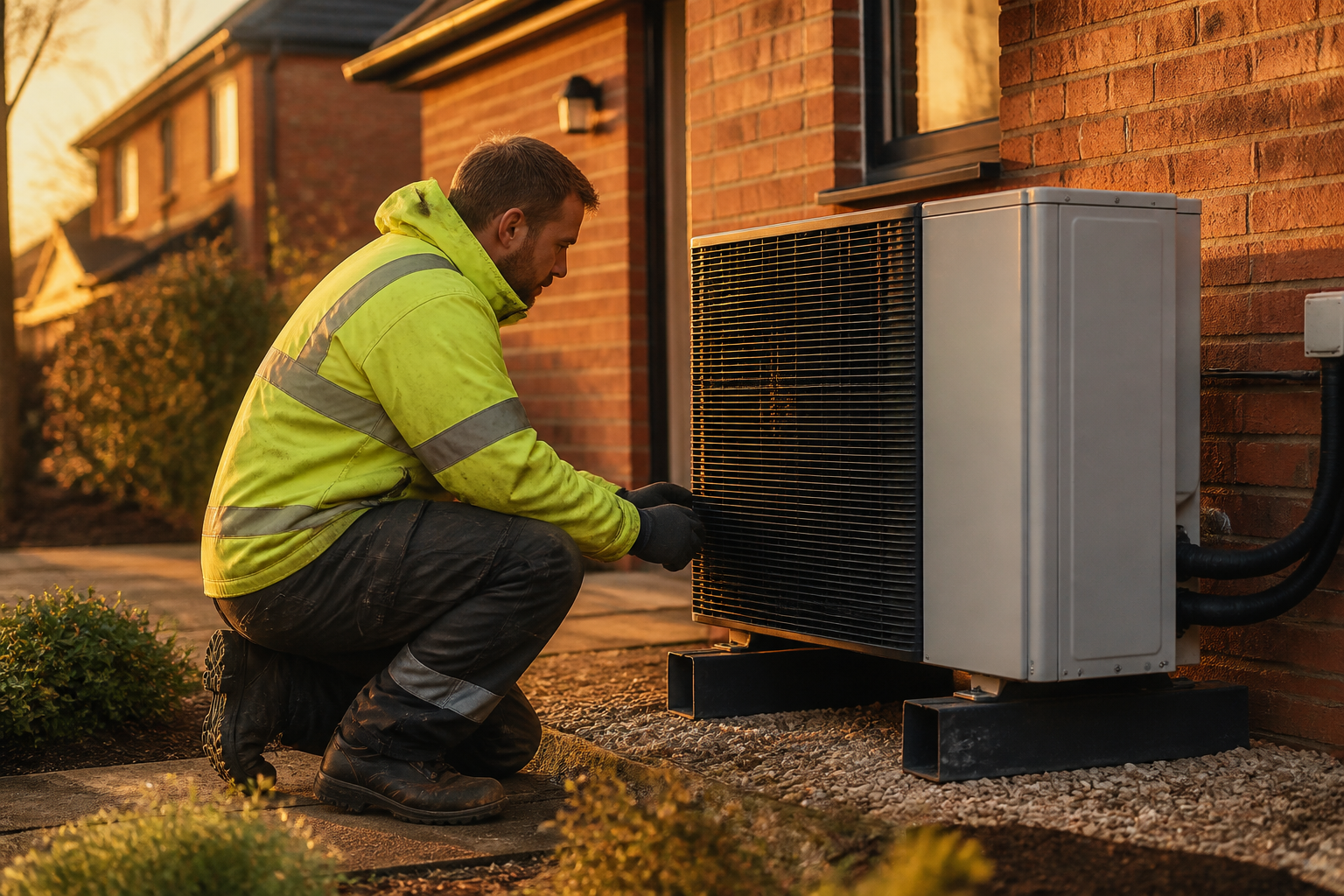
The UK government's primary incentive for domestic low-carbon heating is the Boiler Upgrade Scheme (BUS). Administered by Ofgem on behalf of the Department for Energy Security and Net Zero (DESNZ), the scheme offers capital grant funding of £7,500 towards the cost of replacing fossil fuel heating systems with modern heat pumps. The scheme covers domestic and small non-domestic properties across England and Wales, aiming to accelerate the transition away from mains gas, heating oil, and liquid petroleum gas (LPG).
Understanding how the scheme operates, what the technical prerequisites are, and where additional out-of-pocket costs arise is essential for any householder planning a heating upgrade. This analysis sets out the operational details, regulatory standards, and financial realities of the Boiler Upgrade Scheme.
How the Boiler Upgrade Scheme works
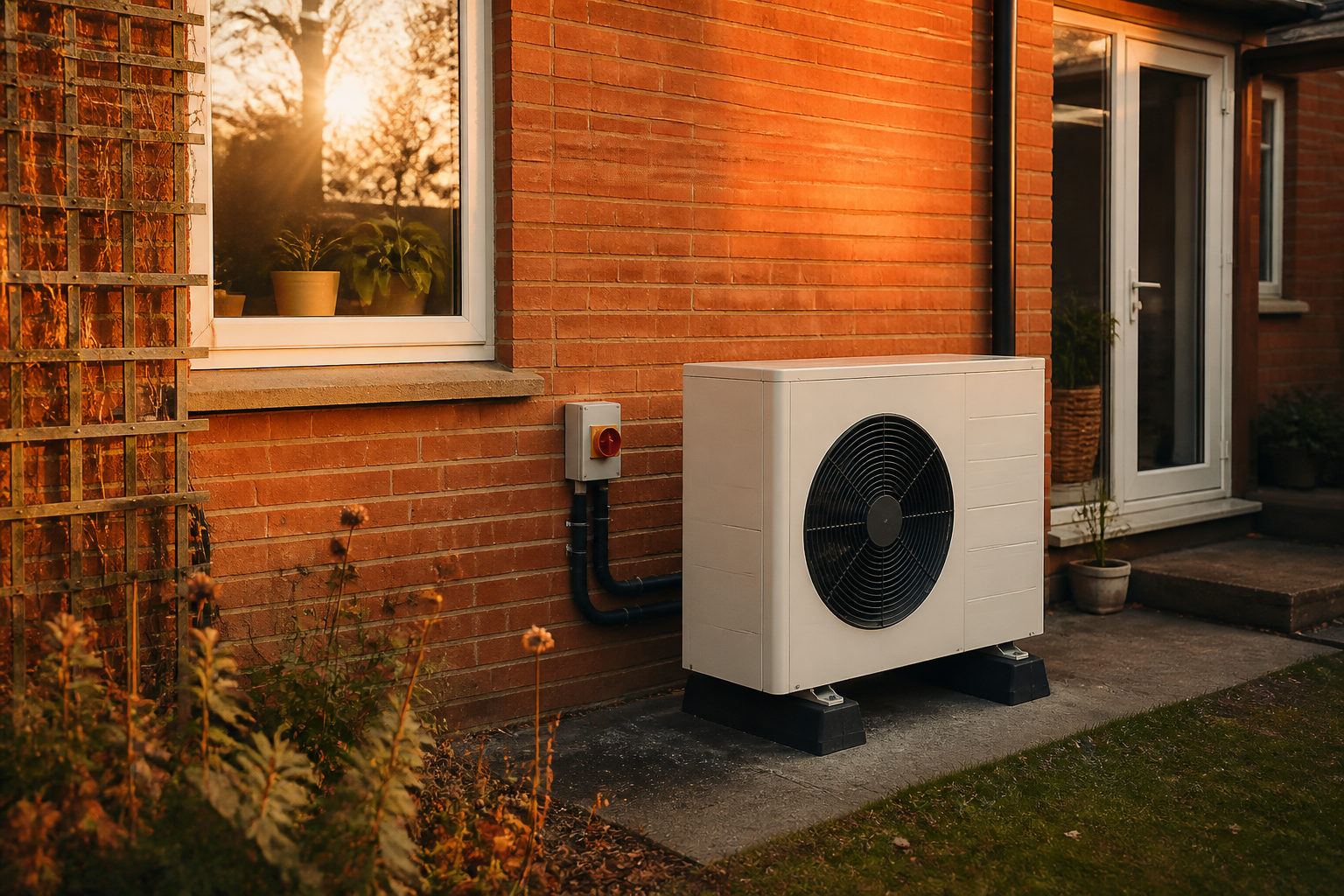
Unlike legacy subsidy schemes such as the Domestic Renewable Heat Incentive (RHI), which paid home energy generators over seven years, the Boiler Upgrade Scheme acts as an upfront capital discount. The installer, rather than the homeowner, submits the grant application directly to Ofgem.
When you accept a formal proposal from an accredited installer, they apply to Ofgem for a discount voucher. Once Ofgem approves the application, the £7,500 grant value is deducted directly from your installation invoice. Upon completing and commissioning the heating system, the installer submits proof of completion to Ofgem to redeem the voucher payment.
This voucher model eliminates the need for property owners to secure large bridge loans or wait for reimbursement, but it places strict administrative obligations on installers. The application process includes rigid timeframes, with vouchers remaining valid for three months for air source heat pumps and six months for ground source heat pumps.
Eligibility criteria for properties and technology
To qualify for funding under the Boiler Upgrade Scheme, both the property and the installed heating technology must meet explicit regulatory standards set by DESNZ and Ofgem.
First, the project must replace an existing fossil fuel heating system (gas, oil, or LPG) or an inefficient direct electric heating system. New build properties are excluded, except for self-build projects that meet specific criteria.
Second, the installation must be executed by an installer certified by the Microgeneration Certification Scheme (MCS) and registered with TrustMark. Self-installation or unaccredited works are strictly ineligible.
Third, the building must have a valid Energy Performance Certificate (EPC) with no outstanding recommendations for loft insulation or cavity wall insulation. If your EPC lists these recommendations, the insulation must be installed and an updated EPC generated before the installer can redeem the grant voucher, unless an official technical exemption applies.
Fourth, the technology itself must deliver high operational efficiency. Under MCS standard MIS 3005, heat pumps must achieve a Seasonal Coefficient of Performance (SCOP) or Seasonal Performance Factor (SPF) of at least 2.8. This ensures that for every kilowatt-hour of electricity consumed, the system generates at least 2.8 kilowatt-hours of heat output over a full annual heating cycle.
Fifth, for air source heat pumps, the outdoor unit must comply with Planning Permitted Development Rights (Class G in England). This requires sound emissions to remain at or below 42 decibels (dB LAeq, 5 mins) measured one metre from a neighbouring property boundary.
| Parameter | Regulatory Requirement | Relevant Standard or Source |
|---|---|---|
| Grant Amount | £7,500 for air source and ground source heat pumps | DESNZ Policy Framework |
| Regional Scope | Existing domestic properties in England and Wales | Ofgem BUS Regulations |
| Minimum System Efficiency | Seasonal Performance Factor (SPF/SCOP) of at least 2.8 | MCS MIS 3005 Standard |
| Property Insulation | Valid EPC with no loft or cavity wall recommendations | EPB Register Standard |
| Acoustic Limit | Maximum 42 dB at 1m from neighbour boundary | Permitted Development Class G |
| Installer Accreditation | Active MCS certification and TrustMark registration | Ofgem Installer Rules |
Step-by-step application process for householders
Navigating the grant process involves several structured steps between the homeowner, installer, and regulator:
- Request quotes: Contact multiple MCS-certified installers to conduct a detailed property heat loss assessment in accordance with BS EN 12831 standards.
- Select installer and agree contract: Review proposals, verifying that the £7,500 grant deduction is explicitly shown on the itemised quotation.
- Voucher application: The installer submits the voucher application through Ofgem's digital portal.
- Owner consent: Ofgem emails you a secure link to confirm that you have authorised the installer to apply for the grant on your behalf.
- Installation: The installer fits the heat pump, hot water cylinder, and any required radiator or pipework upgrades within the voucher validity period.
- Commissioning and redemption: The installer submits commissioning documentation, the MCS certificate, and the final invoice to Ofgem to claim the funds.
Financial realities and practical trade-offs
While a £7,500 grant reduces upfront capital expenditure significantly, heat pump installations often involve broader system upgrades that influence total costs. According to data published by the Energy Saving Trust, total turn-key installation costs for an air source heat pump in a typical three-bedroom semi-detached house usually range between £10,000 and £14,000 before the grant.
This total cost reflects more than just the outdoor heat pump unit. In many homes, running lower flow temperatures, such as 45°C or 50°C, to maintain high seasonal efficiency requires larger radiators to deliver adequate thermal output to living spaces. In addition, replacing a gas combi boiler with a heat pump requires space for a dedicated hot water cylinder.
Consequently, after deducting the £7,500 BUS grant, householders should expect a net out-of-pocket investment between £2,500 and £6,500. For properties replacing oil boilers or LPG systems, running cost savings can be substantial, whereas for homes transitioning from modern mains gas, running cost parity depends heavily on electricity-to-gas price ratios and the use of smart time-of-use tariffs.
What this means for you
If you are considering replacing an aging gas or oil boiler, checking your property eligibility is the recommended starting point. Search the official government Energy Performance of Buildings Register to review your current EPC and check for any outstanding insulation recommendations that must be addressed.
Next, obtain itemised quotes from at least three MCS-accredited installers. Ensure each proposal includes a room-by-room heat loss calculation rather than a generic rule-of-thumb estimate. If your employer provides access to workplace sustainability programmes such as the Net Zero Home Scheme, you may also be able to access vetted installer networks, member pricing, and impartial guidance alongside official government grant funding.
Frequently asked questions
Can I apply for the Boiler Upgrade Scheme grant directly?
No, the application must be submitted by an MCS-certified installer. You will receive an automated email from Ofgem to confirm your consent, but the installer handles all submission details and receives the voucher credit directly.
Do I need to upgrade all my radiators to qualify for the grant?
Not necessarily. Radiator upgrades are determined by heat loss calculations rather than grant rules. If your existing radiators can keep rooms warm at lower flow temperatures, they can be retained, though larger radiators or fan convectors are often added in key rooms.
What happens if my home has uninsulated cavity walls or loft space?
If your EPC recommends cavity wall or loft insulation, these measures must be completed and a new EPC issued before your installer can claim the grant from Ofgem, unless a registered surveyor documents a valid technical exemption.
Sources
- Boiler Upgrade Scheme Guidance for Property Owners, Ofgem
- Apply for the Boiler Upgrade Scheme, Department for Energy Security and Net Zero
- Heat Pump Standards and Installation Guidelines, Microgeneration Certification Scheme
- Incentives and Grants for Heat Pumps, Energy Saving Trust