East-West vs South-Facing Solar: Physics and Economics
An analysis of solar panel orientation, comparing peak generation, daily yield curves, and self-consumption economics for UK homes.
- Written by
- Net Zero Home Scheme editorial team
- Last updated
- Topic
- solar pv, solar orientation, renewable energy
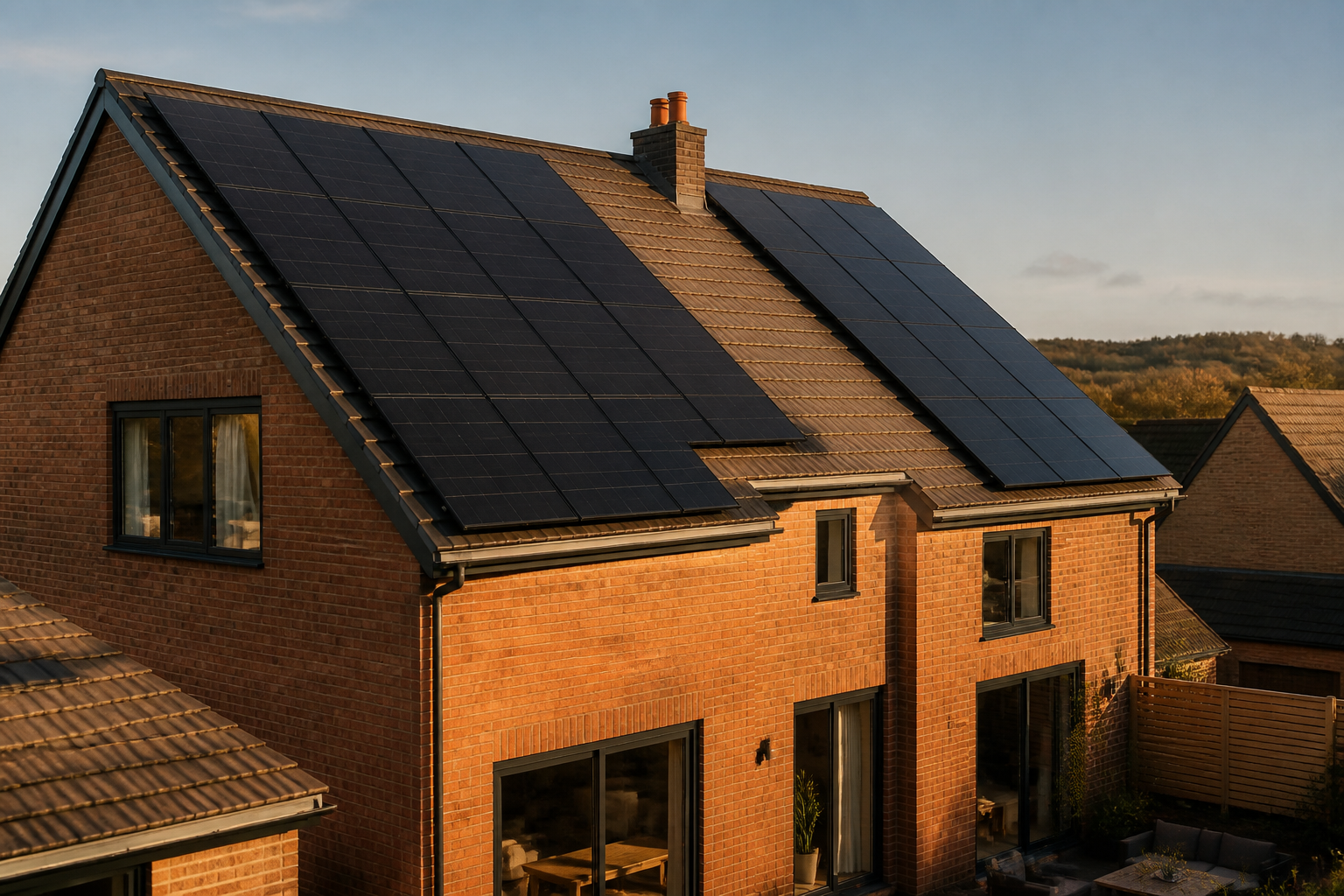
For decades, standard solar design guidance across the UK stated that photovoltaic (PV) panels must face due south pitched at an angle between 30 and 40 degrees. In terms of absolute annual energy production, this orientation delivers the maximum number of kilowatt-hours (kWh) per installed kilowatt-peak (kWp) of capacity. However, changes in domestic energy consumption patterns, grid export structures, and equipment pricing have altered the economic equation. Understanding the trade-offs between a traditional south-facing solar array and an east-west split array requires examining both the physical solar resource and home energy economics.
The physics of solar radiation and panel orientation
Solar panels convert direct and diffuse sunlight into direct current (DC) electricity. The amount of energy generated depends on the total solar irradiance hitting the module surface, measured in watts per square metre (W/m²), and the angle of incidence between incoming light and the panel face.
In the UK, which spans latitudes between approximately 50 and 58 degrees north, the sun reaches its highest point in the sky at solar noon. A south-facing panel captures maximum light intensity around midday, creating a tall, concentrated bell curve of electricity production between 11:00 and 14:00.
An east-west system splits the solar array across two roof slopes. The east-facing modules capture low-angle morning sunlight when the sun rises, reaching their peak generation early in the day. As the sun crosses the meridian and moves west, light intensity on the east panels drops while the west-facing modules take over, peaking in the late afternoon and early evening.
According to yield tables published in the Microgeneration Certification Scheme (MCS) installer standards and the government's Standard Assessment Procedure (SAP 10), an unshaded south-facing roof in central England pitched at 35 degrees generates approximately 950 to 1,000 kWh per kWp annually. By contrast, an identical array split equally between east and west roofs at the same pitch generates roughly 800 to 860 kWh per kWp annually, representing a total yield reduction of approximately 12% to 15%.
However, total annual yield is only one half of the economic equation. The time of day at which that electricity is produced is equally critical.
Comparing generation profiles and self-consumption
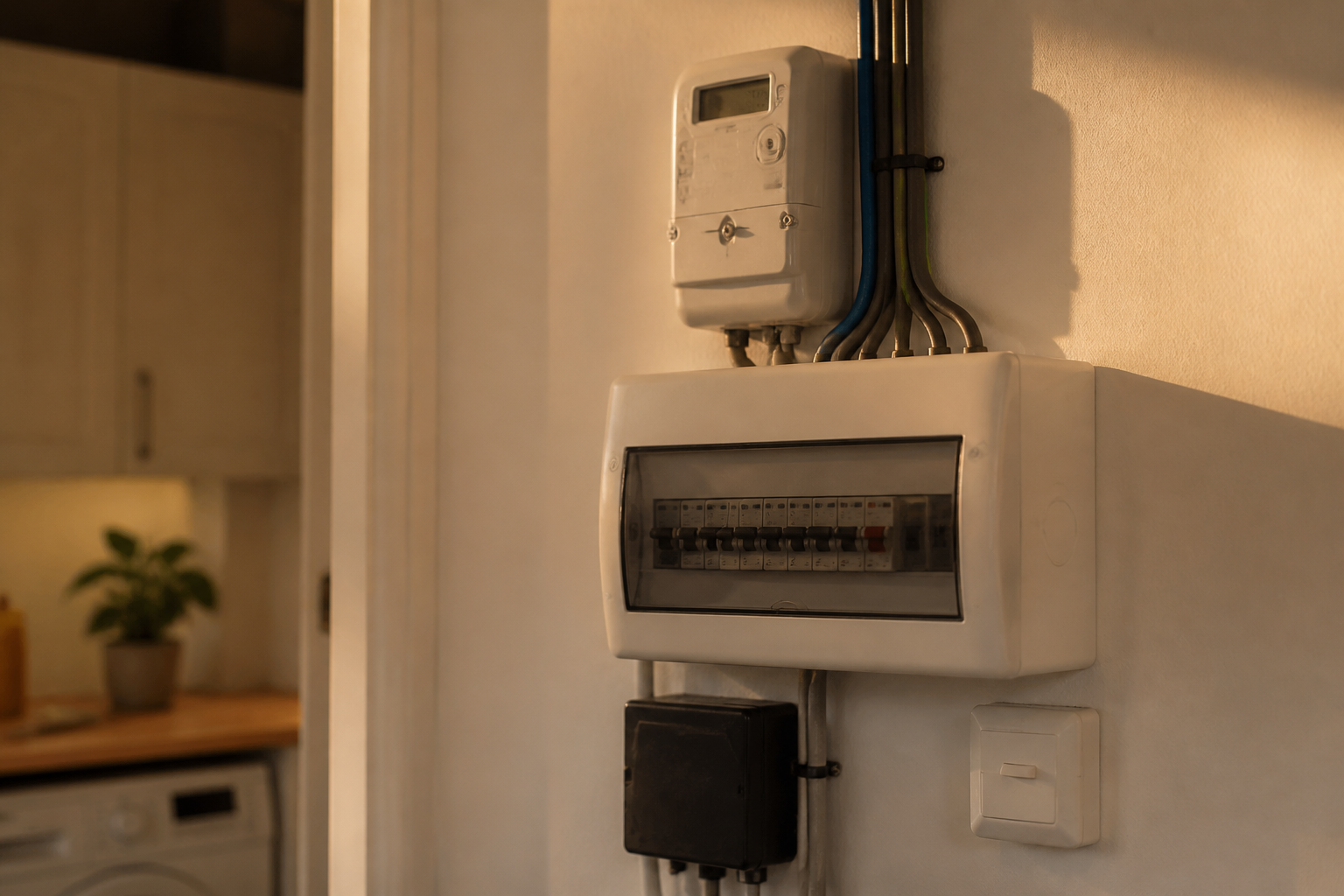
To evaluate financial return, generation must be compared against a home's electricity demand profile. Typical domestic energy use follows a twin-peak pattern: a morning spike between 07:00 and 09:00 as occupants wake up, cook, and prepare for the day, followed by an evening peak between 17:00 and 21:00 due to lighting, cooking, appliances, and space heating.
A south-facing array generates the majority of its daily output during midday hours when domestic demand is often at its lowest point. Unless someone is at home during the middle of the day, much of this energy cannot be used directly by appliances.
Under current UK electricity market rules governed by Ofgem, imported grid electricity costs significantly more than exported electricity sold under the Smart Export Guarantee (SEG). Avoiding the import of a kilowatt-hour saves a household roughly double or triple what they receive for exporting that same kilowatt-hour. Consequently, matching generation directly to household consumption, known as self-consumption, delivers a higher financial return per kilowatt-hour generated.
An east-west array produces a wider, flatter generation curve that matches domestic morning and evening usage far more closely than a south-facing array. While a south-facing system may achieve a self-consumption rate of 25% to 35% without a battery, an east-west system can frequently achieve self-consumption rates of 40% to 50% on direct generation alone.
| Design Parameter | South-Facing Array | East-West Split Array |
|---|---|---|
| Relative Annual Yield (kWh/kWp) | 100% (Baseline) | 85% to 88% of Baseline |
| Daily Generation Profile | Single tall peak at solar noon | Two broader peaks (morning and late afternoon) |
| Typical Direct Self-Consumption | 25% to 35% | 40% to 50% |
| Peak DC Power Density | Concentrated at midday | Distributed across daylight hours |
| Inverter Sizing Requirement | Sized close to 100% of array kWp | Can be oversized (e.g. 120% to 130% DC array to AC inverter) |
| Roof Space Utilisation | Limited to south roof area | Uses two roof slopes for double panel capacity |
System design, inverter sizing, and clipping
The physical spread of generation across an east-west array creates specific engineering advantages when selecting inverters. Solar inverters convert DC power from panels into alternating current (AC) for household use.
Because an east-west array never receives maximum solar irradiance on both sides simultaneously, the total peak DC power hitting the inverter at any single moment is lower than that of a south-facing array of the same total capacity. For example, a 6 kWp solar array split into 3 kWp east and 3 kWp west will rarely produce more than 4 kW of peak DC power at any given moment.
Installers can take advantage of this by connecting an east-west system to a smaller AC inverter, a practice known as oversizing the DC array. Using a 4 kW AC inverter with a 6 kWp east-west array allows the inverter to operate at higher efficiency levels for more hours of the day without suffering significant power limit clipping. Smaller inverters are generally less expensive to purchase and replace, lowering overall lifetime system balance-of-plant costs.
An east-west setup requires an inverter with at least two independent Maximum Power Point Tracking (MPPT) inputs. Each MPPT channel manages one string of panels independently, ensuring that shading or lower light levels on the east slope during the afternoon do not drag down the performance of the producing west slope.
Trade-offs and counter-arguments
While east-west arrays offer improved load matching, they are not superior in every scenario. Understanding when a south-facing array remains the preferred choice is vital for proper system specification.
When paired with a home battery storage system, the midday peak of a south-facing array becomes far less problematic. A battery can absorb the high-volume midday surplus from a south-facing roof and store it for use during evening peak hours. In this scenario, the higher absolute annual yield of the south-facing array allows a household to store and utilise more total free solar energy across the year.
Flatter roof pitches reduce the yield penalty of non-south orientations. Building Research Establishment (BRE) data indicates that on a shallow roof pitch of 15 to 20 degrees, an east-west system performs within 5% to 8% of a south-facing system. Conversely, on a steep roof pitch of 50 degrees, the output loss of an east-west array increases significantly.
Installation costs must also be factored in. Mounting panels across two distinct roof faces requires two sets of scaffolding, double the roof access work, and additional cable runs down to the inverter. If a home already has a large, unshaded south roof, installing all panels on a single slope is typically simpler and less expensive in labor terms.
What this means for you
When evaluating a solar PV installation for your home, do not view non-south roofs as an obstacle. Modern design tools allow accredited installers to calculate exact yield figures based on your specific post code, pitch, and orientation.
- Check your roof orientations using satellite mapping tools to identify available space on east, west, and south elevations.
- Review your electricity bills or smart meter data to understand when your household uses the most energy during the day.
- Request an MCS-compliant yield calculation from your installer that compares a single-slope setup against an east-west configuration.
- Ask whether your inverter specification includes dual MPPT trackers if splitting panels across different roof faces.
- Factor battery storage into the calculation if you have a south-facing roof and wish to capture midday generation spikes.
If your employer offers the Net Zero Home Scheme, you can access member pricing on MCS-certified solar PV and battery installations without salary sacrifice, allowing you to optimize your system design for your roof layout.
Frequently asked questions
Is an east-west solar array cheaper to install than a south-facing array?
Hardware costs per panel are identical, but labor and scaffolding costs for an east-west setup can be slightly higher because work is split across two roof elevations. However, an east-west system can often use a smaller, less expensive AC inverter, which partially offsets the extra labor cost.
Can I put solar panels on a north-facing roof in the UK?
North-facing roofs in the UK receive very little direct solar irradiance, generating roughly 40% to 50% less energy than a south-facing roof. While technical advances make generation possible, north-facing installations rarely offer a competitive payback period compared to south, east, or west orientations.
Do east-west solar systems require special inverters?
Yes. An east-west solar array requires an inverter with at least two separate Maximum Power Point Trackers (MPPTs) or microinverters on each panel. This ensures that the voltage and current of the east string are managed independently from the west string as light levels change throughout the day.
Sources
- MCS Guidance and Solar PV Yield Standards, Microgeneration Certification Scheme
- Energy Saving Trust Guide to Solar Panels, Energy Saving Trust
- Standard Assessment Procedure (SAP 10) Methodology, Building Research Establishment
- Ofgem Smart Export Guarantee (SEG) Overview, Ofgem