Understanding Half-Hourly Settlement for UK Home Energy
Market-wide Half-Hourly Settlement is changing how UK suppliers bill electricity, creating new opportunities for flexible smart tariffs and export rewards.
- Written by
- Net Zero Home Scheme editorial team
- Last updated
- Topic
- tariffs, energy efficiency, energy bills
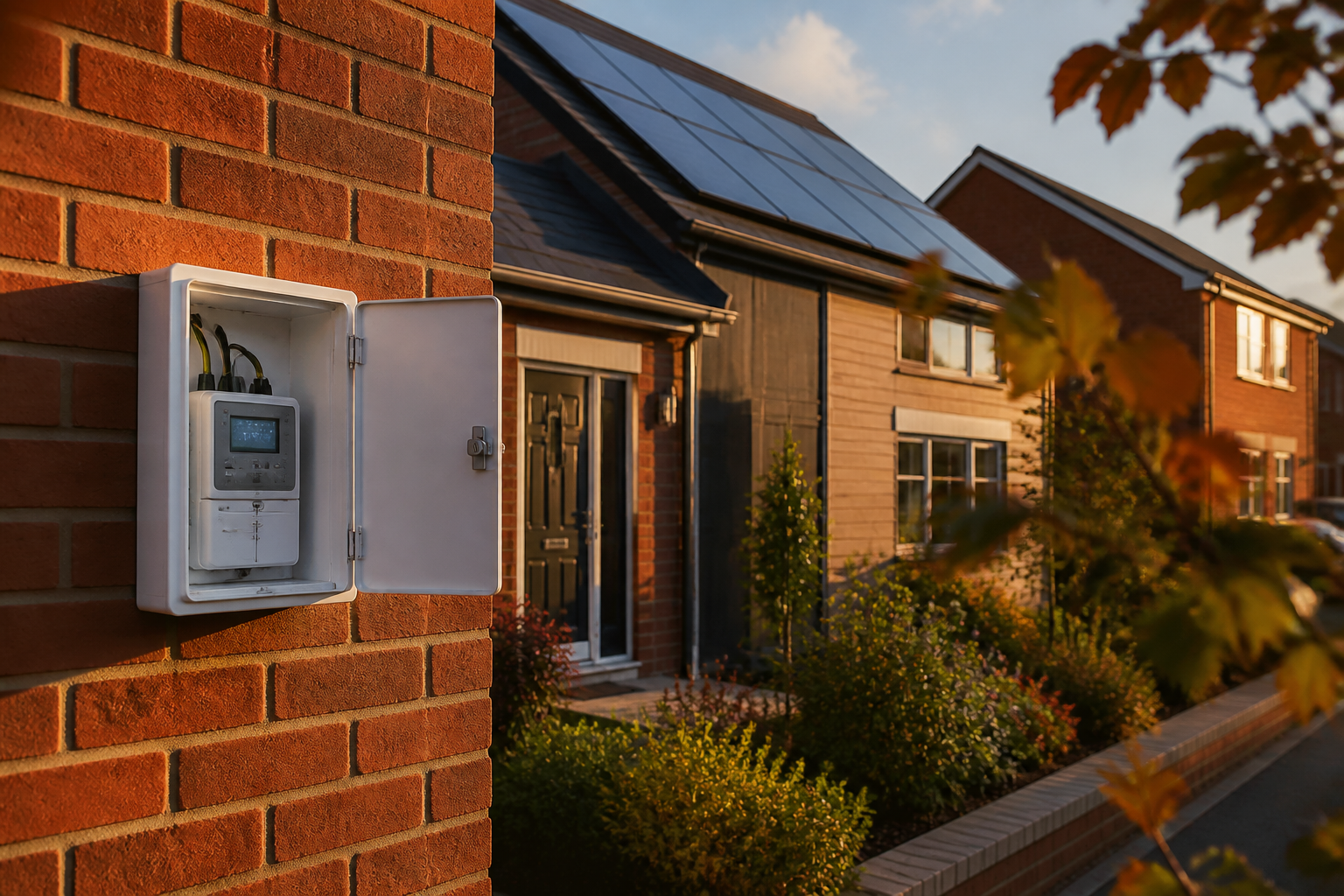
The UK electricity market is undergoing one of its most structural changes since privatisation: the roll-out of Market-wide Half-Hourly Settlement, managed by Elexon under regulatory oversight from Ofgem. For decades, domestic electricity consumption was settled using generic industry profile classes, which estimated when standard households used power throughout the day. Under the new settlement architecture, electricity suppliers settle power purchases against actual 30-minute consumption data sent by smart meters via the central Data Communications Company network.
This shift does not automatically change your energy contract or force you onto a dynamic tariff, but it alters the operational foundation of retail energy. By moving from broad statistical estimates to precise half-hourly reporting, energy suppliers can measure grid demand in real time. For households with smart meters, this regulatory reform opens up tailored time-of-use tariffs, smarter solar export payouts, and automated demand management.
What is Market-Wide Half-Hourly Settlement?
Market-wide Half-Hourly Settlement, often abbreviated to MHHS, is an industry programme overseen by Ofgem and implemented by Elexon, the body responsible for managing the UK electricity balance and settlement code. Historically, non-smart domestic meters were read every few months, or estimated between manual readings. To settle accounts with power generators, energy suppliers relied on Profile Class 1 (standard domestic) and Profile Class 2 (Economy 7) baseline curves to guess when electricity was consumed.
Under MHHS, those profile classes are being phased out in favour of actual half-hourly consumption data. Every 24 hours, smart meters submit 48 individual 30-minute readings to the central system. According to published plans from Elexon and Ofgem, this architecture allows suppliers to purchase electricity on wholesale markets with far greater precision, reducing the risk premium suppliers build into standard tariffs to cover unexpected peak demand spikes.
The reform applies across England, Scotland, and Wales. It does not require physical grid rewiring at your home, but it fundamentally updates how data flows from your meter to the energy settlement system.
How half-hourly data changes home energy tariffs

The primary benefit of half-hourly settlement for households is the expansion of flexible, time-differentiated electricity rates. When suppliers know precisely when you draw power from the grid, they can offer lower prices during periods of low national demand or high renewable generation, such as overnight or during windy afternoons.
According to data published by the Energy Saving Trust, standard flat-rate tariffs charge the same price per kilowatt-hour regardless of grid conditions. In contrast, half-hourly enabled tariffs allow price signals to pass directly to consumers:
- Fixed time-of-use tariffs offer lower off-peak rates during set overnight windows, typically between four and eight hours long, ideal for electric vehicle charging or heating hot water.
- Dynamic tariffs update prices every 30 minutes based on wholesale market movements, giving householders the option to run flexible loads when wholesale electricity prices fall.
- Dynamic export tariffs pay solar and battery owners variable rates for exporting electricity during evening peak hours when national demand is highest.
Without half-hourly data, energy suppliers cannot verify when export or import occurred, limiting householders to flat Smart Export Guarantee rates or standard flat-rate import tariffs.
Smart meter requirements and data privacy choices
To participate in half-hourly settlement benefits, households require a communicating smart meter. Standard second-generation meters, known as SMETS2, connect directly to the national Data Communications Company network and support remote half-hourly reading seamlessly. First-generation SMETS1 meters that have been migrated to the central network also support this functionality.
Data privacy rules established by Ofgem give householders explicit control over how their energy data is handled:
- Daily data collection is the default setting for billing and settlement purposes under regulatory guidelines.
- Half-hourly data collection for marketing or tailored tariff recommendations requires explicit consumer opt-in consent.
- Monthly reading remains available if a householder chooses to opt out of daily collection, though opting out prevents access to smart time-of-use and dynamic export tariffs.
According to Smart Energy GB, over 60 percent of UK homes now have an operating smart meter, making half-hourly data processing accessible to the majority of domestic properties.
Comparing settlement models and consumer impacts
Understanding how settlement works helps clarify why smart tariffs require half-hourly readings. The following table highlights the operational differences between legacy profile settlement and half-hourly settlement:
| Feature | Legacy Profile Settlement | Market-wide Half-Hourly Settlement |
|---|---|---|
| Measurement basis | Estimated industry profile curves | Actual 30-minute meter readings |
| Data submission | Manual or estimated monthly or quarterly | Automated daily batch of 48 readings |
| Tariff flexibility | Flat rate or dual-rate Economy 7 | Dynamic, multi-rate, and time-of-use |
| Export compensation | Estimated export with 50 percent flat assumption | Actual metered half-hourly export |
| Consumer data control | Manual meter reads required | Regulatory opt-in for 30-minute billing |
| Primary energy benefit | Simple predictable billing | Financial reward for shifting load |
Impact on solar export and home storage systems
For householders who have installed solar photovoltaic panels or domestic battery storage, half-hourly settlement changes the economics of energy export. Under the original Feed-in Tariff scheme, export was assumed to be 50 percent of generated power, irrespective of actual home usage.
The Smart Export Guarantee, introduced by the government in 2020 and regulated by Ofgem, requires licensed electricity suppliers with over 150,000 domestic customers to offer an export tariff for renewable generation. However, SEG rates vary significantly between suppliers. Flat-rate SEG payments typically offer lower baseline returns per kilowatt-hour. In contrast, half-hourly settled export tariffs can offer significantly higher returns during peak demand periods, often between 4pm and 7pm, when grid supply is constrained.
When combined with automated battery management software, half-hourly settlement allows systems to charge from cheap off-peak grid power or solar energy, store it, and discharge back to the grid during high-value peak half-hour windows.
What this means for you
If you already have an operational smart meter, you do not need to take manual action to enable standard half-hourly settlement, as suppliers manage the technical transition behind the scenes. However, to take active advantage of the financial benefits created by this market reform, consider the following practical steps:
- Check your smart meter status with your supplier to confirm that your meter is actively transmitting readings over the Data Communications Company network.
- Review your data privacy preferences. To access smart tariffs or competitive export rates, ensure you have opted in to sharing half-hourly data with your chosen supplier.
- Assess your household electricity usage patterns. If you own an electric vehicle, a heat pump, or a home battery, shifting energy-intensive tasks to off-peak periods can reduce annual electricity costs compared to a standard fixed tariff.
- Compare export tariffs if you generate solar power. Look for suppliers offering dynamic or time-differentiated export rates rather than basic flat-rate SEG tariffs.
For employees seeking structured guidance on adopting home energy technologies, the Net Zero Home Scheme provides access to accredited installers for solar, battery storage, and heat pumps alongside clear advice on matching technology choices with smart tariffs.
Frequently asked questions
Do I need a new smart meter for half-hourly settlement?
No, you do not need a new meter if you already have a functional SMETS2 smart meter or a migrated SMETS1 smart meter. These devices are equipped to record and transmit 30-minute readings automatically. If you have an older traditional meter, you will need to request a free smart meter installation from your energy supplier to access half-hourly tariffs.
Can I opt out of sharing my half-hourly energy data?
Yes, under Ofgem regulations, consumers have the right to choose how frequently their consumption data is shared. You can opt out of sharing half-hourly data for marketing or detailed billing purposes. However, choosing to opt out will prevent you from signing up for time-of-use, dynamic, or flexible export tariffs that rely on half-hourly settlement data to calculate your bill.
Will half-hourly settlement automatically raise my energy bills?
No, the transition to half-hourly settlement does not directly increase your electricity rates. Standard fixed and variable tariffs remain regulated under Ofgem price cap rules for standard variable customers. Half-hourly settlement simply creates the technical structure that allows suppliers to offer variable rate tariffs, giving householders the option to save money by moving power consumption away from peak hours.
Sources
- Market-wide Half-Hourly Settlement (MHHS), Ofgem
- MHHS Programme Overview, Elexon
- Smart Meters and Smart Tariffs, Energy Saving Trust