A Practical Guide to Installing Solar PV in the UK
A step-by-step guide to evaluating your roof, choosing accredited installers, understanding system costs, and managing a home solar installation.
- Written by
- Net Zero Home Scheme editorial team
- Last updated
- Topic
- solar pv, home energy, mcs accreditation
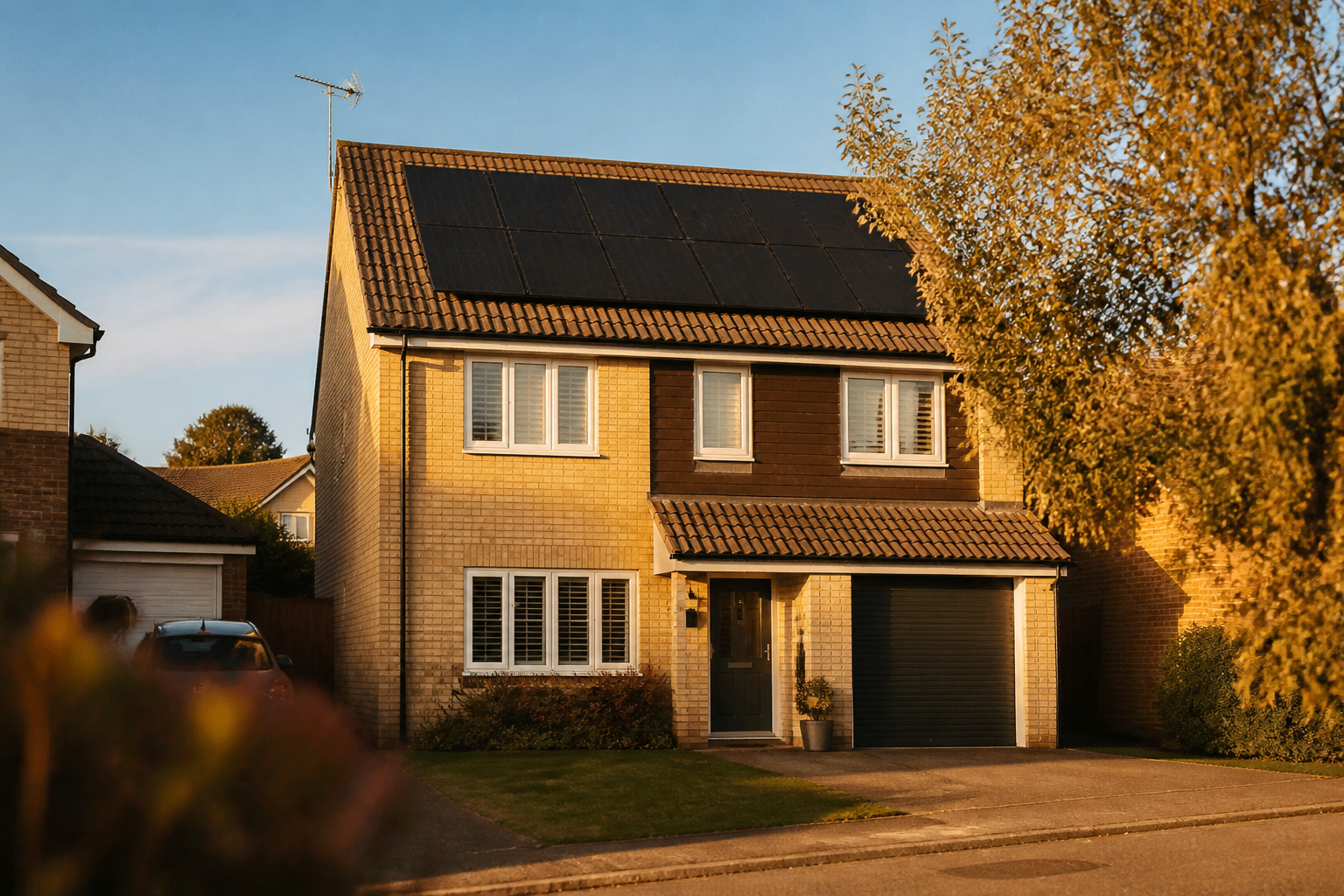
Installing a rooftop solar photovoltaics (PV) system is one of the most direct ways for a UK homeowner to generate low-carbon electricity on site. Modern residential systems are reliable and simple to operate, but navigating equipment choices, installer accreditations, and grid connections requires clear preparation. Understanding the technical requirements and administrative steps beforehand helps ensure your installation runs smoothly and delivers expected performance.
What should you check before getting quotes?
Before contacting installation companies, assess your property's physical and electrical characteristics. Not every roof is suitable for solar PV, and identifying constraints early saves time during the initial design phase.
First, check your roof's orientation, pitch, and shading. In the UK, south-facing roofs tilted at an angle between 30 and 40 degrees generate maximum annual yield. East and west-facing roofs are also viable, generating approximately 80 to 85 percent of a south-facing system's output, often distributing generation more evenly across the morning and afternoon. North-facing roofs are generally unsuited due to lower irradiance.
Look for obstacles that cast shadows, such as nearby trees, dormer windows, or chimneys. Even partial shading on a single solar module can reduce output across an entire electrical string, unless your installer specifies microinverters or DC optimisers to isolate affected panels.
Second, consider the condition and structure of your roof. Solar panels and mounting hardware add a load of roughly 12 to 15 kilograms per square metre. Roof timbers must be structurally sound, and tiled or slate coverings must be in good repair. If your roof needs replacing within the next five to ten years, undertake roof repairs before fitting solar panels, as removing and reinstalling equipment later adds significant labor costs.
Third, examine your electrical setup. Your main consumer unit (fuse box) must have adequate space and capacity for a dedicated solar circuit. You will also need a smart meter capable of measuring exported electricity if you plan to register for export tariffs.
What does a solar PV installation cost and require?
According to figures published by the Energy Saving Trust, an average 4 kilowatt-peak (kWp) residential solar PV system costs approximately £6,000 to £7,000. System costs vary based on component quality, panel efficiency, mounting hardware, roof accessibility, and whether scaffolding is straightforward to erect.
When evaluating quotes, ensure every itemised estimate includes:
- Clear specifications for the panels, including peak capacity in watts and power output degradation guarantees.
- Inverter manufacturer details and warranty length, typically 5 to 10 years, with options to extend.
- Scaffolding hire, roof mounting rails, cabling, AC/DC isolation switches, and safety equipment.
- All grid connection notifications and compliance documentation.
To ensure quality and retain eligibility for export payments, your installation must meet recognized UK technical and consumer protection standards. Look for installers accredited by the Microgeneration Certification Scheme (MCS). MCS certification confirms that equipment meets safety standards and that the installation complies with building regulations.
Installers should also belong to a recognized consumer code, such as the Renewable Energy Consumer Code (RECC) or the Home Insulation & Energy Systems Contractors Scheme (HIES). Electrical connection work must be signed off by a competent person registered with an organization such as NICEIC or NAPIT.
What questions should you ask a solar installer?
When reviewing proposals from accredited companies, ask specific technical and operational questions to compare offers fairly:
- What exact output do you project for this roof design, and what software model generated the estimate?
- Does the design use a single string inverter, or are microinverters or optimisers required to manage shading?
- Will you handle the Distribution Network Operator (DNO) application process directly on my behalf?
- What structural checks will be performed on the roof structure before installation begins?
- What warranties apply to the panels, inverter, mounting frame, and workmanship?
For systems up to 3.68 kW on a single-phase electricity supply, installers connect under the standard G98 process, which involves notifying the DNO after commissioning. Systems larger than 3.68 kW require prior approval from the DNO under the G99 process, which can take several weeks before physical installation work begins.
What is the realistic timeline for installation?
From initial inquiry to final grid registration, a typical residential solar project takes between four and eight weeks. The table below outlines the standard stages involved.
| Project Stage | Typical Duration | Key Actions and Requirements |
|---|---|---|
| Desk-Based Assessment | 3 to 5 days | Provider assesses roof size, orientation, and energy usage data |
| Site Survey | 1 to 2 weeks | Structural check, electrical consumer unit inspection, cable route planning |
| DNO Clearance | 1 to 4 weeks | G98 notification post-install, or G99 prior authorization for systems over 3.68 kW |
| On-Site Work | 1 to 2 days | Scaffolding erection, roof mounting, panel fitting, wiring, inverter installation |
| Commissioning & MCS | 1 to 2 weeks | System testing, handover pack delivery, MCS certificate issue, SEG registration |
What happens during the physical installation?
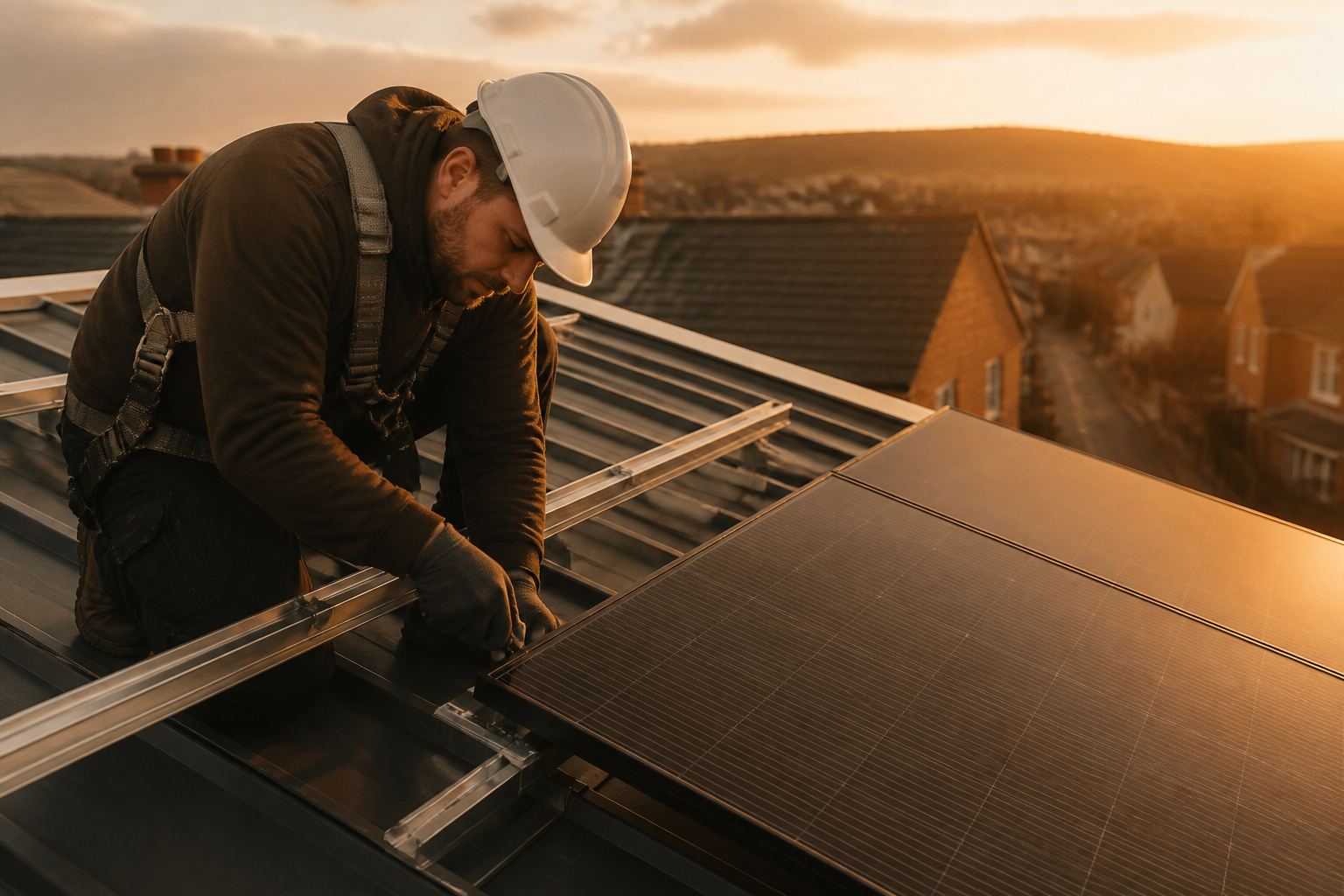
On the day of installation, the team sets up safety scaffolding around the eaves. Roofers fit heavy-duty stainless steel or aluminium mounting brackets directly into the roof rafters, placing roof tiles carefully back into position over flashing kits to maintain weatherproofing.
Aluminum rails attach to these brackets, and solar panels lock securely into place. In parallel, an electrician installs DC wiring running from the roof array into the loft space or utility area, connecting to the DC isolator switch and inverter. The inverter converts generated direct current (DC) into alternating current (AC), feeding into your home's main consumer unit through a dedicated breaker and AC isolator switch.
Once completed, the electrician tests insulation resistance, earthing, and safety shutdown mechanisms before powering the system on. You receive a complete handover pack containing safety instructions, component manuals, warranty cards, and your MCS certificate.
What this means for you
Installing solar PV gives you direct control over a portion of your electricity supply, lowering operational energy costs and reducing your household carbon footprint. Taking a structured approach, checking roof suitability, requesting itemised MCS-certified quotes, and verifying DNO paperwork ensures your system runs safely and reliably for decades.
If your employer offers the Net Zero Home Scheme, delivered by Net Zero Benefits alongside The Electric Car Scheme, you can access member pricing on solar PV, battery storage, and heat pumps installed by accredited professionals without salary sacrifice or payroll deductions.
Frequently asked questions
Do I need planning permission for rooftop solar panels?
In England, Wales, and Scotland, standard rooftop solar installations fall under Permitted Development Rights, meaning formal planning permission is not required. However, exceptions apply if your building is listed, located within a conservation area, or if panels project higher than the highest part of the roof.
How long do residential solar PV panels last?
Most modern solar panels carry a linear performance warranty guaranteeing 80 to 85 percent of original output after 25 years. String inverters typically have a shorter lifespan of 10 to 12 years and may need replacement once during the lifetime of the panel array.
Can I register for export payments without an MCS certificate?
According to rules established by Ofgem for the Smart Export Guarantee (SEG), electricity suppliers require proof of system compliance. An MCS certificate, or an equivalent accredited scheme certification, is mandatory to register for export tariffs and receive payment for excess solar energy exported to the grid.
Sources
- Solar Panels Guide, Energy Saving Trust
- MCS Standards and Certification, Microgeneration Certification Scheme
- Smart Export Guarantee (SEG) Guidance, Ofgem