MCS 020 Noise Rules for Heat Pump Planning Approval
Learn how the MCS 020 noise assessment determines permitted development rules for UK heat pump installations, boundary distance limits and decibel targets.
- Written by
- Net Zero Home Scheme editorial team
- Last updated
- Topic
- heat pumps, regulation, mcs
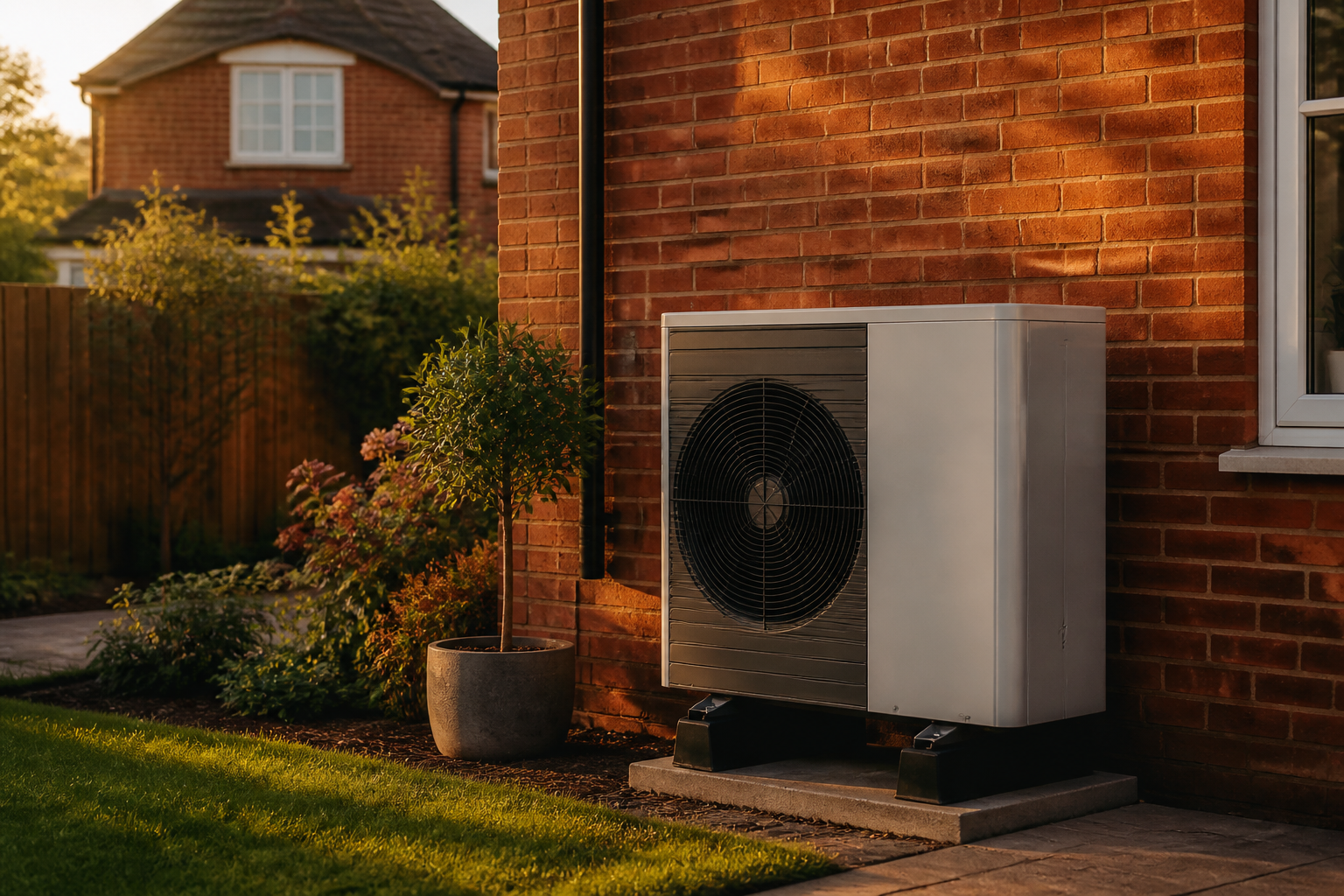
Installing an air source heat pump is one of the most effective ways to lower household carbon emissions, but external units create sound from internal fans and compressors. To ensure heat pumps operate quietly without disturbing nearby residents, planning rules in England, Wales, and Scotland rely on a standardised acoustic standard known as MCS 020. This standard sets strict limits on the noise levels permitted at neighbouring boundary windows and doors.
Understanding how MCS 020 works, how installers calculate acoustic impact, and what options exist if a site is tight helps homeowners plan an installation smoothly without encountering unexpected planning delays.
What is MCS 020 and why does it matter?
MCS 020 is the official acoustic planning standard published by the Microgeneration Certification Scheme. Under Permitted Development Rights across England and Wales, defined in the Town and Country Planning (General Permitted Development) Order 2015, homeowners can install an air source heat pump without applying for full planning permission, provided the installation satisfies specific physical and noise criteria.
The primary noise requirement of MCS 020 is that the sound pressure level generated by the outdoor unit must not exceed 42 decibels, expressed as 42 dB L_Aeq,5min, at the assessment position. The assessment position is defined as the centre point of the nearest window or door of a habitable room in a neighbouring property. Habitable rooms include bedrooms, living rooms, dining rooms, and kitchens, but exclude bathrooms, hallways, and staircases.
If an installation meets this 42 dB threshold and complies with other statutory rules, such as outdoor unit volume limits and distance from property boundaries, it qualifies as permitted development. If the calculated noise level exceeds 42 dB, the installation cannot proceed under permitted development rules, and formal planning permission must be sought from the local planning authority.
How is heat pump noise calculated under MCS 020?
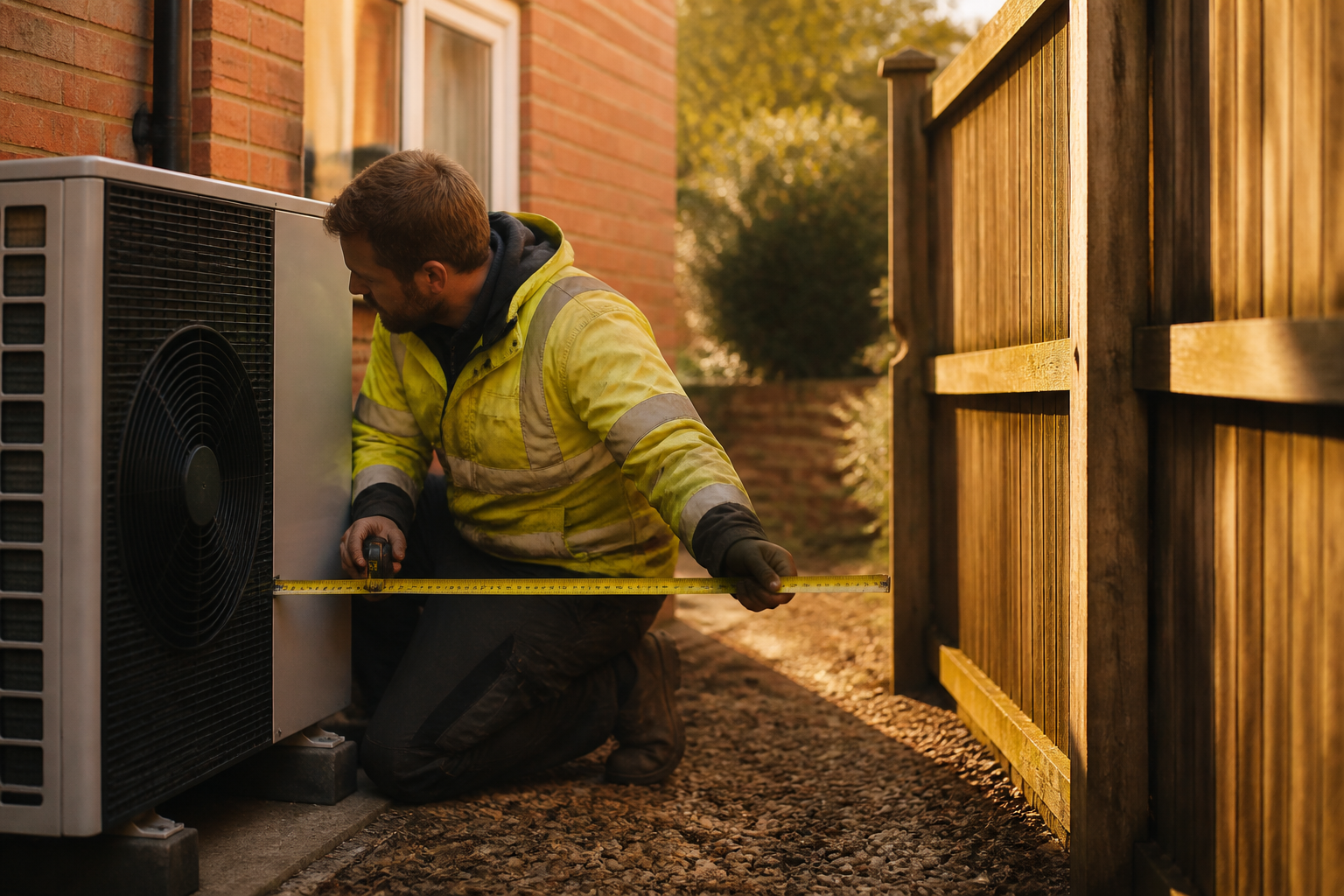
Installers do not need to measure sound with microphones late at night to perform an MCS 020 assessment. Instead, the standard uses a standardized mathematical procedure based on verified manufacturer laboratory data and the physical geometry of your property.
According to MCS guidelines, the calculation accounts for five distinct acoustic factors:
- Sound power level: The total acoustic energy emitted by the heat pump unit, measured in decibels under test standard BS EN 12102. Manufacturers publish sound power figures in their technical datasheets.
- Directivity factor: How sound reflects off nearby solid surfaces. A heat pump sitting in an open garden radiates sound in all directions (Q value of 2). A unit positioned flat against a wall reflects sound forward, doubling sound energy (Q value of 4). A unit placed in a tight corner between two walls concentrates sound further (Q value of 8).
- Distance attenuation: Sound level decreases as distance increases due to the inverse square law. The assessment measures the direct distance from the heat pump fan face to the neighbouring window or door.
- Barrier attenuation: Solid structures that completely block line of sight between the heat pump and the neighbouring window reduce sound levels. A solid brick wall or heavy timber fence can reduce perceived sound by up to 5 or 10 decibels, provided there are no gaps.
- Background noise allowance: MCS 020 assumes a conservative background sound level, ensuring that the heat pump remains unobtrusive even during quiet night periods.
| Calculation Step | Factor Considered | Impact on Final Sound Level |
|---|---|---|
| 1. Sound Power Level | Manufacturer rating (BS EN 12102) | Base acoustic rating of the outdoor unit |
| 2. Directivity (Q Value) | Wall or corner reflections | Adds 3 dB for wall, 6 dB for corner |
| 3. Distance Attenuation | Distance to neighbour window | Reduces sound level by around 6 dB per doubling of distance |
| 4. Barrier Attenuation | Solid walls or heavy fencing | Reduces sound level by 5 dB to 10 dB if line of sight is blocked |
| 5. Final Assessment | Sum of factors at neighbour window | Must be 42 dB L_Aeq,5min or lower for permitted development |
What happens if a heat pump fails the MCS 020 noise assessment?
If the initial calculation shows a sound pressure level higher than 42 dB at the neighbour's window, the project cannot proceed under permitted development rights as originally designed. However, installers and householders have several practical ways to bring the installation into compliance:
- Move the outdoor unit: Relocating the heat pump further from the property boundary or away from the neighbour's window is often the simplest fix. Increasing distance is highly effective at reducing decibel levels.
- Add acoustic barriers: Installing a solid timber fence or brick garden wall that breaks line of sight between the heat pump fan and the neighbouring window provides significant acoustic attenuation.
- Select a quieter heat pump model: Sound power levels vary widely between manufacturers and models. Units with larger fan blades, variable-speed compressors, or sound-dampening insulation often operate 3 to 6 decibels quieter than budget alternatives.
- Enable quiet mode settings: Many modern heat pumps feature programmable quiet or night modes that cap fan speeds during nighttime hours, reducing sound output when neighbours are sleeping.
- Apply for formal planning permission: If physical constraints prevent meeting the 42 dB limit, you can submit a planning application to your local council. Local planning officers evaluate the local context, background ambient noise, and potential disturbance before deciding.
What this means for you
Before committing to a heat pump installation, ensure your chosen installer performs a site survey and completes a formal MCS 020 calculation sheet. This documentation is required to confirm permitted development status and is essential for claiming government incentives like the Boiler Upgrade Scheme grant in England and Wales.
Choosing an accredited installer guarantees that noise calculations comply with building standards and local planning legislation, protecting you from potential noise complaints or enforcement action later. Employees accessing member pricing on accredited heat pump installations through the Net Zero Home Scheme receive installations carried out by certified installers who complete MCS 020 calculations prior to fitting.
Frequently asked questions
Can I install an air source heat pump without planning permission?
Yes, in most cases in England and Wales, heat pump installations qualify as permitted development provided they meet MCS 020 noise standards, do not exceed 0.6 cubic metres in volume, and sit at least one metre from the property boundary. Conservation areas and listed buildings have stricter rules.
How loud is 42 decibels in practical terms?
A noise level of 42 decibels measured at a neighbour's window is equivalent to quiet library background noise or soft conversational speech spoken in a quiet room. Inside the neighbouring home with windows closed, the sound is usually imperceptible above normal indoor background noise.
Does MCS 020 apply to ground source heat pumps?
MCS 020 specifically applies to air source heat pumps because their outdoor evaporator units use fans that exhaust air directly into the environment. Ground source heat pumps house their compressor units indoors or in outbuildings and collect heat from ground loops, so they do not require an MCS 020 outdoor noise calculation.
Sources
- MCS 020 Standard for Heat Pump Noise Assessment, Microgeneration Certification Scheme
- Permitted Development Rights for Renewable Energy, Department for Levelling Up, Housing and Communities
- Air Source Heat Pump Installation Guide, Energy Saving Trust