Understanding Solar Panel Degradation Physics and Warranties
Learn how solar panels lose output over time through LID, PID, and thermal stress, and how performance warranties protect your investment.
- Written by
- Net Zero Home Scheme editorial team
- Last updated
- Topic
- solar, energy efficiency, home energy
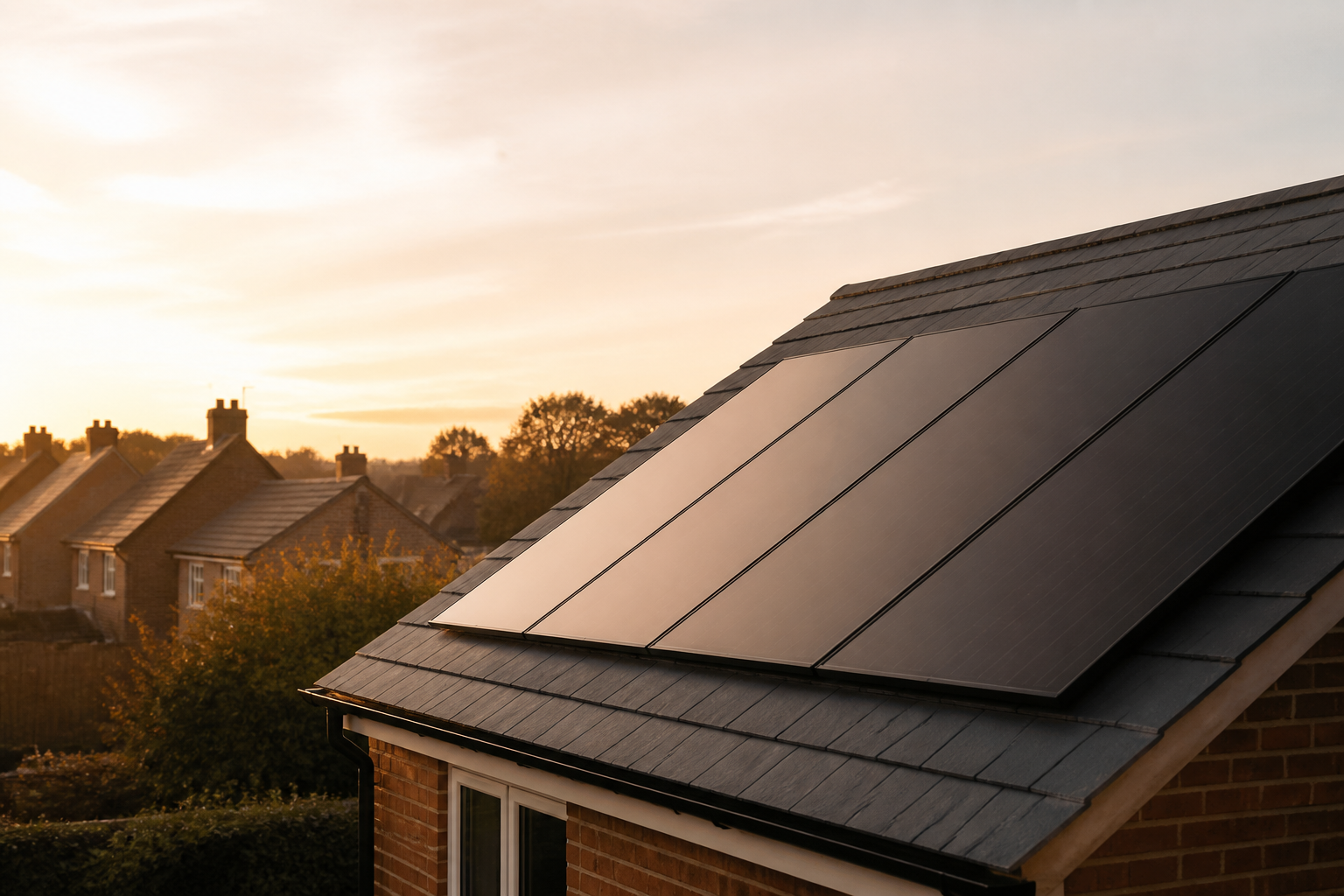
Solar photovoltaic (PV) panels do not suddenly stop working after a set number of years. Instead, their electrical generation declines gradually over time through physical and chemical mechanisms inherent to semiconductor materials and prolonged exposure to outdoor weather. Understanding why solar panels lose output, how quickly this occurs, and what manufacturer performance warranties actually guarantee enables householders to project long-term financial returns accurately and choose the right panel technology for their roof.
What causes solar panel degradation?
Solar panel degradation is driven by specific physical processes within the silicon cells, polymer layers, and electrical contacts. While panels have no moving parts, continuous exposure to sunlight, voltage potentials, moisture, and temperature fluctuations alters their microscopic structure over time.
Light-Induced Degradation (LID)
Light-Induced Degradation occurs almost immediately when a solar panel is exposed to sunlight for the first time. In standard p-type crystalline silicon cells, boron is added during manufacturing to create a positive electrical charge layer. However, small trace amounts of oxygen remain trapped within the silicon wafer. When sunlight hits the cell, boron and oxygen atoms react to form boron-oxygen defect complexes. These complexes act as electron traps, capturing free electrons before they can leave the cell as usable current. This initial LID phase causes a drop of 1% to 3% in power output within the first few days or weeks of operation.
Potential-Induced Degradation (PID)
Potential-Induced Degradation occurs in systems where high DC voltage strings create a large potential difference between the active solar cells and the grounded aluminium frame. Under humid conditions, this voltage gradient causes positive sodium ions from the front glass cover to migrate into the silicon wafer. These sodium ions disrupt the electrical field within the junction of the cell, leading to leakage currents and output drops that can exceed 20% if unmitigated. Modern panels reduce this risk by using anti-reflective coatings and glass formulations tested under international standard IEC 62804.
Microcracks and Thermal Cycling
Daily temperature changes cause solar panels to expand and contract. Because the silicon wafers, copper interconnecting busbars, and glass covers expand at different rates, thermal stress builds up across the solder joints. Over years of seasonal cycles, microscopic fractures can form in the thin silicon wafers. While invisible to the naked eye, these microcracks can sever electrical pathways across a cell, creating isolated regions that no longer contribute to electricity generation and generating local hot spots.
Encapsulant Breakdown and UV Exposure
Solar cells are sandwiched between protective layers of polymer encapsulant, typically Ethylene-Vinyl Acetate (EVA), and covered by toughened glass. Exposure to ultraviolet (UV) radiation over decades causes polymer chains within the encapsulant to degrade and yellow slightly. This yellowing reduces light transmission through to the silicon cells, resulting in a small, steady drop in annual output.
How fast do modern solar panels degrade?
The rate of annual output loss depends largely on the underlying semiconductor technology. Testing by the National Renewable Energy Laboratory (NREL) and independent test laboratories shows that cell architecture determines both initial first-year loss and ongoing degradation rates.
Traditional Passivated Emitter and Rear Cell (PERC) technology relies on p-type silicon wafers. Because these contain boron, they experience initial LID followed by an average annual degradation rate of approximately 0.5% to 0.55% per year.
Newer n-type silicon technologies, including Tunnel Oxide Passivated Contact (TOPCon) and Heterojunction (HJT), use phosphorus instead of boron as a dopant. Because phosphorus does not form defect complexes with oxygen, n-type panels are fundamentally immune to boron-oxygen LID. As a result, n-type panels experience lower initial output loss and maintain a lower annual degradation rate of 0.3% to 0.4% per year.
| Cell Technology | Wafer Type | First Year Loss | Annual Degradation | 25-Year Retained Output | Primary Loss Mechanism |
|---|---|---|---|---|---|
| PERC | P-Type (Boron) | 1.5% to 2.0% | 0.50% to 0.55% | 84.8% to 86.0% | Boron-oxygen LID |
| TOPCon | N-Type (Phosphorus) | 1.0% | 0.40% | 89.4% | Contact paste moisture sensitivity |
| Heterojunction (HJT) | N-Type (Phosphorus) | 1.0% | 0.30% to 0.35% | 90.6% to 91.8% | High temperature processing limits |
| Back-Contact (IBC) | N-Type (Phosphorus) | 0.5% to 1.0% | 0.25% to 0.30% | 92.0% to 93.2% | Manufacturing complexity and cost |
Over a 25-year operational lifetime, an n-type panel retaining 89% of its original rated power generates significantly more total kilowatt-hours than a p-type panel retaining 84%, even if both panels had identical nameplate capacities on the day of installation.
Linear performance warranties vs product warranties
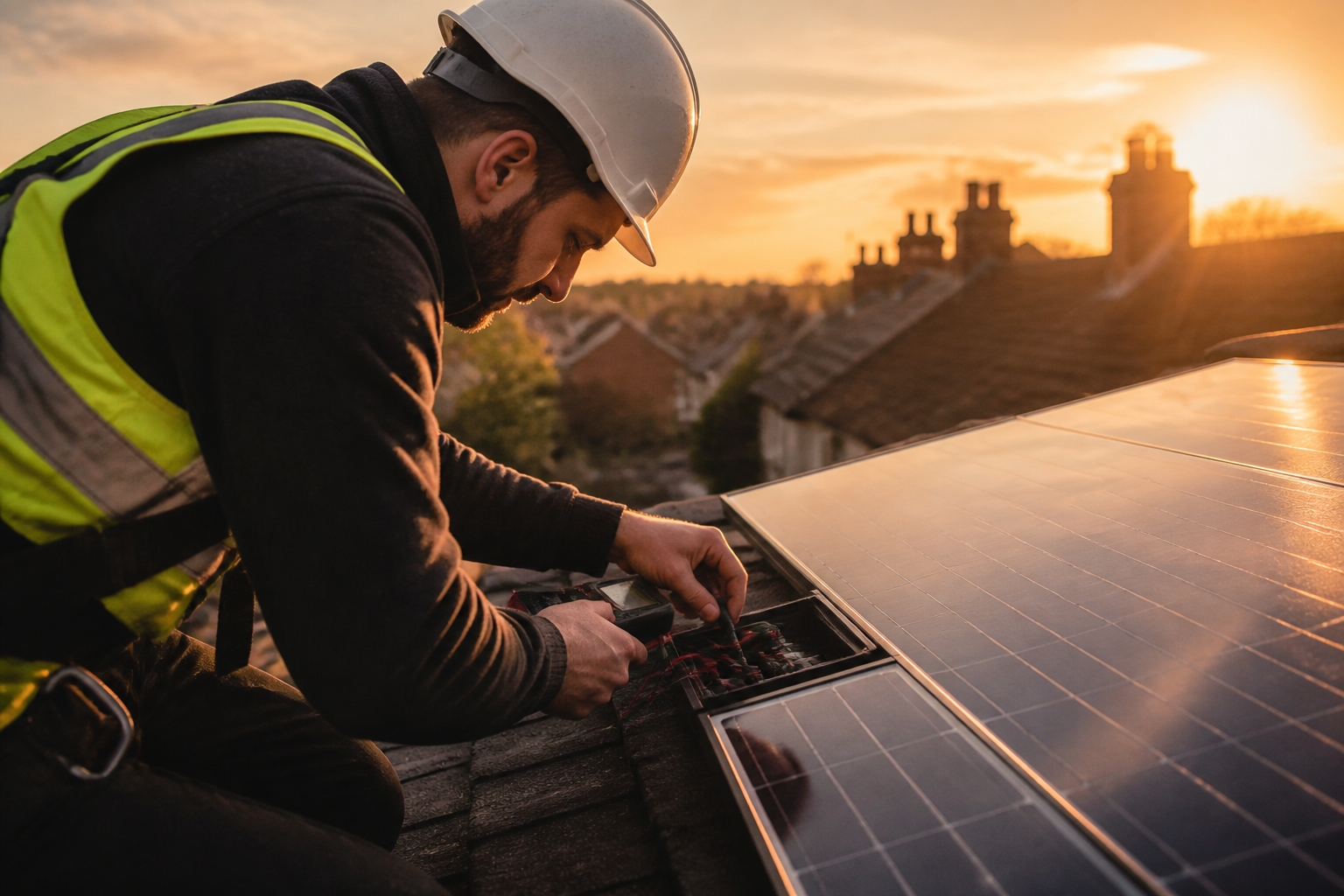
When evaluating solar panel warranties, it is vital to distinguish between two separate guarantees provided by manufacturers: the product warranty and the linear performance warranty.
The product warranty covers defects in materials and workmanship, such as junction box failures, frame corrosion, micro-cracks from factory handling, or moisture ingress causing delamination. Standard product warranties range from 12 to 25 years depending on the manufacturer and tier of panel.
The linear performance warranty guarantees that power output will not drop below a specified percentage of the panel's original rated output over time. Typically, a linear warranty promises that output will not fall below 98% in year one, followed by a maximum drop of 0.4% to 0.55% per year, culminating in a guaranteed output of 85% to 90% at year 25.
In practice, claiming against a linear performance warranty can be technically challenging. Power output must be measured under Standard Test Conditions (STC), which specify an irradiance of 1,000 W/m², a cell temperature of 25°C, and a light spectrum of AM1.5. Because outdoor sunlight and temperatures in the UK rarely match these exact lab conditions, proving a small underperformance shortfall requires sending the module to a certified laboratory for flash testing under IEC 61215 protocols, or conducting calibrated on-site measurement with a solar simulator.
Trade-offs and technology choices
Choosing higher grade panels with ultra-low degradation rates involves balancing up-front capital cost against lifetime generation.
N-type TOPCon and HJT panels generally carry a price premium over standard PERC panels. For roofs with constrained space where every square metre must yield maximum lifetime energy, investing in n-type technology is often cost effective because the higher retained output per square metre offsets the initial purchase price over 20 to 25 years.
Conversely, for large roof spaces where physical area is not a limiting factor, lower cost p-type panels can achieve a faster financial payback period. Because the UK climate features moderate temperatures and diffuse sunlight, UK solar arrays experience lower thermal degradation stress than panels installed in hot, high UV climates. According to data published by the Energy Saving Trust, array orientation, shading, and inverter efficiency frequently exert a larger influence on real-world annual yield than subtle differences in annual degradation rates.
What this means for you
When planning a home solar installation, understanding panel degradation helps you evaluate installer quotes and performance projections realistically:
- Verify panel certification: Confirm that proposed modules are certified to IEC 61215 for design qualification and IEC 62804 for PID resistance.
- Compare warranty structures: Look for panels that combine a 25-year product warranty with a linear performance warranty guaranteeing at least 87% output at year 25.
- Account for degradation in financial models: Ensure financial projections incorporate a realistic 0.5% annual degradation curve rather than assuming static year-one generation for 25 years.
- Select certified installers: Ensure your installation is completed by an MCS certified installer and backed by TrustMark registration.
For working households exploring solar PV and battery storage options, the Net Zero Home Scheme provides member pricing on accredited solar and storage installations without salary sacrifice or payroll deductions.
Frequently asked questions
Do solar panels stop producing electricity after 25 years?
No. A 25-year performance warranty means the manufacturer guarantees the panel will still produce 80% to 90% of its original rated output after 25 years. Solar panels routinely continue generating electricity for 30 to 40 years, albeit at gradually reduced capacity.
How do I know if my solar panels are degrading faster than expected?
You can monitor yearly generation totals through your inverter monitoring software and compare annual kWh totals against historical weather data. If generation drops significantly faster than 0.5% per year, the cause is usually shading, dirty glass, or an electrical string fault rather than accelerated cell degradation.
Does cleaning solar panels reduce degradation?
Cleaning removes surface dirt, bird droppings, and soot that temporarily block sunlight, restoring temporary output loss known as soiling. While cleaning does not reverse internal chemical degradation such as LID, removing heavy debris prevents localised hot spots that can cause permanent cell damage.
Sources
- Solar Panel Home Guide, Energy Saving Trust
- MCS Installation Standards and Quality Assurance, Microgeneration Certification Scheme
- PV Lifetime Performance and Degradation Studies, National Renewable Energy Laboratory
- International Standards for Photovoltaic Modules, International Electrotechnical Commission