New Guide Prepares Councils for Community Solar Grants
A new industry guide published on 18 August 2026 aims to help local councils access community solar backing ahead of a new Great British Energy Partnership Fund.
- Written by
- Net Zero Home Scheme editorial team
- Last updated
- Topic
- solar, policy, home energy

On 18 August 2026, environmental publisher edie reported the release of a dedicated practical guide designed to help local authorities set up and scale community solar projects across England, Scotland and Wales. The guidance arrives as Great British Energy prepares to launch its Partnership Fund, a national financial mechanism intended to co-fund joint clean energy developments between local councils and community organizations.
The new resource sets out structural, legal and planning frameworks for local authorities seeking to deploy solar photovoltaic systems on public buildings, council housing stock and municipal land. By establishing standardized governance and shared-ownership models, the initiative aims to shorten development timescales and clear technical hurdles before public funding opens for applications.
What the new guidance covers
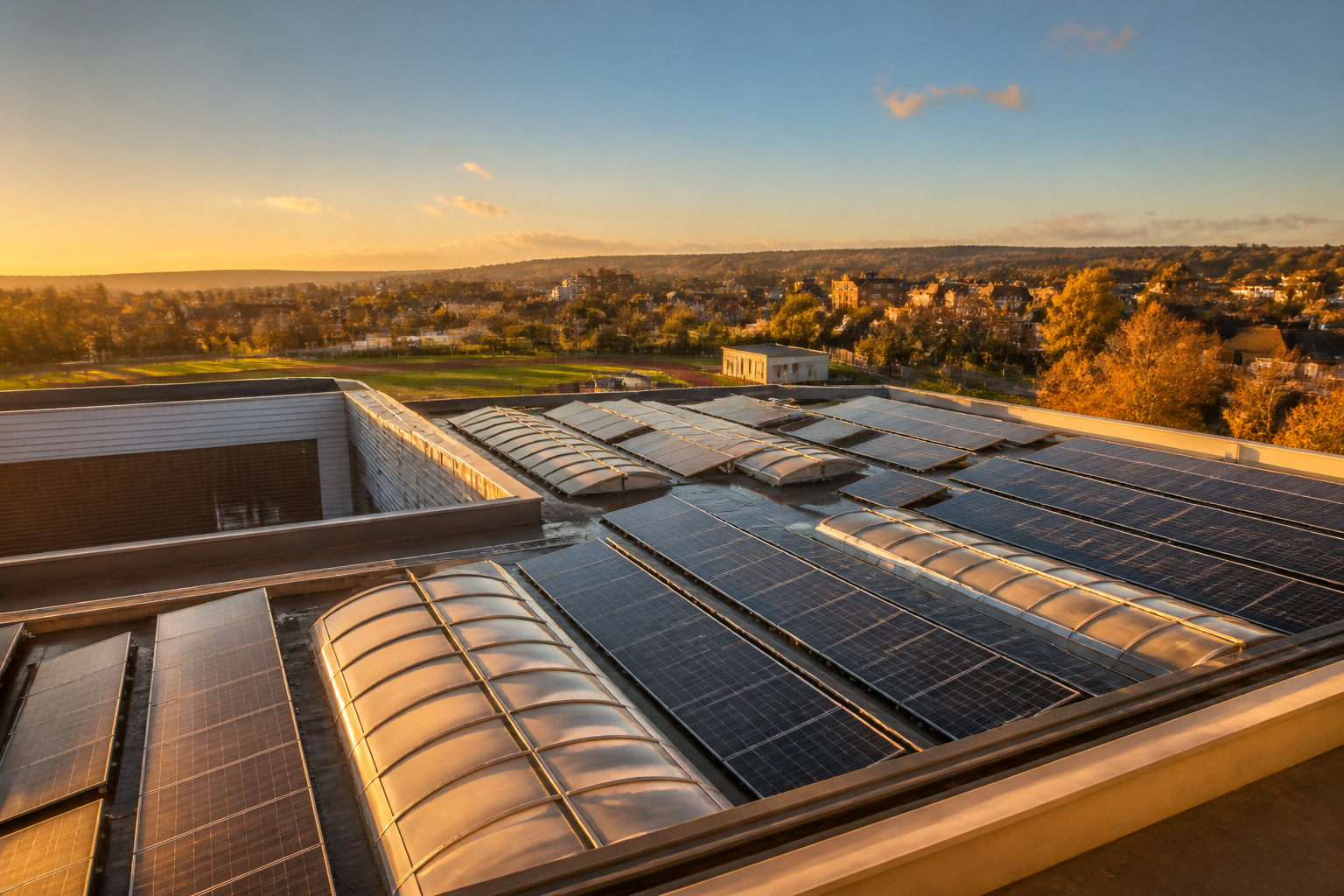
Developing community-owned solar capacity in the UK historically suffered from fragmented regulatory processes and complex grid interconnection applications under Energy Network Association rules. Local councils often lack dedicated engineering teams to navigate distribution network operator (DNO) connection offers, particularly for medium-scale rooftop or ground-mounted arrays ranging from 50 kWp to 1 MWp.
The guide outlines clear pathways for three distinct delivery models:
- Council-led community rooftops: Installation on schools, leisure centres and administrative buildings where generation is consumed on-site and surplus export is shared with local residents.
- Co-operative ground-mounted arrays: Joint ventures on non-agricultural municipal land where community benefit societies raise local share capital alongside council grant funding.
- Social housing microgrids: Grouped rooftop solar systems linked with shared battery storage to supply affordable power directly to tenant distribution boards.
To facilitate faster deployment, the framework standardizes legal templates for power purchase agreements (PPAs), lease arrangements and roof-rent agreements, reducing external legal costs for local authorities.
What the numbers say
According to reporting by edie on 18 August 2026, the forthcoming Great British Energy Partnership Fund is expected to catalyze municipal clean energy investment by providing grant capital to de-risk early-stage project development. While full financial allocations for the fund have not yet been disclosed by government ministers, the guidance targets local projects capable of delivering renewable electricity directly to municipal networks and domestic consumers.
edie reported on 18 August 2026 that commercial and public sector organizations face substantial barriers from electrical grid connection bottlenecks. Major distribution network operators across the UK currently report queue times of several years for medium-scale commercial solar installations seeking firm export capacity under G99 grid connection regulations. The standardizing framework aims to help councils apply for non-firm or flexible export agreements to bypass these traditional delays.
| Project Scale | Typical Capacity | Primary Grid Impact | Target Ownership Structure |
|---|---|---|---|
| Public Building Rooftop | 50 kWp to 250 kWp | Standard G98/G99 Notification | Council-owned, leased to community |
| Social Housing Cluster | 100 kWp to 500 kWp | Local Transformer Upgrades Needed | Joint Municipal and Housing Association |
| Ground-Mounted Park | 500 kWp to 2 MWp | Formal DNO Queue and Curtailment | Community Benefit Society (CBS) |
Where specific regional figures or funding allocations remain unconfirmed by the Department for Energy Security and Net Zero, local authorities are advised to conduct initial structural roof surveys and preliminary G99 capacity checks before submitting formal grant bids.
What this means for your home
For individual householders, the growth of municipal and community solar creates distinct opportunities and technical choices. Community solar schemes offer a way for households in rented accommodation or flats with unsuitable roof spaces to participate in local clean generation. However, if you own your home, on-site roof-mounted solar PV combined with domestic battery storage continues to deliver direct advantages that off-site schemes cannot match.
Comparing home solar with community schemes
When power is generated directly on your roof, you avoid national transmission costs, distribution network charges and retail supplier margins. Every kilowatt-hour (kWh) generated by a home solar array and consumed on-site offsets electricity imported at standard retail tariff rates, typically saving around 24p to 28p per kWh based on current price cap levels.
In contrast, power received from a local community solar array is transmitted through the public grid and subject to network delivery fees. As a result, participating in a council or community scheme generally offers lower direct bill savings than an equivalent home system, though it requires zero home maintenance and no roof space.
If you are considering home renewable installations, the primary operational factors to review include:
- Rooftop orientation and shade: South, east and west facing roofs with minimal shading remain ideal candidates for direct domestic PV.
- Grid connection rules: Home installations up to 3.68 kW per phase fall under simplified G98 notification rules, allowing rapid grid connection without long DNO wait times.
- Self-consumption technology: Adding a domestic battery or hot water immersion diverter allows you to store daytime solar output for evening household use, maximizing yield.
Households considering off-site community schemes should verify whether local energy tariffs offer true peer-to-peer supply arrangements or simple fixed financial dividends from joint projects.
What this means for employers
Rising national interest in local renewable generation reflects broader household concern over volatile energy costs and long-term living expenses. As public attention turns to community energy initiatives, reward leads and HR directors are increasingly asked for direct home-based sustainability benefits that provide tangible financial relief to employees.
While municipal projects take months or years to build and commission, employer-led domestic energy benefits can be deployed immediately. Through the Net Zero Home Scheme, employers can give staff access to member pricing on accredited solar PV, home battery storage, heat pumps and plug-in solar arrays. The scheme is delivered by Net Zero Benefits alongside The Electric Car Scheme, carrying no cost, no salary sacrifice and no payroll administration for the employer.
Providing home energy upgrade support allows organizations to align workplace benefits with wider net zero targets. Employees gain professionally installed, MCS-accredited installations that immediately reduce household running costs and improve home energy performance certificates (EPCs).
Frequently asked questions
When will the Great British Energy Partnership Fund open?
As reported by edie on 18 August 2026, the specific opening date and total grant capital for the Partnership Fund have not yet been finalized by ministers. The published guidance is designed to prepare local councils in advance so projects are investment-ready when applications open.
Can householders buy electricity directly from local council solar projects?
Direct supply depends on whether the local project uses a peer-to-peer energy trading platform or a partnered supply licence. In many existing schemes, households purchase shares in a community benefit society and receive annual dividend payments rather than a customized home energy tariff.
How does home solar PV compare to joining a community project?
Home solar PV provides immediate direct savings by offsetting retail electricity tariffs on-site. Community energy projects suit households that live in listed buildings, rented properties or flats where installing personal solar panels is structurally or legally impractical.