Installing a Hybrid Heat Pump: A UK Homeowner Guide
Learn how hybrid heat pumps combine gas boilers with air source technology, including typical costs, sizing rules, installer standards and practical setup timelines.
- Written by
- Net Zero Home Scheme editorial team
- Last updated
- Topic
- heat pumps, energy efficiency, energy bills
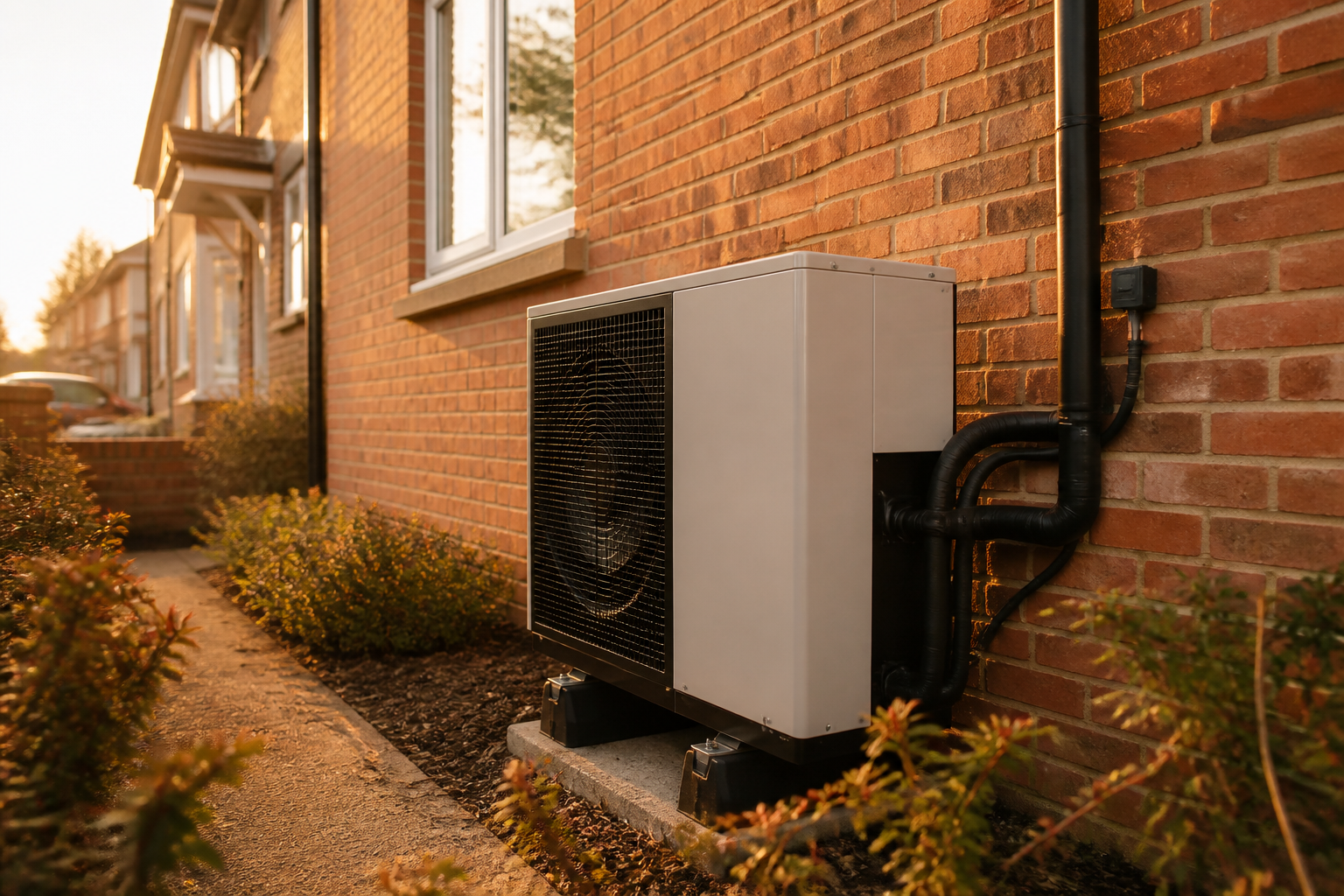
Hybrid heat pumps offer a middle path between a traditional gas boiler and a full zero-carbon air source heat pump installation. By pairing an outdoor air-to-water heat pump with a gas or oil boiler, home heating can transition largely to renewable electricity without requiring immediate radiator replacements or hot water cylinder installations. Understanding how these dual-fuel systems operate, what they cost to install, and where their operational limits lie helps householders decide if a hybrid setup suits their property.
How a hybrid heat pump system operates
A hybrid heat pump connects a compact outdoor air source unit, typically rated between 4 kW and 7 kW, directly to an existing or new central heating boiler. An intelligent control system continuously monitors outdoor temperatures, internal heating demand, and electricity and gas unit tariffs.
During mild and moderate winter weather, when outdoor temperatures remain above 3°C to 5°C, the outdoor heat pump handles the space heating. At these ambient temperatures, an air source heat pump operates at a high seasonal coefficient of performance (SCOP), delivering three to four units of heat for every unit of electricity consumed.
When external temperatures drop sharply during deep winter spells, or when there is an immediate demand for high-temperature domestic hot water, the control unit automatically signals the gas boiler to ignite. The boiler supplies water at flow temperatures of 60°C to 70°C to satisfy the load quickly, ensuring comfort is maintained without running the heat pump at low efficiency.
What to check before choosing a hybrid system
Before engaging an installer, householders should complete a basic physical and logistical assessment of their property:
- Radiator sizing: Verify whether existing radiators can deliver adequate heat at lower flow temperatures, such as 45°C to 50°C. Larger double-panel radiators allow the heat pump to run for more hours during the year.
- Outdoor space: Ensure there is clear ground or wall space for the outdoor unit, complying with MCS 020 sound planning standards, which require noise levels at the nearest neighboring window to remain below 42 dB(A).
- Current boiler condition: Assess the age and efficiency of the existing boiler. Hybrids work best when paired with a modern condensing boiler. If the existing boiler is over fifteen years old, replacing it alongside the heat pump installation is usually recommended.
- Electrical capacity: Check that the main consumer unit has a spare way and adequate electrical headroom for a dedicated 16A or 20A circuit.
Hybrid heat pump costs and grant eligibility
Supply and installation costs for a UK hybrid heat pump system generally range between £5,000 and £10,000, depending on whether the existing boiler is retained or replaced, and whether dynamic controls are installed.
A crucial financial detail for UK householders involves grant eligibility. According to Ofgem guidance, the Boiler Upgrade Scheme (BUS), which provides a £7,500 grant for clean heating in England and Wales, specifically excludes hybrid heat pumps. The scheme requires the total replacement of fossil fuel heating appliances. Consequently, homeowners installing a hybrid system must fund the entire capital cost, although the installation benefits from the zero-rate VAT policy on energy-saving materials through to March 2027.
Additionally, because a hybrid system retains a fossil fuel connection, the property remains subject to the gas daily standing charge, which according to Energy Saving Trust data adds approximately £110 to £120 to annual household utility overheads regardless of gas consumption volume.
Comparing heating upgrade options

Evaluating hybrid heat pumps against alternative heating choices helps clarify trade-offs in performance, setup requirements, and running characteristics.
| Feature or Parameter | Hybrid Heat Pump System | Full Air Source Heat Pump | Modern Condensing Gas Boiler |
|---|---|---|---|
| Typical Installed Cost | £5,000 to £10,000 | £11,000 to £15,000 (gross) | £2,500 to £4,000 |
| Boiler Upgrade Scheme Eligible | No | Yes (£7,500 grant available) | No |
| Hot Water Cylinder Required | Optional (works with combis) | Yes (unvented cylinder needed) | No (if using combi) |
| Radiator Upgrades Needed | Minimal to none | Moderate to extensive | None |
| Retains Gas Standing Charge | Yes | No (if gas supply capped) | Yes |
| Typical Space Heating Efficiency | 250% to 320% overall | 300% to 400% SCOP | 88% to 93% ErP |
What accreditations to verify
Because hybrid systems combine low-carbon electrical heating with high-pressure gas pipework, installer qualification standards are dual-layered. Homeowners should verify credentials before signing any contract:
- Gas Safe Register: Mandatory for any engineer touching gas supply lines, flue arrangements, or boiler hydraulic connections.
- MCS (Microgeneration Certification Scheme): Essential to ensure the outdoor heat pump is designed and sized in accordance with MIS 3005-D standards.
- TrustMark: Indicates the installer abides by consumer protection guidelines and provides deposit protection and financial guarantees.
- NICEIC or NAPIT Registration: Confirms that the electrical installation and consumer unit connection comply with BS 7671 wiring regulations.
Step-by-step installation timeline
A standard residential hybrid heat pump retrofit follows a predictable five-week progression from initial survey to final handover:
- Week 1: Detailed room-by-room heat loss calculation using BS EN 12831 methodology to determine exact kw heating requirements.
- Week 2: Submission of Distribution Network Operator (DNO) Connect and Notify forms under Engineering Recommendation G98, or formal application under G99 if total electrical export/import thresholds require pre-approval.
- Week 3: Delivery of equipment, chemical flush of existing radiators according to BS 7593 standards, and installation of outdoor equipment pad or wall brackets.
- Week 4: Physical mounting of outdoor unit, running refrigerant lines or insulated hydro-pipes, connecting intelligent hybrid control unit, and integrating with gas boiler.
- Week 5: Electrical testing under BS 7671, system balancing, control optimization, MCS registration, and comprehensive homeowner handover demonstration.
What this means for you
A hybrid heat pump provides a practical stepping stone for properties where converting fully to a heat pump is restricted by radiator sizing or space constraints for a hot water cylinder. While missing out on government grant funding increases upfront expenditure relative to grant-assisted full heat pumps, the reduced need for internal plumbing alterations lowers installation disruption.
If you are considering home energy upgrades, employees whose organisations participate in the Net Zero Home Scheme can access member pricing on heat pumps, battery storage, solar PV and plug-in solar installed by accredited contractors.
Frequently asked questions
Do hybrid heat pumps qualify for the Boiler Upgrade Scheme grant?
No. Ofgem guidelines state that the £7,500 Boiler Upgrade Scheme grant is restricted to full fossil fuel replacement systems. Because hybrid heat pumps retain a gas or oil boiler as a supplementary heat source, they do not meet the scheme eligibility criteria.
Can a hybrid heat pump work with my existing combi boiler?
Yes. Many hybrid systems are designed specifically to interface with existing condensing combi boilers. The heat pump provides low-temperature space heating, while the combi boiler turns on automatically to deliver high-temperature domestic hot water or supplementary heating during severe frost.
How does a hybrid heat pump switch between gas and electricity?
The central controller continuously monitors outdoor air temperature and system flow temperatures. Advanced controllers can also be programmed with your specific electricity and gas unit tariffs, automatically calculating which appliance delivers space heating at the lowest monetary cost per kilowatt-hour at any given hour.
Sources
- Energy Saving Trust: Heat Pumps, Energy Saving Trust
- MCS Standards and Compliance, Microgeneration Certification Scheme
- Ofgem Boiler Upgrade Scheme Guidance, Ofgem