Heat Pump Summer Cooling Explained: Capabilities and Costs
A technical look at how UK air source heat pumps provide summer cooling, detailing dew point physics, emitter requirements, and energy impact.
- Written by
- Net Zero Home Scheme editorial team
- Last updated
- Topic
- heat pumps, energy bills, regulation
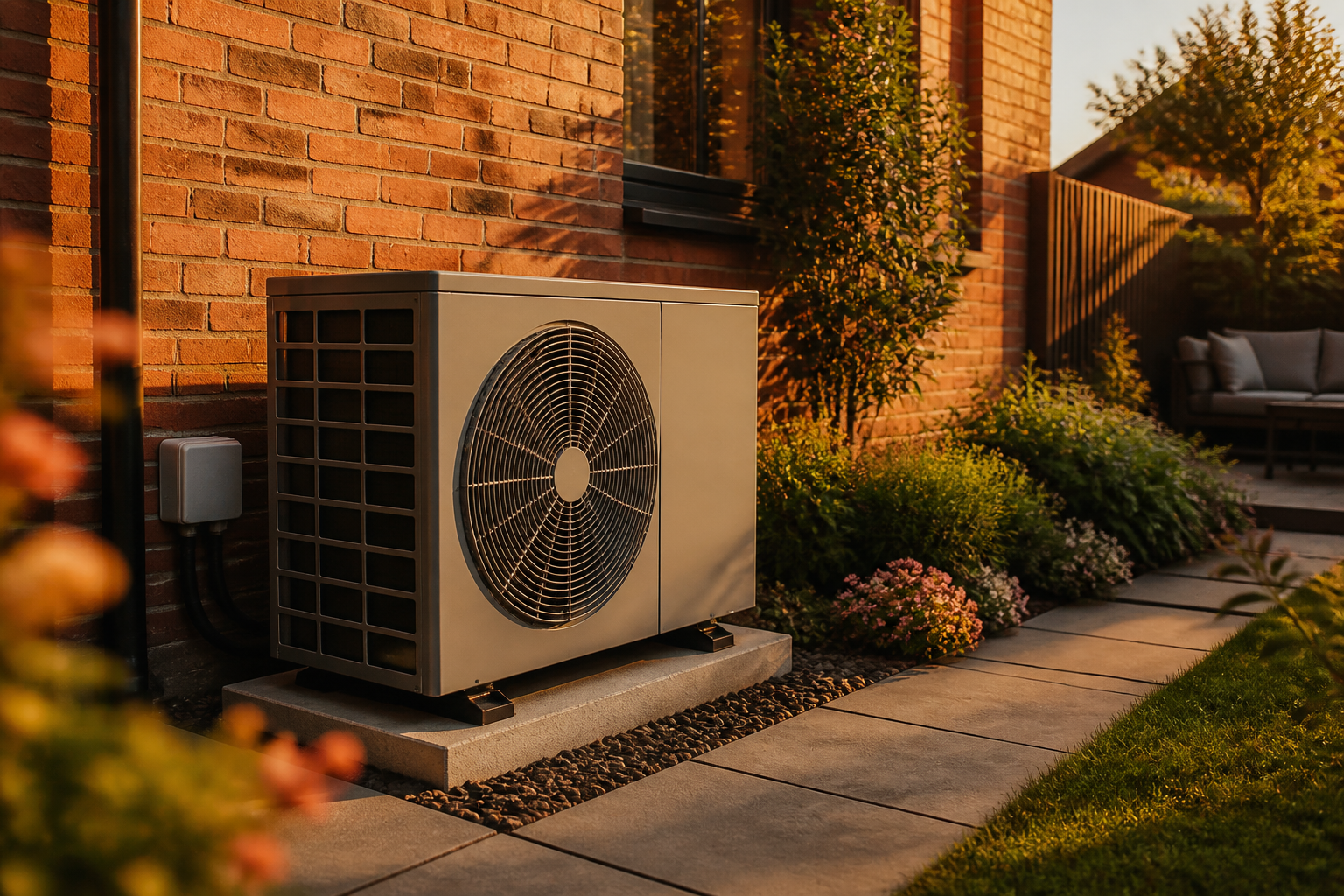
In August 2026, reporting by The Guardian highlighted a growing trend among UK homeowners using air source heat pumps for space cooling during summer heatwaves. Simultaneously, analysis published by the Energy Saving Trust on 12 August 2026 examined over one million technology and tariff combinations, underscoring how domestic energy systems perform across changing seasonal demands. While heat pumps are primarily installed across England, Scotland, and Wales to replace fossil fuel heating, modern units inherently possess the mechanical capacity to operate in reverse. Understanding how heat pump cooling works, its physical constraints, and its regulatory context allows householders to evaluate whether summer cooling is feasible for their properties.
How reverse-cycle heat pumps cool a home
An air source heat pump operates on the vapour compression refrigeration cycle. During winter heating, refrigerant evaporates in the outdoor coil by absorbing thermal energy from ambient air, passes through a compressor to raise its pressure and temperature, and condenses in the indoor heat exchanger to warm water or air.
To provide active cooling, a heat pump utilizes a four-way reversing valve to switch the direction of refrigerant flow. In cooling mode, the indoor heat exchanger acts as the evaporator, absorbing heat from inside the dwelling, while the outdoor coil acts as the condenser, discharging heat to the external environment.
Heat pump cooling is categorized into two distinct hydronic and direct expansion system types:
- Direct Expansion (Air-to-Air): Split air-to-air heat pumps circulate refrigerant directly between indoor wall-mounted fan units and the outdoor compressor. These systems cool and dehumidify internal air directly.
- Hydronic (Air-to-Water): Air-to-water heat pumps chill water circulating through internal pipework. The chilled water is pumped through specialized emitter networks such as underfloor heating pipes or fan coil units.
Radiators, underfloor loops and fan coils: output limits
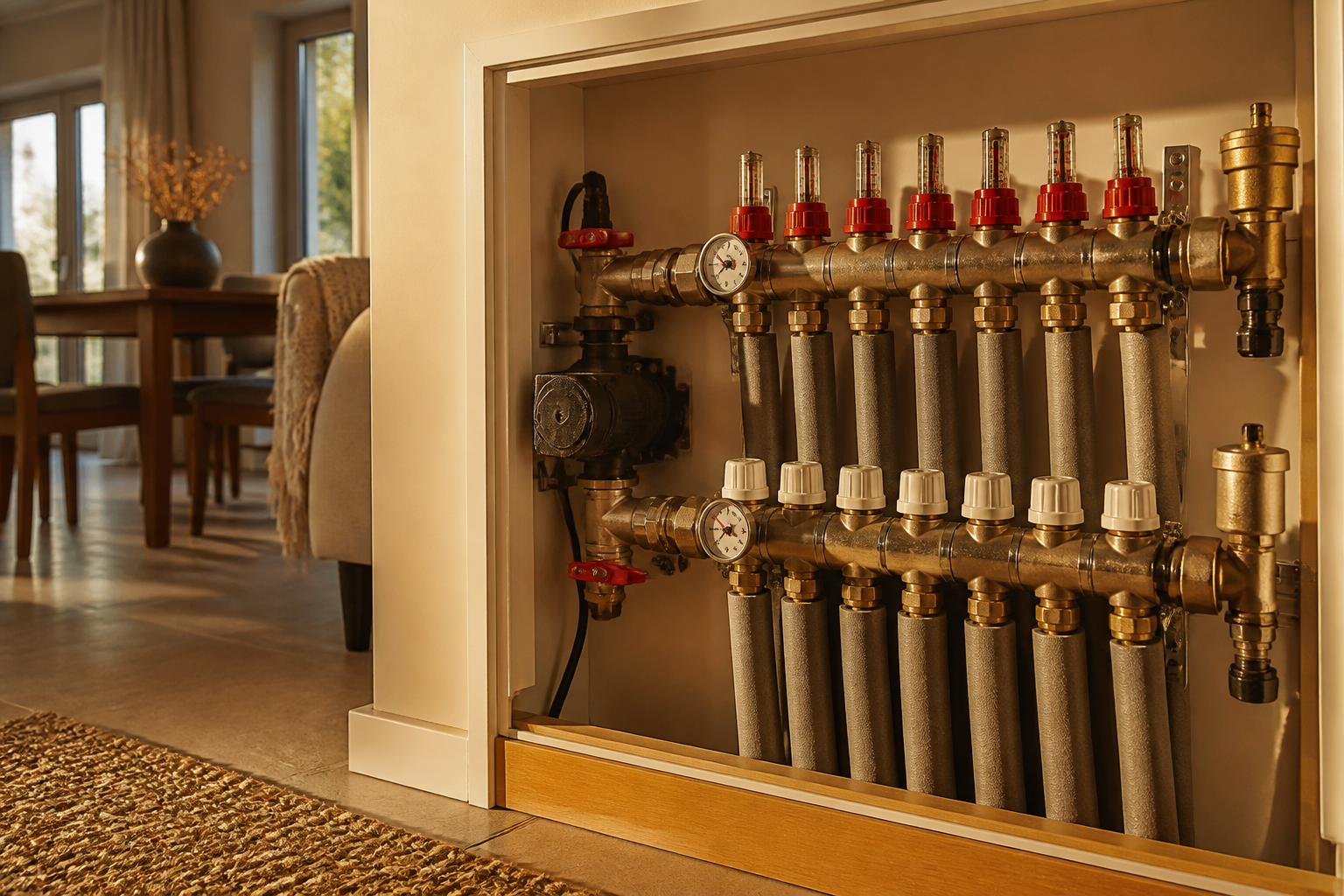
A critical physical constraint of hydronic cooling is the dew point of internal air. When humid indoor air comes into contact with a surface cooled below its dew point temperature, water vapour condenses into liquid droplets.
Standard panel radiators are unsuitable for chilled water cooling. If cold water at 7°C to 12°C circulates through standard steel panel radiators, condensation forms rapidly on the metal surfaces, leading to water dripping onto flooring, timber joists, and baseboards, causing structural moisture damage and mould growth.
To safely deliver hydronic cooling, UK installations rely on specific emitter configurations:
- Underfloor Heating Loops: Chilled water circulates at a higher flow temperature, typically 18°C to 20°C, keeping the floor surface above the indoor dew point. This provides sensible cooling without risk of condensation, delivering approximately 20 to 40 watts per square metre of cooling capacity. Humidity sensors integrated into room thermostats shut down cooling if relative humidity rises beyond safe thresholds.
- Fan Coil Units (FCUs): Fan coil units combine a chilled water coil with a condensate tray, drain pipe, and active fan. Water can circulate at lower temperatures such as 7°C, providing higher cooling outputs and active dehumidification, as condensate is safely collected and discharged to wastewater drainage.
Energy consumption and running costs during summer
Cooling efficiency is measured by the Seasonal Energy Efficiency Ratio (SEER), which expresses the ratio of cooling output in kilowatt-hours (kWh) to electrical energy input in kWh over a typical cooling season. High-efficiency modern heat pumps achieve SEER ratings between 4.0 and 6.0, meaning every 1 kWh of electricity generates 4.0 to 6.0 kWh of cooling energy.
Running costs during summer are generally low compared to winter heating demands. Cooling is typically required for far fewer total hours per year in Great Britain compared to southern European climates. Furthermore, peak cooling demand coincides directly with maximum solar photovoltaic (PV) generation during hot daylight hours. A domestic solar PV array generating 3 kWp to 5 kWp often covers the electrical load of an active heat pump compressor operating in cooling mode, minimizing draw from the grid.
Building regulations and planning considerations in the UK
Installing and operating a heat pump in cooling mode involves specific compliance requirements under UK building and planning frameworks:
- Permitted Development Rights: In England, Wales, and Scotland, air source heat pumps installed under Permitted Development Rights must comply with Microgeneration Certification Scheme (MCS) planning standards, specifically MCS 020 for acoustic limits. Acoustic emissions must not exceed 42 dB(A) at the boundary of a neighbouring property. Because cooling operates when windows are more likely to be open, sound attenuation must be reviewed carefully.
- Building Regulations Part O: Part O governs overheating risk in new residential buildings. While passive measures such as shading and ventilation are prioritized under Part O, active cooling systems must be correctly sized to avoid excessive energy consumption.
- Electrical Standards: All wiring and control interfaces must adhere to BS 7671 IET Wiring Regulations, executed by a qualified electrician registered with NICEIC, NAPIT, or an equivalent competent person scheme.
Comparative breakdown of heat pump cooling modes
| Cooling Technology | Typical Chilled Water Temp (°C) | Cooling Capacity (W/m²) | Condensation Management | Retrofit Complexity |
|---|---|---|---|---|
| Air-to-Air Split System | N/A (Direct Expansion) | 80 - 120 | Integrated condensate drain pipe | Medium (Requires refrigerant pipework) |
| Underfloor Hydronic Cooling | 18 - 20 | 20 - 40 | Dew point sensor cutoff required | High (Requires suitable underfloor loops) |
| Hydronic Fan Coil Units | 7 - 12 | 60 - 100 | Dedicated condensate drain network | Medium to High (Requires power and drainage) |
| Standard Steel Radiators | Not Permitted | 0 | None (Causes surface dripping) | Incompatible |
What this means for you
If you are planning a heat pump installation or seeking to manage summer indoor temperatures, consider the following practical steps:
- Assess existing emitters: Standard panel radiators cannot be used for cooling. If summer cooling is a priority, evaluate installing underfloor heating loops or dedicated fan coil units during system design.
- Verify controller capabilities: Check whether your heat pump control panel supports reversing valve actuation and dew point monitoring. Some manufacturers disable cooling software functions by default in UK market models unless specific accessories are fitted.
- Pair with renewable generation: Combine cooling controls with solar PV arrays or battery storage to offset daytime electrical demand during hot weather.
- Select accredited installers: Ensure your installation is carried out by an installer accredited under MCS and registered with a consumer protection scheme such as RECC or HIES.
If your employer participates in the Net Zero Home Scheme, delivered by Net Zero Benefits alongside The Electric Car Scheme, you can access member pricing on accredited heat pump installations, solar PV, battery storage and plug-in solar with no salary sacrifice or payroll deductions involved.
Frequently asked questions
Can I cool my home using my existing radiator network?
No, standard steel or aluminium panel radiators cannot be used for active chilled water cooling. Circulating chilled water through standard radiators causes moisture from humid indoor air to condense on the metal surface, leading to water pooling on floors and damaging building fabric. Hydronic cooling requires underfloor pipework maintained above the dew point or fan coil units fitted with condensate drainage lines.
Does cooling mode use significantly more electricity than heating?
No, active cooling with a modern heat pump is highly efficient, often operating at SEER ratings of 4.0 or higher. Because UK summer cooling demands are generally limited to peak heatwave days and daytime hours, overall annual energy consumption for cooling is a small fraction of winter heating requirements. Furthermore, daytime cooling demand aligns with peak solar PV output.
Are all heat pumps sold in the UK equipped for reversible cooling?
While most modern air source heat pumps contain the mechanical components necessary for reverse cycle operation, many UK models have cooling disabled in their default firmware or require optional room sensors to monitor dew points safely. Installers must configure system controls and verify compliance with local planning acoustic limits under MCS 020 before enabling active cooling functionality.