Installing a Dedicated Heat Pump Cylinder in UK Homes
A practical guide to standalone heat pump hot water cylinders in UK homes: space needs, ducting rules, G3 accreditation, installed costs and realistic energy savings.
- Written by
- Net Zero Home Scheme editorial team
- Last updated
- Topic
- heat pumps, energy efficiency, home energy
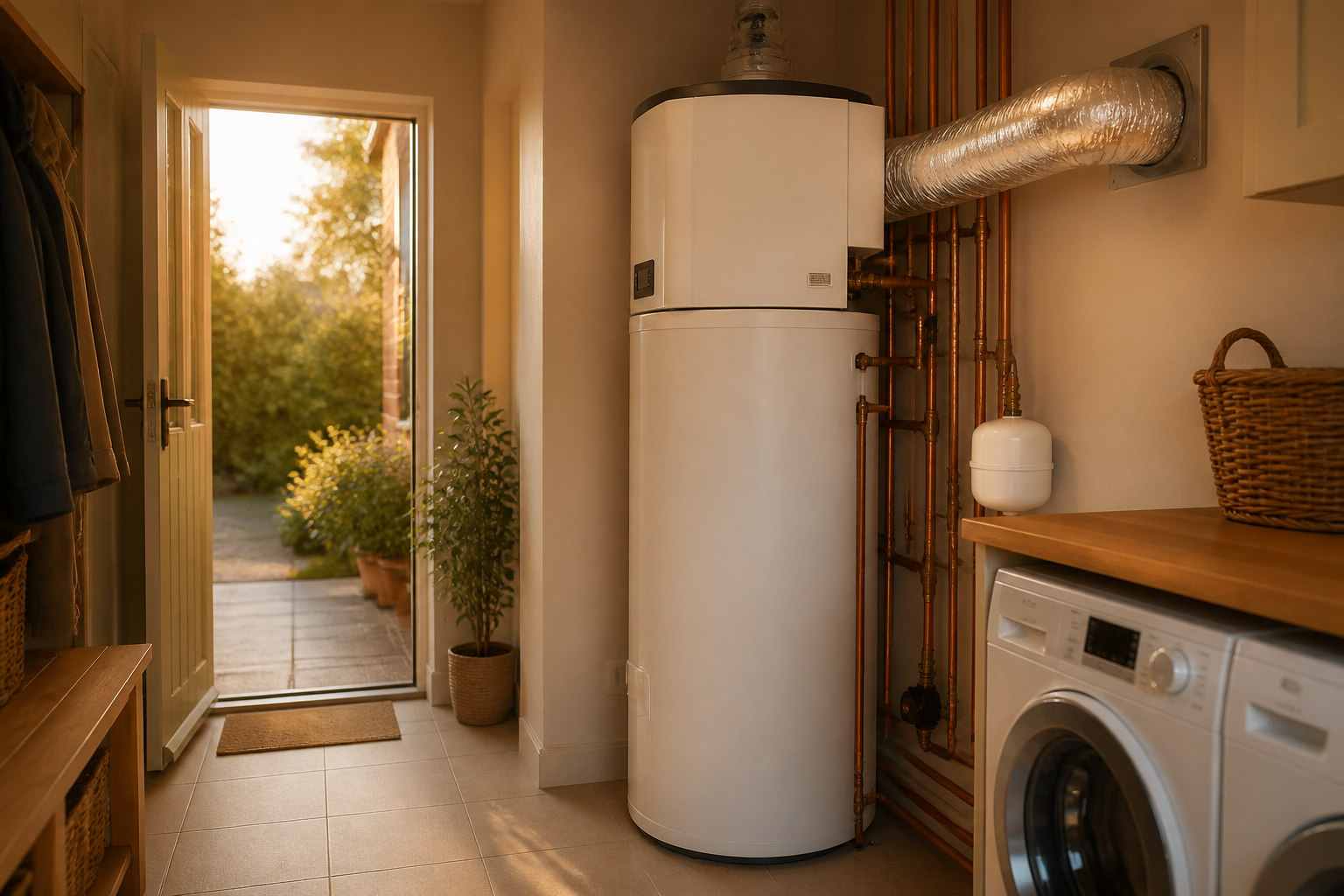
A standalone heat pump hot water cylinder, also known as a dedicated domestic hot water heat pump, provides an efficient way to generate hot water without replacing your existing central heating boiler or installing a full space-heating heat pump system. By integrating a small air-source heat pump directly onto the top of an unvented hot water tank, these units extract heat from ambient air to supply daily domestic hot water at seasonal coefficient of performance (SCOP) values between 2.5 and 3.5, according to test standards monitored by the Energy Saving Trust. This means that for every 1 kWh of electricity consumed, the system yields up to 3.5 kWh of heat energy, reducing hot water energy demands by up to 70 percent compared to direct electric immersion heating.
While full air source heat pumps handle both radiators and hot water, dedicated heat pump cylinders focus entirely on hot water provision. They are particularly popular in homes with direct electric heating, infrared panels, or solar PV arrays, as well as properties looking to decommission gas water heating while retaining specialized space heating systems. To ensure a safe, efficient installation, householders must understand the physical space requirements, air ducting rules, plumbing standards, and exact costs involved before committing to a system.
What to check in your home before purchasing
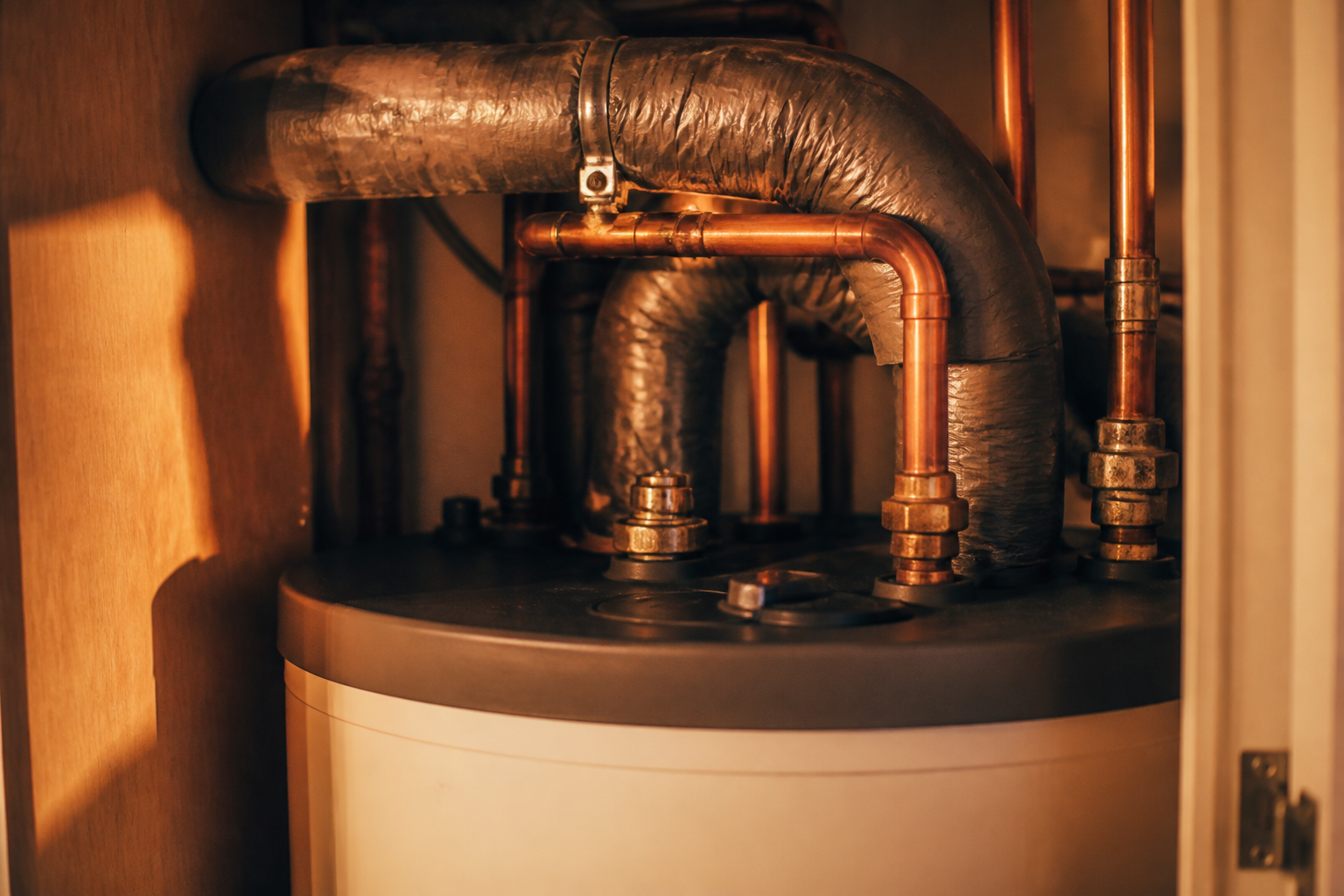
Installing a heat pump water heater involves more than swapping an old cylinder. Because the unit incorporates a mechanical compressor, air fan, and refrigerant circuit on top of the vessel, physical layout and structural factors dictate whether a property is suitable.
First, verify the available installation space and ceiling height. Integrated heat pump cylinders are taller than standard unvented units, typically standing between 1.6 metres and 2.1 metres high, with capacities ranging from 150 litres to 300 litres. You must allow a minimum overhead clearance of 300 mm to 500 mm above the unit for maintenance access, air filter removal, and servicing.
Second, assess the flooring structure. A filled 200-litre heat pump cylinder weighs approximately 280 kg to 320 kg. If installing the unit in a first-floor airing cupboard or timber-joisted loft, a structural engineer or qualified surveyor must confirm that the floor joists can safely support the static load in compliance with Building Regulations Approved Document A. Ground-floor utility rooms or concrete floors are usually ideal.
Third, establish the air intake and discharge strategy. Heat pump cylinders pull ambient air across their evaporator coil to extract heat, discharging chilled air as a result. There are two primary configuration methods:
- Ducted outdoor air intake and exhaust: Two insulated 125 mm or 160 mm ducts connect the cylinder through an external wall. This ensures indoor temperatures remain unaffected during winter operation.
- Ambient indoor air intake with ducted exhaust: The unit draws warm air from inside a large utility room or garage, requiring a minimum room volume of 20 cubic metres, and vents cold air outside.
Fourth, check drainage and electrical infrastructure. The heat pump process generates condensate water, requiring a continuous drain connection capable of taking 1 to 2 litres of water per day via a dedicated tundish or soil pipe connection. Electrically, the unit requires a dedicated 13A or 16A fused spur, connected in accordance with BS 7671 IET Wiring Regulations.
Realistic installation costs and project timelines
A standalone heat pump hot water cylinder costs more upfront than a direct electric cylinder, but delivers substantially lower running costs. The total investment depends on cylinder capacity, ductwork complexity, and whether electrical upgrades are required.
According to figures published by the Energy Saving Trust, hot water generation accounts for roughly 18 percent of an average UK household energy bill. Replacing a direct electric immersion cylinder with a heat pump cylinder yielding an average SCOP of 3.0 can save a family of four around £300 to £450 per year on electricity bills under standard tariff rates.
| Cost or Specification Component | Typical Range or Requirement | Key Operational Consideration |
|---|---|---|
| Hardware Cost (150L,300L Unit) | £1,600 to £2,800 | Includes integrated heat pump, unvented cylinder, and internal controls |
| Installation Labour & Fitting | £900 to £1,600 | Covers G3 plumbing, electrical connection, core drilling, and ducting |
| Core Drilling & External Vents | £200 to £400 | Required for two 125mm/160mm wall penetrations and weatherproof louvres |
| Total Installed Project Cost | £2,700 to £4,800 | Varies based on room access, floor strengthening, and duct lengths |
| Typical SCOP Efficiency | 2.5 to 3.5 | Delivers 2.5 kWh to 3.5 kWh of heat for every 1 kWh of electricity |
| Space & Room Volume | Min 20 m³ (if unducted intake) | Height requirement of 1.7m to 2.2m including overhead servicing clearance |
| Physical Project Timeline | 1 to 2 Working Days | Decommissioning old cylinder, pipework, core drilling, and commissioning |
The installation process typically spans one to two days. On day one, the installer drains and removes the existing cylinder, core-drills ductwork penetrations through external walls, and places the new unit. On day two, the plumber completes the G3 unvented discharge pipework, connects the cold mains supply and hot distribution pipes, finishes electrical connections, tests for leaks, and commissions the digital controller.
What accreditations to look for in an installer
Because a heat pump hot water cylinder combines high-pressure plumbing, refrigeration, and electrical wiring, your installer must hold specific mandatory qualifications.
- G3 Unvented Hot Water Certification: Under Building Regulations Approved Document G, anyone installing or servicing an unvented hot water storage system must hold a valid G3 qualification. Unvented cylinders operate under mains water pressure and require correctly installed expansion vessels, temperature relief valves, and tundish discharge pipes to prevent dangerous over-pressurisation.
- WRAS Approval and WaterSafe Registration: Ensure the hardware carries Water Regulations Approval Scheme (WRAS) certification to prove materials will not contaminate drinking water, and that the installer is registered with WaterSafe or CIPHE (Chartered Institute of Plumbing and Heating Engineering).
- NICEIC, ELECSA, or NAPIT Electrical Certification: The electrical connection must comply with BS 7671 standards, accompanied by an Electrical Installation Certificate (EIC).
- F-Gas Certification (if micro-split): Fully self-contained monobloc cylinders with factory-sealed refrigerant circuits do not require an F-Gas qualified technician to install, but if the heat pump module uses a split refrigerant line to an outdoor compressor, the installer must be F-Gas registered with REFCOM or FGAS Register.
Note that standalone domestic heat pump water heaters are currently excluded from the UK Boiler Upgrade Scheme grant, as the scheme specifically requires a primary space-heating heat pump installation.
Essential questions to ask your installer before signing
Before accepting a quote, ask your installer the following practical questions:
- How will you route the air ducting, and are the ducts fully insulated? Uninsulated ductwork carrying cold air will suffer from heavy surface condensation, causing dampness and ceiling damage.
- Is the proposed floor location certified to support the fully laden weight of the unit?
- Where will the G3 safety relief pipework and heat pump condensate drain discharge?
- What is the standing loss rating of the cylinder, and what is its noise rating in decibels (dB)? Most quality units operate between 45 dB and 52 dB at one metre.
- Does the unit include an automatic anti-legionella cycle, and can it be scheduled to run on off-peak electricity tariffs?
What this means for you
Installing a dedicated heat pump water heater is an effective way to cut water heating costs without undertaking a full space-heating overhaul. By combining intelligent control scheduling with high-efficiency heat recovery, householders can achieve significant long-term savings on their electricity bills. If you are an employee looking for trade-discount pricing on home renewable technologies installed by accredited contractors, the Net Zero Home Scheme provides access to certified installers without salary sacrifice or payroll deductions.
Frequently asked questions
Can a heat pump water heater work with existing solar PV panels?
Yes. Many modern heat pump cylinders feature dedicated solar PV signal inputs or volt-free contact relays. When your solar panels generate surplus electricity, the cylinder automatically triggers its heat pump or immersion heater to store excess solar power as thermal energy in your hot water tank.
How loud is a heat pump hot water cylinder during operation?
Most domestic units generate noise levels between 45 dB and 52 dB(A) when the compressor and fan are running, which is roughly equivalent to a modern kitchen refrigerator or quiet dishwasher. Installing anti-vibration rubber feet and locating the unit in a utility room, garage, or sound-insulated cupboard ensures minimal disruption to living areas.
Does a heat pump cylinder still provide hot water in freezing winter temperatures?
Yes. When set up with outdoor air ducting, quality heat pump cylinders extract heat from outside air temperatures down to -5°C or -7°C. If outdoor temperatures drop below operational limits or hot water demand spikes rapidly, an integrated electric immersion heater automatically supplements the heat pump to ensure a reliable hot water supply.
Sources
- Unvented Hot Water Storage Systems: Building Regulations Approved Document G, HM Government
- Hot Water Systems and Energy Efficiency Guide, Energy Saving Trust
- IET Wiring Regulations BS 7671, Institution of Engineering and Technology