BS 7671 Rules for Solar, Battery and EV Electrical Safety
A practical guide to BS 7671 Amendment 2 rules for UK solar, battery, and EV installations, covering RCD types, surge protection, and consumer unit busbar loading.
- Written by
- Net Zero Home Scheme editorial team
- Last updated
- Topic
- solar, battery storage, regulation
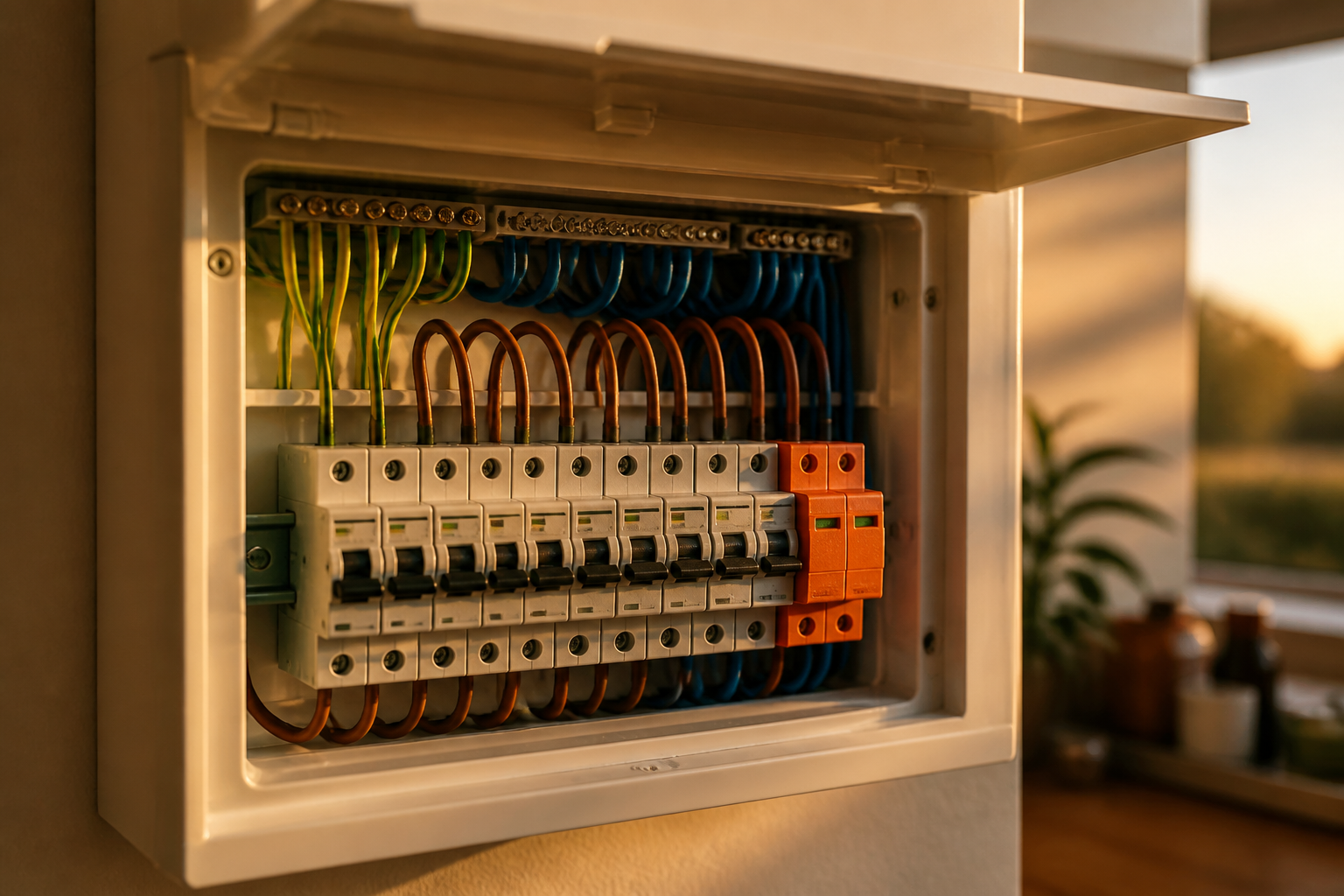
Installing renewable energy technologies like solar photovoltaics, battery storage, and electric vehicle chargers transforms a home from a simple consumer of grid power into a micro-generator. This shift changes the electrical forces present within a domestic wiring network. To manage these operational risks, the Institution of Engineering and Technology publishes BS 7671, the national standard for electrical installations in the UK.
In 2022, the publication of BS 7671:2018+A2:2022, known as Amendment 2, introduced essential updates governing how solar inverters, battery management systems, and EV chargers must connect to domestic consumer units. Electricians working to British standards must evaluate how direct current leakage, continuous current loads, and transient voltage surges affect household electrical safety. Understanding these rules helps householders evaluate installation quotes and confirm that an upgraded system meets current UK regulations.
Why BS 7671 Amendment 2 changed domestic electrical rules
Traditional domestic electrical installations were designed for one-way power flow. Electricity traveled from the National Grid, through the DNO service fuse and meter, into the consumer unit, and out to final circuits such as lighting and socket outlets. Solar PV and battery storage systems reverse this dynamic by feeding generated alternating current back into the consumer unit.
According to technical guidance from Electrical Safety First and the IET, bidirectional power flow introduces distinct safety challenges:
- Direct current fault currents generated by solar array inverters and battery cells can blind standard alternating current protective devices.
- Continuous high power export or import can cause thermal overload on main switchgear and distribution busbars.
- Atmospheric activity and switching operations can send transient overvoltages through microinverters and battery management systems.
Amendment 2 addresses these factors by establishing strict selection criteria for protective devices, earthing arrangements, and busbar loading limits.
Residual Current Devices: Type AC, Type A, and Type B explained
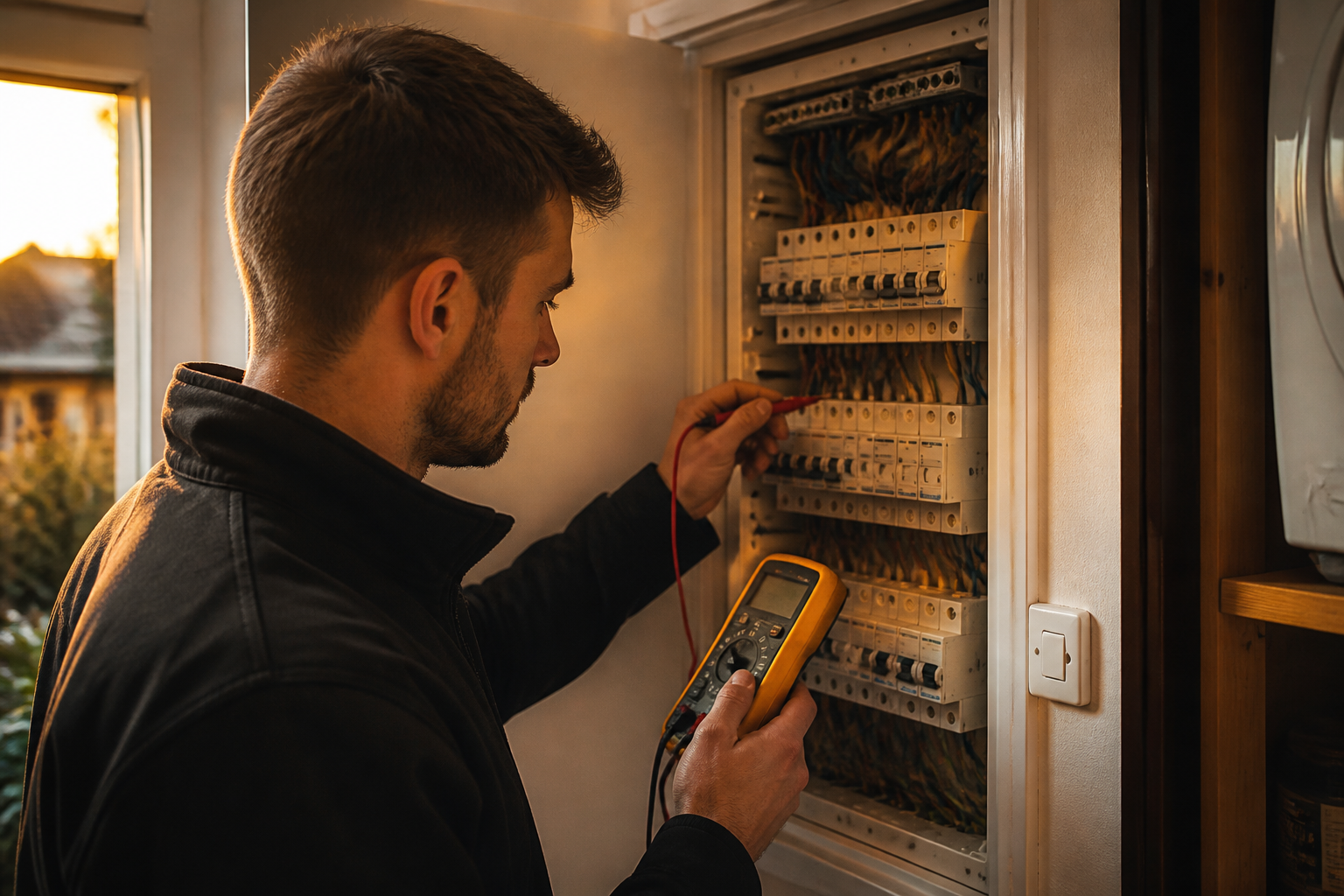
Type AC RCDs, which only detect pure sinusoidal AC fault currents, were formerly standard in UK homes. Under Amendment 2, Type AC RCDs are prohibited for circuits supplying equipment that contains electronic components capable of generating direct current leakage.
If direct current leaks into a Type AC or standard Type A RCD, it can saturate the magnetic core of the device. This effect, known as RCD blinding, prevents the switch from tripping even during a dangerous AC earth fault on a completely separate domestic circuit.
| Equipment Installed | Primary Electrical Fault Risk | Minimum RCD Requirement | Standard Installation Practice |
|---|---|---|---|
| Solar PV (Transformerless Inverter) | Smooth DC leakage current | Type B (or Type A with isolated output) | Type B installed unless manufacturer confirms Type A compatibility |
| Home Battery Energy Storage | Bidirectional DC and AC fault current | Type B RCD | Type B recommended to prevent DC blinding |
| EV Dedicated Wallbox Charger | DC leakage from vehicle electronics | Type A with 6 mA RDC-DD, or standalone Type B | BS 7671 Section 722 compliant protection |
| Inverter Heat Pump | High frequency AC fault current | Type A or Type F RCD | Specified by heat pump manufacturer instructions |
Installer compliance requires checking inverter datasheets carefully. If a solar or battery inverter lacks galvanic isolation or built-in DC fault detection, a Type B RCD must be installed upstream in the consumer unit.
Surge Protection Devices: Section 443 rules for sensitive electronics
Section 443 of BS 7671 addresses protection against transient overvoltages caused by lightning activity or grid switching operations. Modern home energy systems rely heavily on sensitive microprocessors in solar inverters, battery management systems, and smart energy controllers. A brief voltage spike can permanently damage these components.
Under Amendment 2, Surge Protection Devices (SPDs) must be installed in all commercial and domestic premises unless the home owner explicitly opts out after being informed of the financial and operational risks. An SPD acts as a voltage-sensitive switch. When a high-voltage surge enters the electrical installation, the SPD clamps the voltage and safely diverts excess current to earth within nanoseconds, preserving sensitive electronics.
Installers fit Type 2 SPDs inside or adjacent to the main consumer unit. For solar arrays mounted on roof structures where direct lightning strikes present a calculated risk, combined Type 1+2 SPDs may be required on both the AC side and DC side of the inverter.
Consumer unit busbar ratings and bidirectional power flow
Standard UK domestic consumer units feature an internal copper busbar rated to carry up to 100 amperes of continuous current. In traditional setups, the total current passing through the main switch can never exceed the rating of the DNO service fuse, which is typically 60 A, 80 A, or 100 A.
When a home battery energy storage system or solar PV array generates power, that electricity enters the consumer unit from a circuit breaker while grid power can simultaneously enter through the main switch.
For example, if a home has an 80 A main DNO fuse and a battery inverter capable of discharging 32 A (7.36 kW), the total potential current flowing through sections of the main busbar can reach 112 A. This exceeds the standard 100 A rating of the busbar and main switch assembly, creating a fire hazard through thermal overload.
To satisfy BS 7671 busbar loading rules, installers adopt one of three solutions:
- Downgrade the upstream main circuit breaker or grid fuse to ensure the combined current cannot exceed 100 A.
- Install a high-capacity consumer unit rated for 125 A continuous operation.
- Fit a dedicated microgeneration consumer unit supplied directly via a Henley block split before the main household consumer unit.
Earthing arrangements and PEN fault protection
Most UK residential properties connect to a Protective Multiple Earthing (PME) supply network, designated as TN-C-S. In a PME system, the supply neutral and earth conductors are combined in a single PEN conductor provided by the Distribution Network Operator.
If the neutral conductor breaks upstream in the public grid, metal casings of electrical appliances, solar mounting frames, and EV chargers connected to earth can become energised relative to the ground outside.
Under BS 7671 Section 722 for EV chargers and the IET Code of Practice for Electrical Energy Storage Systems, installers must mitigate open PEN fault risks by:
- Installing an unbonded earth electrode (earth rod) that operates independently of the DNO neutral.
- Installing automatic protective devices that isolate live, neutral, and earth connections if voltage drift is detected.
- Ensuring all structural metalwork associated with solar panels or outbuilding batteries is correctly bonded to the main earthing terminal.
What this means for you
Upgrading your home with low-carbon technology requires more than mounting panels on a roof or hanging a battery on a wall. Electrical safety standards ensure your home installation remains safe, reliable, and insured.
When planning an installation, consider the following practical steps:
- Ask your installer to confirm how they comply with BS 7671 Amendment 2 regarding RCD selection and SPD protection.
- Check whether your existing consumer unit requires a busbar upgrade or split supply connection to handle bidirectional power flow.
- Ensure your electrician provides a full Electrical Installation Certificate (EIC) upon completion, confirming testing of earth loop impedance and RCD trip times.
- Verify that your installer holds accreditation with a recognised competent person scheme such as NICEIC, NAPIT, or Select.
Employees accessing home green technology through the Net Zero Home Scheme work with accredited installers who follow strict MCS, TrustMark, and BS 7671 safety standards across England, Scotland, and Wales.
Frequently asked questions
Do I need a new consumer unit to install solar panels or a home battery?
Not always, but many older consumer units lack space for dedicated solar breakers, surge protection devices, or Type B RCDs. Additionally, if adding generation power risks overloading the existing 100 A busbar rating, installing a dedicated microgeneration consumer unit or replacing the main board is necessary to comply with BS 7671.
What is the difference between a Type A and Type B RCD?
A Type A RCD detects standard alternating current faults and pulsating direct current up to 6 milliamperes. A Type B RCD detects AC faults, high-frequency AC faults, and smooth direct current fault currents. Type B RCDs are necessary for equipment such as transformerless solar inverters and home batteries that can leak smooth DC current during a fault.
Are Surge Protection Devices mandatory for all UK home renewable installs?
Under BS 7671 Section 443, SPDs are standard for domestic installations unless the homeowner explicitly signs an opt-out declaration accepting full financial responsibility for equipment damaged by transient overvoltages. Given the value of modern inverters and battery storage systems, fitting an SPD is strongly recommended by industry bodies.
Sources
- IET Wiring Regulations BS 7671:2018+A2:2022, Institution of Engineering and Technology
- Code of Practice for Electrical Energy Storage Systems, Institution of Engineering and Technology
- Electrical Safety in Low-Carbon Technology Installations, Electrical Safety First