How Solar Panel Temperature Coefficients Affect Summer Output
Solar panels lose efficiency as they heat up in summer. Here is the physics behind temperature coefficients, heat losses, and module selection.
- Written by
- Net Zero Home Scheme editorial team
- Last updated
- Topic
- solar, energy efficiency, mcs
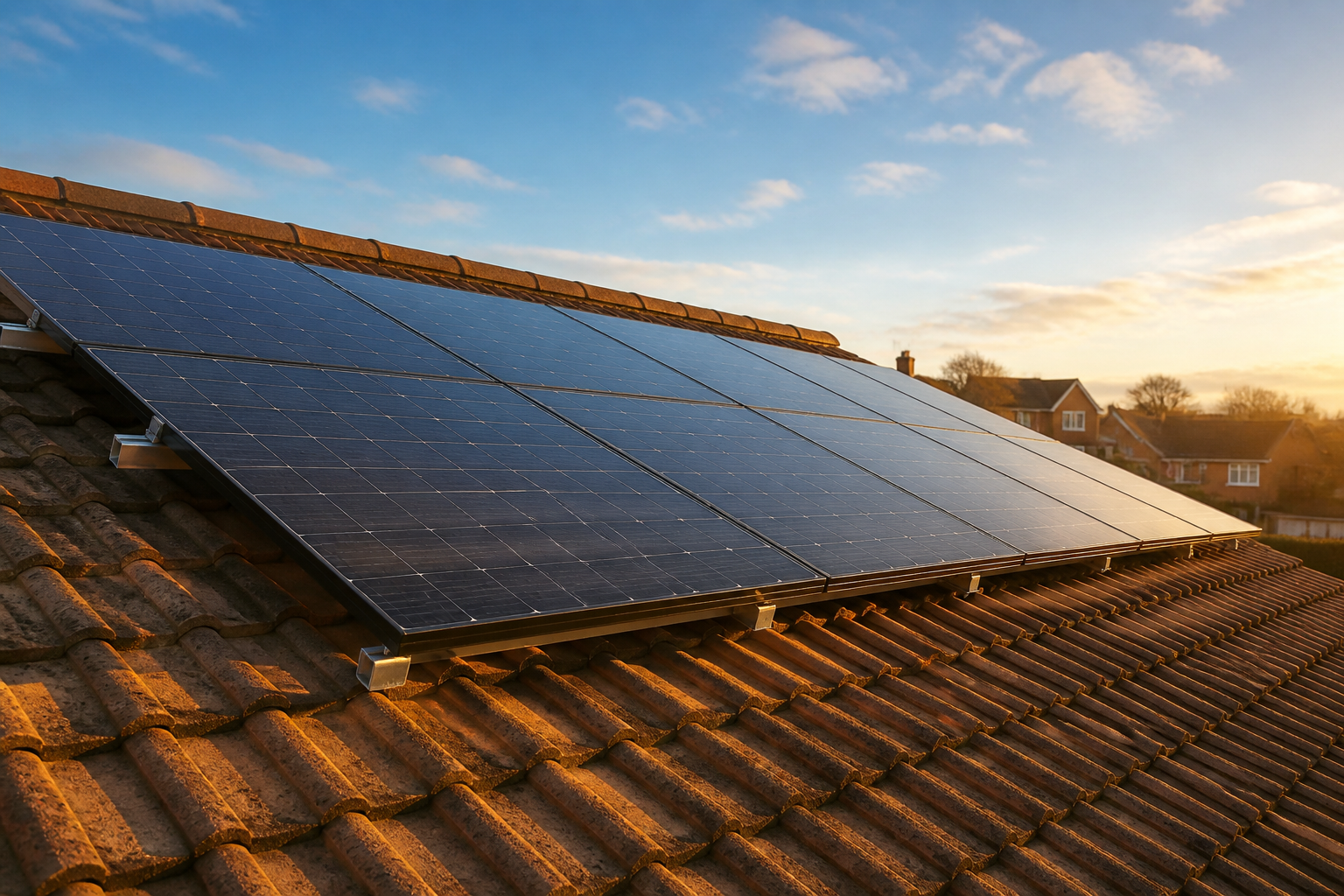
Many UK homeowners assume that the hottest, sunniest midsummer afternoon will deliver the highest peak generation from a solar photovoltaic system. In practice, system monitoring often reveals that a clear, cool day in late April or May produces higher peak instantaneous power than a scorching afternoon in July.
This phenomenon is caused by the temperature coefficient of the solar cell. Silicon solar panels are semiconductors, and their electrical efficiency drops as their internal temperature rises above standard testing thresholds. Understanding how heat affects photovoltaic performance explains why module specifications matter, how roof installation details preserve energy yield, and where the economic trade-offs lie when choosing solar panels for a UK home.
The physics of heat loss in silicon solar cells
Solar panels generate electricity when light photons displace electrons within the silicon semiconductor lattice, creating a voltage differential across the p-n junction. Every solar module is rated at Standard Test Conditions, established internationally as an irradiance of 1,000 watts per square metre, an air mass spectrum of 1.5, and a cell junction temperature of exactly 25 degrees Celsius.
While irradiance determines the current produced by a cell, cell temperature primarily dictates the open-circuit voltage. As silicon warms up, atomic vibrations within the lattice increase. This reduces the bandgap energy of the semiconductor, making it easier for thermal energy to excite electrons. Although this slight bandgap narrowing causes a tiny increase in short-circuit current, it causes a much larger drop in voltage across the cell junction.
Because electric power equals voltage multiplied by current, the sharp drop in voltage outweighs the minor gain in current. The net result is a steady reduction in maximum power output as cell temperature rises.
How temperature coefficients are measured
The relationship between heat and output is quantified on panel datasheets as the maximum power temperature coefficient, expressed as a negative percentage per degree Celsius. It indicates how much peak power the panel loses for every degree its internal cell temperature exceeds 25 degrees Celsius.
On a warm UK summer day with an ambient air temperature of 25 degrees Celsius, solar radiation absorbed by the dark glass and silicon backsheet heats the module far above the surrounding air. Unventilated or flush-mounted panels can routinely reach internal temperatures between 60 and 65 degrees Celsius under direct sunlight.
If a solar panel has a temperature coefficient of -0.38% per degree Celsius and operates at a cell temperature of 65 degrees Celsius, it is operating 40 degrees above Standard Test Conditions. The power loss calculation is straightforward:
40 degrees Celsius temperature rise multiplied by -0.38% equals a 15.2% reduction in rated capacity.
A panel rated at 400 watts under factory testing will deliver a maximum capacity of approximately 339 watts under those thermal conditions, regardless of how bright the sunshine is.
Comparing panel technologies and thermal performance
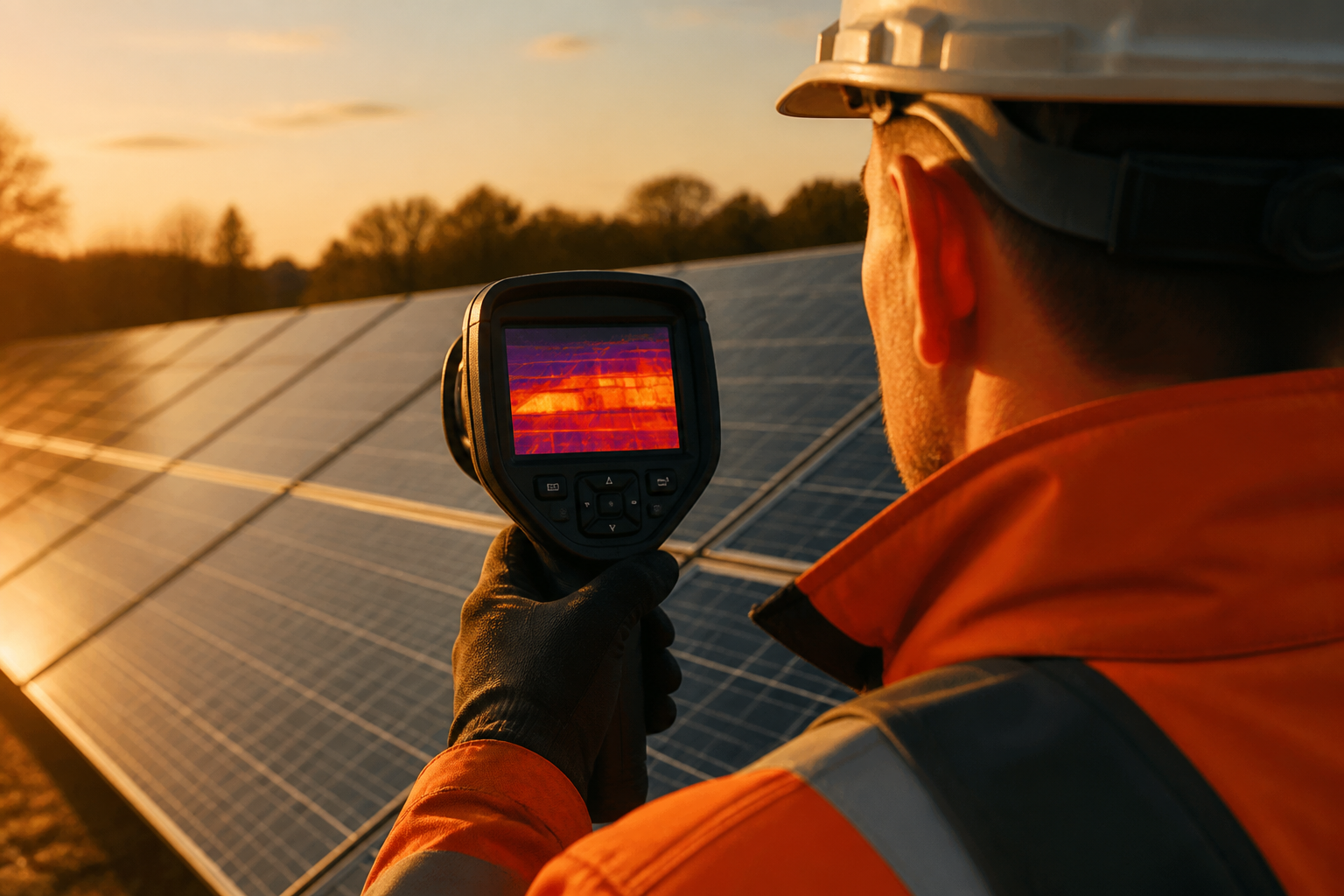
Not all silicon panels respond to heat in the same way. Advanced cell architectures and manufacturing variations alter how sensitive the semiconductor layer is to voltage degradation. Modern solar modules broadly fall into three commercial categories, each with distinct thermal characteristics.
| Cell Technology | Typical Temperature Coefficient | Cell Temp on Hot UK Day (65°C) | Output Loss vs Factory Rating | Actual Capacity of 400W Rated Panel |
|---|---|---|---|---|
| P-type PERC (Passivated Emitter) | -0.35% to -0.39% / °C | +40°C above test conditions | -14.0% to -15.6% | 338 W to 344 W |
| N-type TOPCon (Tunnel Oxide) | -0.29% to -0.32% / °C | +40°C above test conditions | -11.6% to -12.8% | 349 W to 353 W |
| Heterojunction (HJT) | -0.25% to -0.28% / °C | +40°C above test conditions | -10.0% to -11.2% | 355 W to 360 W |
Data published by the European Commission Joint Research Centre through the Photovoltaic Geographic Information System demonstrates that while total annual solar irradiance in Great Britain is highest between May and August, thermal degradation offsets a notable proportion of theoretical maximum output during extreme heatwaves.
TOPCon and Heterojunction panels limit voltage drop because their passivated contact layers reduce surface recombination rates, preserving higher open-circuit voltage even as internal heat rises.
Spring versus summer yield: the UK ambient temperature paradox
In the UK climate, peak instantaneous power readings often occur during clear weather in April or May. During these spring months, clear skies provide strong solar irradiance while ambient air temperatures remain between 10 and 15 degrees Celsius. Continuous airflow across the roof keeps internal cell temperatures close to 30 or 35 degrees Celsius.
Under these conditions, a 400-watt P-type panel operating at 35 degrees Celsius loses only 3.8% of its rated power to heat, outputting roughly 385 watts. In mid-July, under identical irradiance but with ambient temperatures reaching 28 degrees Celsius, the same panel running at 65 degrees Celsius loses over 15% of its output.
However, instantaneous power is only one part of total annual energy generation. July days offer longer daylight hours, yielding higher cumulative kilowatt-hours per day despite lower instantaneous peak conversion efficiency. Homeowners evaluating system data should distinguish between peak power capacity in kilowatts and total daily energy yield in kilowatt-hours.
Installation factors: ventilation gaps and mounting physics
Hardware choice is not the only factor governing panel operating temperature. Installation mechanics play an equally critical role in passive thermal management.
When light strikes a panel, only 20% to 23% of the incident solar energy is converted into electricity. The remaining 77% to 80% is converted into thermal heat energy. If this heat cannot escape from the rear of the module, the temperature of the silicon cell escalates rapidly.
Key installation rules for controlling thermal losses include:
- Maintaining an adequate airflow gap: accredited guidance under Microgeneration Certification Scheme standards recommends mounting panels at least 100 millimetres clear of roof tiles on pitched mounting rails to encourage natural convection beneath the array.
- In-roof integration clearance: integrated or roof-inset panels sit flush with roof tiles, which restricts rear air movement. Integrated arrays typically run 10 to 15 degrees Celsius hotter than above-roof arrays, resulting in an additional 4% to 6% yield loss during warm weather.
- Inverter voltage windows: central string inverters require a minimum direct current voltage threshold to operate efficiently. String design must account for lower summer operating voltages so that hot summer arrays do not drop below the inverter lower operating limit.
What this means for you
When comparing quotes for home solar installations, panel temperature coefficients offer a reliable indicator of real-world hardware quality. While lower temperature coefficients command a slight price premium, the financial returns depend heavily on location, orientation, and array type.
For standard on-roof systems in the UK, temperature losses account for roughly 3% to 5% of total annual kilowatt-hour yield due to Great Britain's temperate maritime climate. On a system producing 4,000 kilowatt-hours per year, choosing TOPCon over standard PERC yields roughly 80 to 120 additional kilowatt-hours annually. In hotter regions or on dark, unventilated flat roofs, that performance gap widens.
If you choose an in-roof array for aesthetic reasons, prioritizing modules with low temperature coefficients like TOPCon or Heterojunction compensates for the reduced airflow behind the panels.
If you are assessing home energy improvements alongside your employment benefits, the Net Zero Home Scheme offers eligible UK workers member pricing on accredited solar PV, battery storage, and heat pump installations.
Frequently asked questions
Why does my solar inverter report lower power on hot midsummer days?
On hot summer afternoons, cell temperatures inside solar panels can exceed 60 degrees Celsius. This internal heat causes panel voltage to drop, reducing peak kilowatt output even when sunshine appears exceptionally bright.
Are TOPCon or HJT panels worth the extra cost in the UK climate?
TOPCon panels now represent standard commercial quality with minimal price difference over older PERC panels, making them worthwhile for most UK roofs. Heterojunction panels cost more but provide superior heat tolerance, making them best suited for space-constrained roofs or flush in-roof installations.
Can thermal heat build-up permanently damage my solar panels?
Standard thermal expansion and cooling cycles do not damage quality panels built to IEC 61215 standards. However, poor installation ventilation accelerates moisture ingress into backsheets and speeds up long-term EVA encapsulant degradation over a 25-year lifespan.
Sources
- MCS Guidance and Standards, Microgeneration Certification Scheme
- Solar PV Technical Guide, Energy Saving Trust
- Photovoltaic Geographical Information System (PVGIS), European Commission Joint Research Centre