Solar Panel Fire Safety Rules and DC Isolation in UK Homes
An analysis of UK solar PV safety standards, BS 7671 requirements for DC isolators, arc fault risks and safety guidelines for rooftop installations.
- Written by
- Net Zero Home Scheme editorial team
- Last updated
- Topic
- solar, regulation, mcs
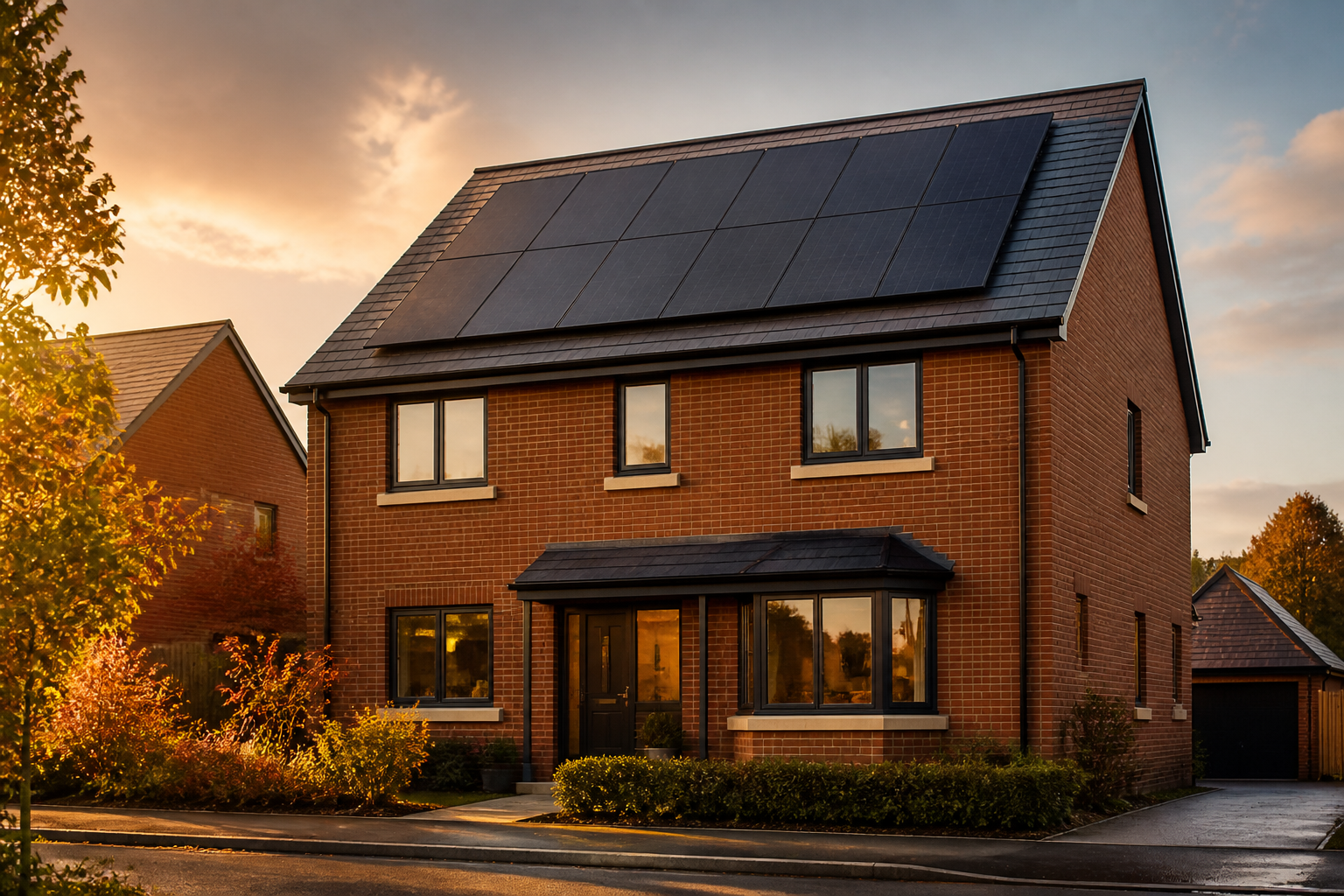
Rooftop solar photovoltaic installations across England, Scotland and Wales operate under strict technical frameworks designed to manage high voltage direct current power safely. While home solar systems have a exceptionally low fault rate, understanding how fire safety rules, electrical standards and component specifications work together provides vital clarity for householders evaluating green technology upgrades.
Electrical standards in the UK are set out in BS 7671, known as the IET Wiring Regulations, alongside specific microgeneration installation standards published by the Microgeneration Certification Scheme. These documents govern how direct current generated by rooftop arrays is safely switched, routed and isolated before it reaches the central inverter and household distribution board.
How direct current hazards differ from standard domestic wiring
Standard mains electricity in UK homes uses alternating current, which reverses direction fifty times per second. This zero crossing point allows electrical protective devices, such as standard circuit breakers, to extinguish electrical arcs quickly whenever a circuit trips or breaks.
Solar panels generate direct current, which flows continuously in a single direction whenever daylight strikes the photovoltaic cells. Because direct current lacks a zero crossing point, an electrical arc formed across a loose connection or damaged cable can sustain high temperatures unless the circuit is interrupted by components specifically rated for high voltage direct current operation.
According to technical guidance from the Institution of Engineering and Technology, rooftop solar arrays routinely generate direct current voltages between two hundred and six hundred volts in standard residential string configurations. Managing this voltage requires dedicated double pole isolators, correct cable containment and strict adherence to component safety standards.
What BS 7671 and MCS standards require for solar DC switches
Under BS 7671 Amendment 2 and MCS installer standard MIS 3002, rooftop solar systems must include dedicated DC switch disconnectors. These switches allow engineers and emergency services to isolate the direct current wiring running between the roof array and the inverter.
DC isolator switches must be rated for direct current utilisation categories such as DC21B, ensuring they can safely break full load currents without arcing or thermal failure. Indiscriminate use of standard alternating current isolators on direct current circuits is explicitly prohibited under UK wiring regulations due to the risk of internal contact welded failure or fire.
Location guidance for DC isolators has evolved significantly over recent years. MCS installation guidelines specify that DC isolators must be installed adjacent to the inverter for operational clarity. Where inverters are installed in loft spaces, additional thermal considerations apply, and the switch disconnector must remain easily accessible for maintenance without requiring specialized entry tools.
In addition, cables carrying direct current through building cavities or timber structures must be installed in fire retardant conduit or heavy duty trunking, minimizing mechanical wear and reducing the risk of insulation degradation over the multi-decade lifespan of the system.
Fire service guidance and rapid shutdown technology
The National Fire Chiefs Council provides operational guidelines for emergency responders attending residential properties equipped with microgeneration equipment. A primary consideration for fire personnel is that solar panels continue generating electrical potential as long as light reaches the cells, even when the property mains supply is isolated.
To address this operational reality, installer standards require clear, standardized labeling at the household consumer unit and generation meter, indicating the presence of a rooftop solar array, battery storage system and the location of all isolation points.
Advanced installations increasingly incorporate module level power electronics, such as microinverters or DC optimisers equipped with rapid shutdown functionality. Microinverters convert direct current to alternating current directly on the roof behind each panel, eliminating high voltage direct current cabling inside the home. DC optimisers can drop string voltages to safe levels automatically whenever the central AC supply is disconnected, significantly reducing electrical hazards during maintenance or emergency response.
| Safety Component | Governing Standard | Primary Function | Installation Requirement |
|---|---|---|---|
| DC Switch Disconnector | BS EN 60947-3 / BS 7671 | Isolates DC current between panels and inverter | Must be DC-rated and placed adjacent to the inverter |
| DC Cable Containment | MCS MIS 3002 | Protects solar cables from UV and mechanical damage | Flame-retardant conduit through building structures |
| System Identification Labels | BS 7671 / NFCC Guidance | Alerts emergency services to live generation equipment | Displayed at consumer unit and main isolation points |
| Rapid Shutdown Technology | BS EN 62109-1 / IET Code | Reduces roof string voltage upon AC disconnection | Optional or built into microinverter/optimiser setups |
| Arc Fault Detection (AFDD) | IEC 63027 / BS 7671 | Detects and interrupts direct current electrical arcing | Integrated into modern high-specification inverters |
What this means for you
For UK householders planning or managing a home solar PV system, fire safety and electrical compliance rely on choosing accredited installers and verifying system documentation.
First, ensure that your solar installation is carried out by an MCS-accredited installer who provides an MCS certificate alongside an Electrical Installation Certificate under Building Regulations Part P. This documentation confirms that all DC switches, isolators, and cable runs comply with current BS 7671 standards.
Second, check that your system includes visible, mandatory warning labels on your main electrical consumer unit and next to the solar generation meter. These labels ensure that any electrician or emergency service professional working on your home can instantly locate all AC and DC isolation switches.
Third, review your routine maintenance requirements. While solar panels require minimal ongoing intervention, asking a qualified electrician to inspect DC isolators, cable connections, and inverter operation every five years helps identify minor wear before it affects performance or safety.
If you are exploring home renewable energy options, the Net Zero Home Scheme gives employees member pricing on solar, heat pumps, battery storage and plug-in solar, installed by accredited installers across England, Scotland and Wales, with no salary sacrifice or payroll deduction involved.
Frequently asked questions
Do solar panels increase the fire risk of a UK home?
According to technical research by the Building Research Establishment, fire incidents involving solar PV systems in the UK are extremely rare. The vast majority of reported issues relate to poor quality DC connectors or incorrect installation of non-DC-rated isolation switches. Choosing an MCS-certified installer who follows BS 7671 rules ensures these risks are minimised.
Where should the DC isolator switch be located?
Under current MCS installation guidelines, the primary DC switch disconnector is installed directly adjacent to the solar inverter. If the inverter is installed in an accessible loft space or utility room, the isolator must be clearly marked and accessible without obstruction.
What safety checks should be included in an MCS installation handover?
Your installer must provide an Electrical Installation Certificate, an MCS certificate, array layout drawings, and operating manuals detailing isolation procedures. They should demonstrate how to operate the AC and DC isolators safely and explain any automatic shutdown features built into your inverter.
Sources
- Code of Practice for Grid-Connected Solar Photovoltaic Systems, Institution of Engineering and Technology
- MCS MIS 3002 Solar PV Technical Standard, Microgeneration Certification Scheme
- Solar Photovoltaic Systems Guidance for Fire and Rescue Services, National Fire Chiefs Council
- Guide to the Installation of Photovoltaic Systems, Energy Saving Trust