Smart Export Guarantee Rules for UK Solar and Storage
The Smart Export Guarantee obliges large UK energy suppliers to pay households for exported solar power, subject to MCS certification and smart meter rules.
- Written by
- Net Zero Home Scheme editorial team
- Last updated
- Topic
- solar, tariffs, policy
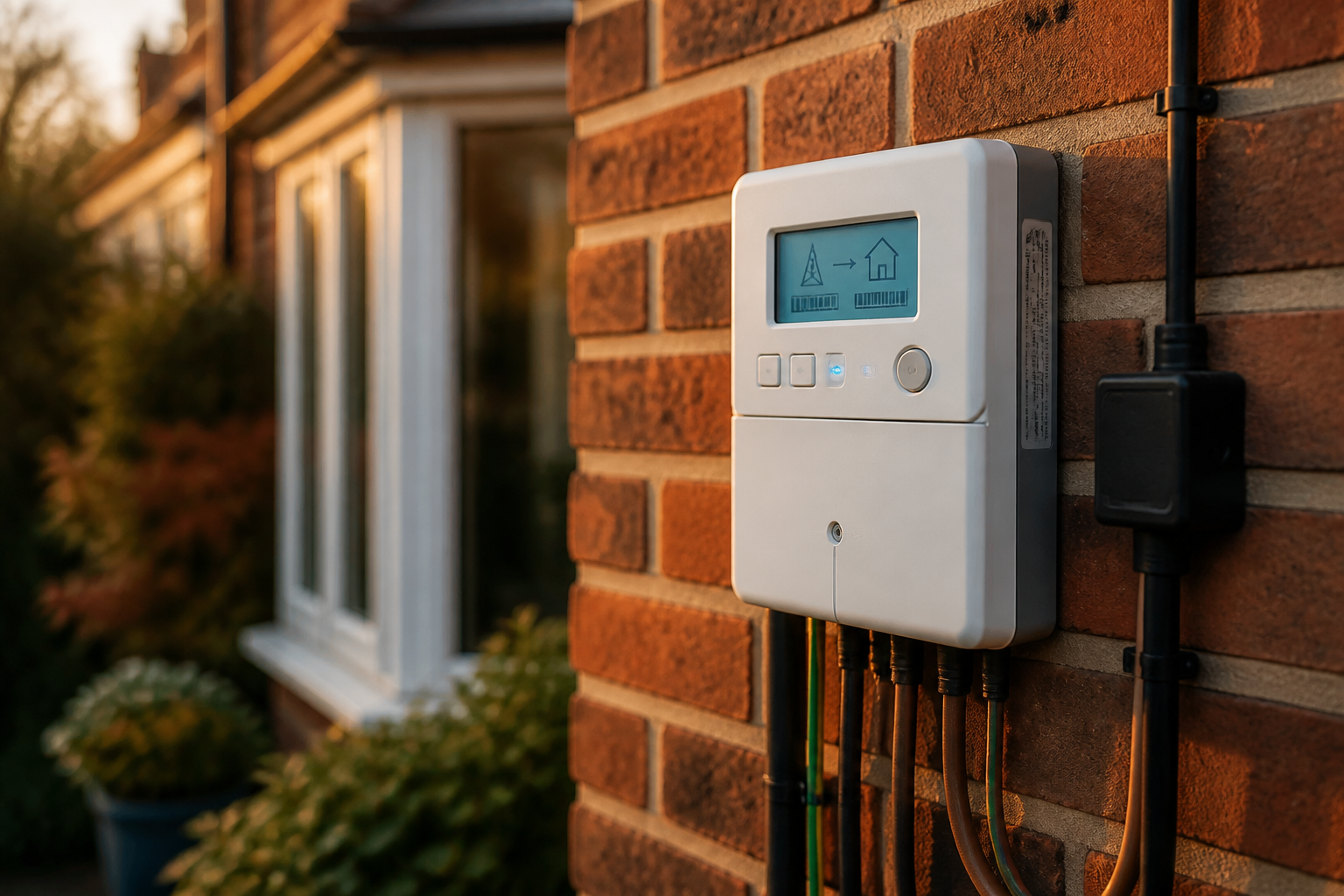
The Smart Export Guarantee, introduced under Ofgem regulation in 2020, replaced the legacy Feed-in Tariff export payment system for small scale renewable generators in Great Britain. Under this legal framework, all licensed electricity suppliers with 150,000 or more domestic customers must offer a tariff that pays households for electricity exported back to the National Grid. While the scheme guarantees a mechanism for payment, suppliers are free to set their own contract terms, rate structures, and payment frequencies. Understanding how these rules operate is essential for any household installing solar photovoltaic panels or domestic battery storage.
How the Smart Export Guarantee regulatory framework operates
The legal obligation for the Smart Export Guarantee rests on electricity suppliers under standard licence condition 57, administered by the regulator Ofgem. Under these rules, qualifying domestic energy generators receive payment for every kilowatt hour (kWh) of clean electricity sent into the distribution network. Unlike the legacy Feed-in Tariff, which paid a fixed, index linked generation tariff regardless of export volume, the Smart Export Guarantee measures export directly using half hourly smart metering.
To qualify for export payments under Ofgem regulations, your generation system must meet four fundamental criteria:
- Total capacity must not exceed 5 megawatts for solar PV, wind, micro-combined heat and power, or hydro installations.
- The installation must be located in England, Scotland, or Wales.
- All equipment must be installed by an accredited installer holding Microgeneration Certification Scheme (MCS) accreditation or an equivalent recognized standard.
- The property must feature a half hourly capable meter, typically a second generation smart meter (SMETS2) or an upgraded first generation smart meter (SMETS1), capable of recording export readings.
Suppliers can offer fixed or variable rates for exported power. A fixed export tariff pays a consistent rate per kilowatt hour over the term of the agreement, whereas a variable or dynamic tariff alters rates based on wholesale electricity market conditions. However, Ofgem rules dictate that export rates must remain above zero at all times, preventing suppliers from charging households when export prices turn negative in wholesale power markets.
Technical requirements: Metering, MCS certification, and DNO notification
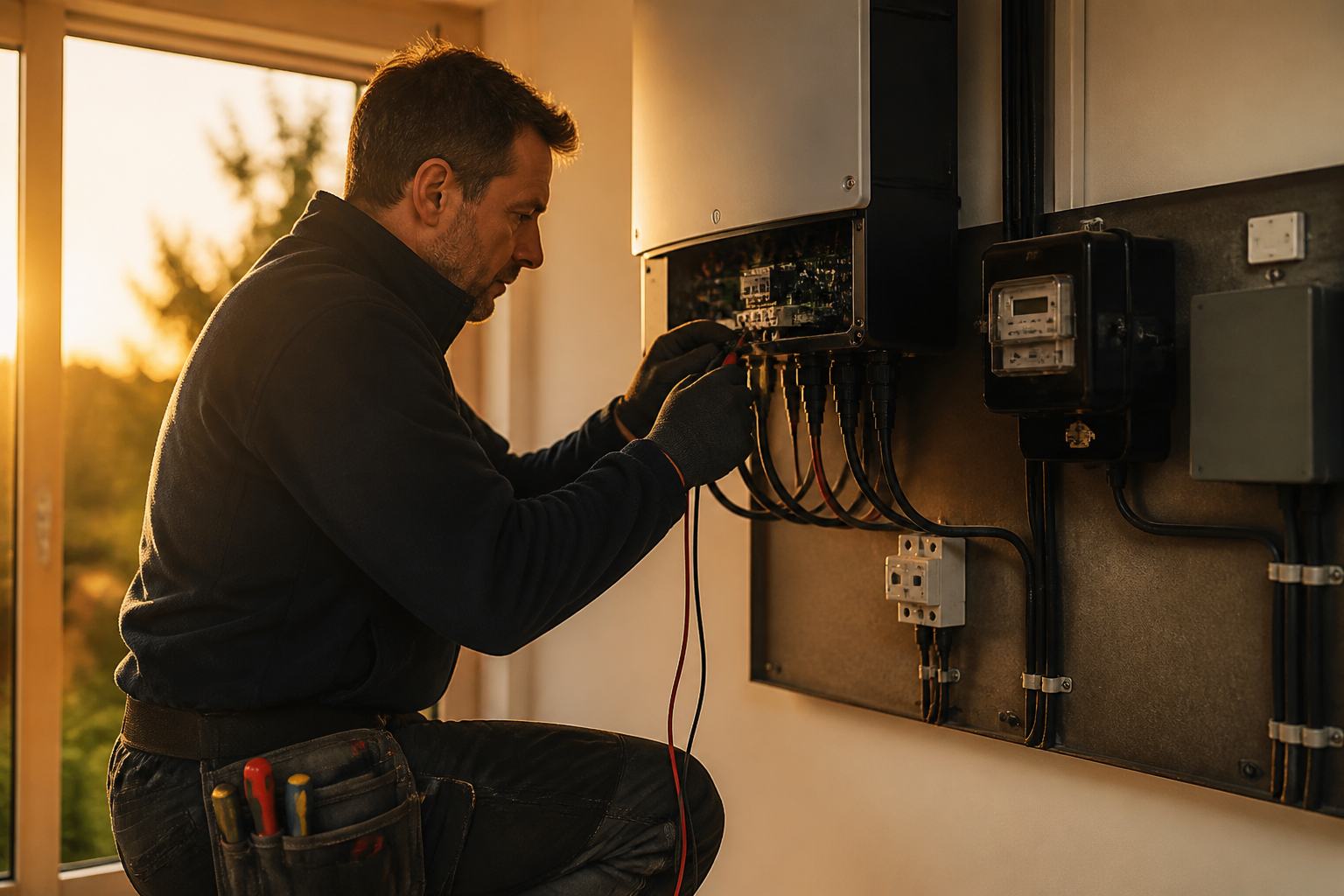
Securing export payments requires formal documentation verifying that your generation system complies with UK electrical safety and grid stability standards. When you install solar panels or battery storage, your installer must issue an MCS certificate confirming that the equipment and installation method conform to standards such as MCS 001 and MCS 012. Without an MCS certificate or suitable equivalent proof, energy suppliers will reject your export tariff application.
In addition to installer certification, your local Distribution Network Operator (DNO) must be notified of the installation. For smaller domestic generation systems operating under 3.68 kilowatts per phase, your installer submits a G98 notification to the DNO within 28 days of commissioning. For larger residential systems, a G99 application must be approved prior to installation. Once approved, the DNO assigns a Unique Export MPAN (Meter Point Administration Number) to your property, which identifies your specific export meter on the national energy database.
| Requirement | Responsible Body | Compliance Criteria | Key Document |
|---|---|---|---|
| System Accreditation | Microgeneration Certification Scheme (MCS) | Equipment and installation standards | MCS Certificate |
| Grid Connection | Distribution Network Operator (DNO) | Engineering Recommendation G98 or G99 | DNO Approval Letter |
| Export Measurement | Meter Asset Provider / Supplier | SMETS2 or upgraded SMETS1 smart meter | Export MPAN |
| Export Tariff Contract | Licensed Energy Supplier | Standard Licence Condition 57 compliance | SEG Payment Agreement |
Smart meters play a central operational role in export tracking. Older traditional meters or basic digital meters cannot measure reverse electricity flow and may generate errors or run backwards if exposed to unmetered export. A SMETS2 smart meter measures import and export independently every 30 minutes, automatically transmitting export logs to your chosen supplier over the secure Smart DCC communication network.
How battery storage interacts with export rules
Integrating home battery storage alongside solar PV adds flexibility but introduces regulatory distinctions between green export and brown export. Green export refers to power generated directly by renewable hardware such as solar panels. Brown export refers to power imported from the national grid into a battery storage unit and subsequently exported back to the grid during peak hours.
Some energy suppliers restrict Smart Export Guarantee eligibility strictly to green export, requiring households to sign a declaration confirming that exported energy originates entirely from renewable generation. Other suppliers accept mixed or brown export on specialized dynamic tariffs, provided the property uses an approved smart meter capable of recording timed half hourly flows. Before pairing battery storage with an export agreement, households should check individual supplier terms regarding battery discharge.
Export limitation devices, governed under Energy Network Association G100 standards, may also apply if your solar array or battery inverter capacity exceeds the grid connection limit set by your local network operator. If your inverter is capped at 3.68 kilowatts using a G100 export limiter, your maximum physical export to the grid will not exceed that limit, directly capping your peak export earning potential.
Financial calculations and export payment structures
Calculating export revenue depends on your home's total self consumption rate. Self consumption describes the proportion of generated solar power used directly by appliances in your home rather than sent to the grid. Because import tariffs are higher than standard export tariffs, consuming generated solar power directly delivers greater bill savings than exporting it.
According to data published by the Energy Saving Trust, an average UK home with a 4 kilowatt peak (kWp) solar PV array generates approximately 3,400 to 4,000 kilowatt hours of electricity annually. A typical household without battery storage might self consume 30 to 40 percent of that solar energy, leaving 60 to 70 percent available for export. At an export tariff rate of 15 pence per kilowatt hour, exporting 2,400 kilowatt hours yields an annual return of £360. Adding a domestic battery storage system increases self consumption to 70 or 80 percent, reducing exported units but offsetting higher priced grid import.
Households are free to choose a different company for their export tariff than their import supplier. While some energy suppliers offer higher export rates to customers who purchase import electricity from them, Ofgem rules ensure that suppliers cannot force households to bundle import and export services together.
What this means for you
If you plan to install solar PV or battery storage, ensure your installer is MCS accredited and handles the DNO notification process on your behalf. Keep all commissioning documentation, including the MCS certificate and DNO confirmation, as your export supplier will request these during application. Check that your smart meter is recording export data, and request an export MPAN from your supplier if one has not already been assigned to your property. Comparing independent export rates across suppliers can maximize your annual earnings without requiring you to switch your main home electricity supplier.
Employees accessing home green technology through the Net Zero Home Scheme can select accredited installers who provide the required MCS documentation and DNO filings necessary to secure export tariffs.
Frequently asked questions
Do I need a smart meter to receive Smart Export Guarantee payments?
Yes, you must have a smart meter capable of reading half hourly export data, such as a SMETS2 meter or compatible SMETS1 meter. Standard digital or dial meters cannot record export power, and energy suppliers require verified export readings to calculate your payments.
Can I choose a different supplier for export than my import supplier?
Yes, under Ofgem regulations, you can select any licensed supplier offering a Smart Export Guarantee tariff, regardless of who supplies your home's import electricity. However, some suppliers offer enhanced export rates exclusively to their own import customers.
Can I receive Smart Export Guarantee payments alongside the Feed-in Tariff?
You cannot receive export payments from both schemes for the same generation equipment. If you receive legacy Feed-in Tariff generation payments, you can opt out of deemed FIT export payments and switch to a Smart Export Guarantee tariff while retaining your FIT generation payments.
Sources
- Smart Export Guarantee (SEG), Ofgem
- Smart Export Guarantee explained, Energy Saving Trust
- MCS Standards and Certification, Microgeneration Certification Scheme