G100 Export Limitation Rules for UK Solar and Batteries
A guide to ENA G100 rules, explaining how dynamic export limitation allows UK homes to install larger solar and battery systems without overloading local electricity grids.
- Written by
- Net Zero Home Scheme editorial team
- Last updated
- Topic
- solar, battery storage, regulation
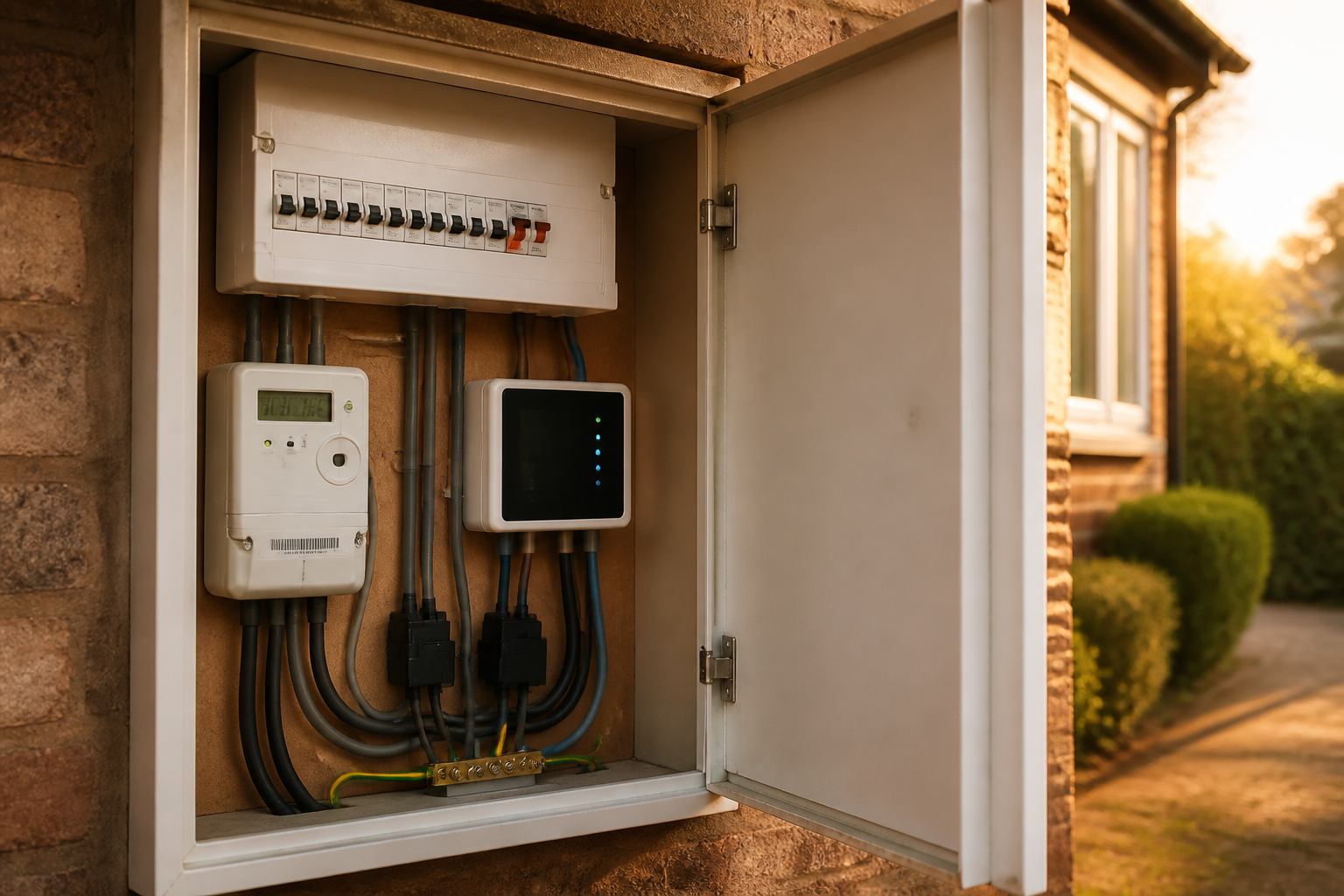
Distribution Network Operators across England, Scotland, and Wales set strict boundaries on how much power domestic generation systems can send into the local electricity grid. Under standard grid connection rules governed by the Energy Networks Association, a single-phase household can usually export a maximum of 3.68 kilowatts, equivalent to 16 amperes at 230 volts. When householders wish to install larger solar PV arrays or high-output battery systems that can generate far more power, network operators often impose dynamic curtailment requirements under Engineering Recommendation G100.
Understanding how dynamic export limitation works allows you to design a higher capacity home energy system while remaining fully compliant with distribution network rules and maintaining safety across the local low-voltage grid.
How ENA G100 controls system export
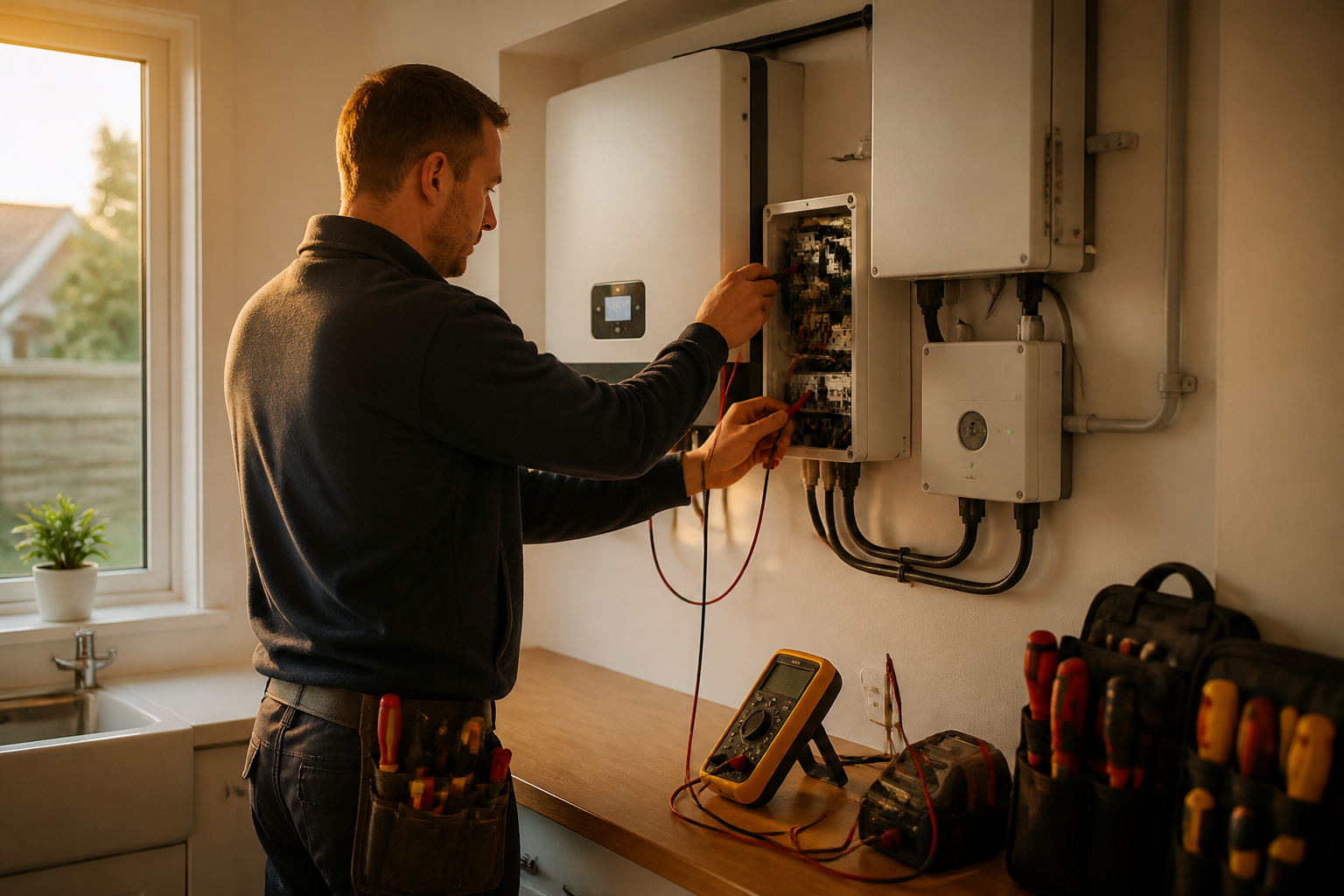
Engineering Recommendation G100 is the technical standard published by the Energy Networks Association that governs Export Limitation Schemes. An Export Limitation Scheme comprises measuring equipment, a processing unit, and control devices that continually monitor the net power flow at your main incoming electricity meter.
When your solar panels generate electricity or your battery discharges, the power is first absorbed by your household loads. If generation exceeds your real-time electricity consumption, the surplus flows toward the grid. A G100-compliant system uses current transformers or digital power meters fitted at your consumer unit to read this export rate continuously.
If the exported power approaches the threshold agreed with your Distribution Network Operator, such as the standard 3.68 kilowatt single-phase ceiling or a lower site-specific restriction, the G100 controller sends an immediate signal to the inverter. The inverter ramps down its output or redirects excess power into a home storage battery within seconds, ensuring your export never exceeds the grid boundary limit.
| Parameter | Technical Requirement | Governing Standard |
|---|---|---|
| Fail-Safe Response Time | Must reduce export to approved limit within 5 seconds | ENA EREC G100 Issue 2 |
| Measurement Accuracy | Within +/- 2% of maximum export capacity rating | ENA EREC G100 Clause 6.1 |
| Grid Interface Rules | Operates alongside standard G99 commissioning | ENA Engineering Recommendation G99 |
Fail-safe requirements under G100 Issue 2
The Energy Networks Association updated the standard to G100 Issue 2 to introduce stricter operational and safety criteria for domestic and commercial power control units. A core requirement of Issue 2 is mandatory fail-safe operation.
Installers must also ensure equipment cannot be altered by end users to bypass export limits. Control units must feature password protection, physical seals, or encrypted digital controls to ensure compliance throughout the operational lifespan of the system.
Why export caps affect solar array sizing
Without dynamic export limitation, households are frequently restricted to fitting a 3.68 kilowatt inverter under notification-only G98 grid rules. While a 3.68 kilowatt inverter works well for modest rooftop setups, it limits your ability to harvest winter daylight or charge batteries rapidly from larger solar panel arrays.
By installing a G100-compliant Export Limitation Scheme under a formal G99 grid application, you can install a larger inverter, such as a 6 kilowatt or 8 kilowatt model, alongside a 7 kilowatt-peak solar array. On a bright summer day, your solar system can deliver 6 kilowatts of clean power inside your home, simultaneously running a heat pump, charging an electric vehicle, and topping up a home battery, while the G100 control system ensures that export back to the grid never exceeds 3.68 kilowatts.
This framework removes the technical ceiling on internal clean energy generation without requiring costly, time-consuming infrastructure upgrades to local substation transformers or cables.
Installation requirements and DNO compliance
Installing a G100 export-limited energy system requires adherence to strict regulatory and technical protocols:
- Prior DNO Application: You must submit a formal G99 application to your Distribution Network Operator and receive written approval before commissioning generation equipment above standard limits.
- Approved Equipment Register: The inverter and control unit must be registered on the Energy Networks Association Type Test Register as fully compliant with G100 Issue 2.
- Accredited Installation: Installation must be carried out by a competent electrician registered with an approved body such as NICEIC, NAPIT, or the Microgeneration Certification Scheme.
- On-Site Fail-Safe Testing: During commissioning, the installer must perform a live test by deliberately interrupting the communication link between the sensor and inverter to verify that export drops within five seconds.
What this means for you
Dynamic export limitation offers UK homeowners a clear path to generating more of their own power without being constrained by local grid export bottlenecks. By selecting G100 Issue 2 certified hardware, you can size your solar array and inverter to match your total annual electricity consumption rather than being forced to restrict array size to meet a fixed export cap.
Working with an accredited installer registered with TrustMark and the Microgeneration Certification Scheme ensures that all G99 paperwork and G100 commissioning certificates are submitted correctly to your network operator.
Employees considering renewable installations can access member pricing on accredited solar PV, battery storage, and heat pump installations through the Net Zero Home Scheme, delivered by Net Zero Benefits alongside The Electric Car Scheme.
Frequently asked questions
Does a G100 system reduce how much solar energy I can use at home?
No. G100 limits only the power exported back into the public grid. Your inverter can generate its full potential output to supply household appliances, run heat pumps, or charge an energy storage battery.
What happens if my G100 sensor loses connection?
Under G100 Issue 2 rules, the system is engineered to be fail-safe. If the sensor loses power or signal connection, the inverter automatically reduces its export output to the agreed safe threshold within five seconds.
Is G100 required for standard solar installations?
No. If your inverter export capacity is 3.68 kilowatts or lower on a single-phase supply, the installation falls under standard G98 notification rules and does not require a G100 export limitation scheme.
Sources
- Engineering Recommendation G100 Issue 2, Energy Networks Association
- Standards and Quality Assurance Guidance, Microgeneration Certification Scheme
- Guidance on Connecting Generation to the Distribution Network, Ofgem