Heat Pump Anti-Legionella Cycles: Rules and Energy Costs
Learn how heat pump thermal disinfection cycles protect against Legionella bacteria, meet UK building standards, and impact your annual electricity bills.
- Written by
- Net Zero Home Scheme editorial team
- Last updated
- Topic
- heat pumps, energy efficiency, regulation
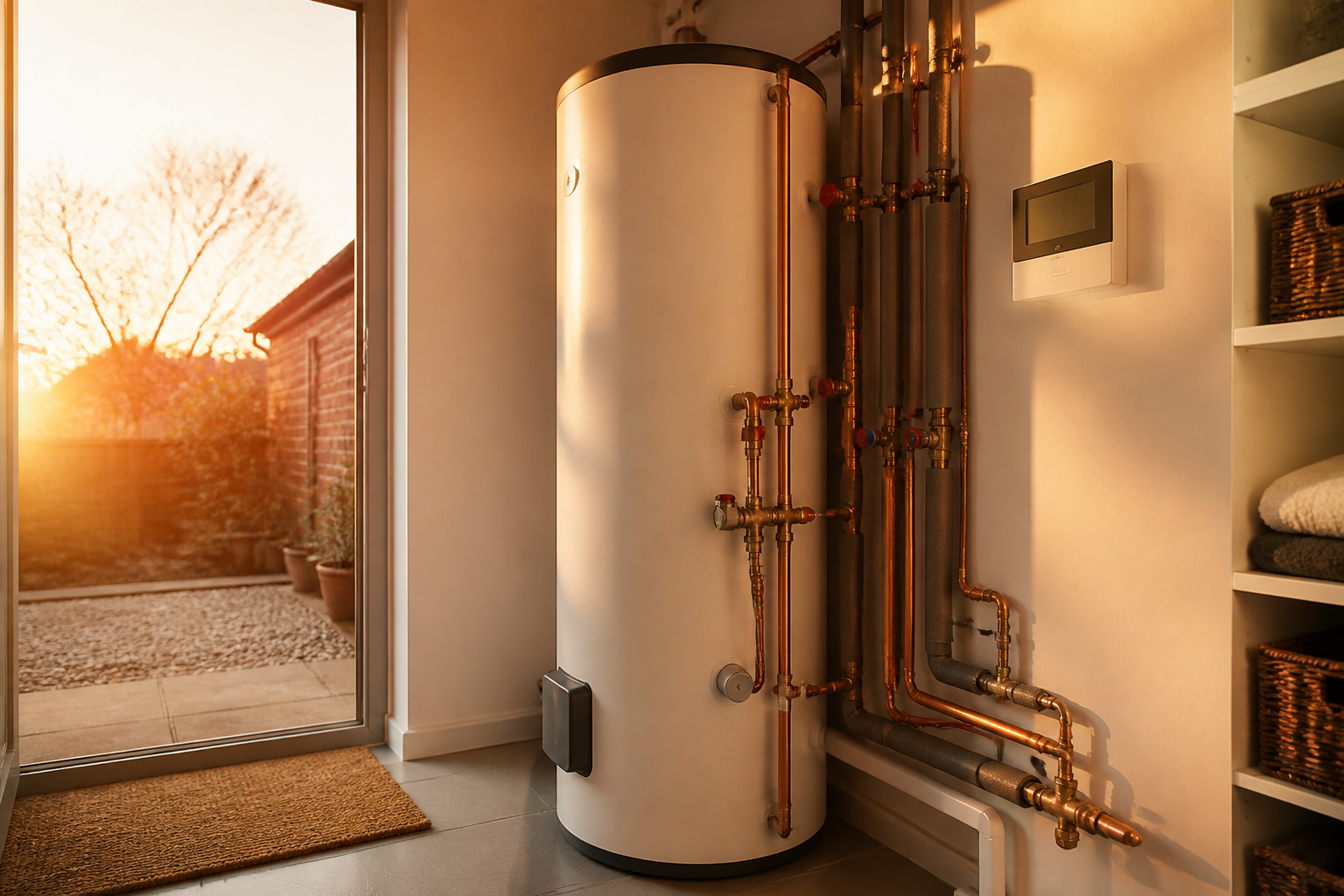
Air source and ground source heat pumps deliver maximum operational efficiency when generating low-temperature hot water. While space heating typically operates at flow temperatures between 35°C and 45°C, domestic hot water cylinders are generally heated to 50°C or 55°C during routine operation. This temperature range provides comfortable hot water for everyday household tasks while allowing the heat pump compressor to maintain a high Seasonal Coefficient of Performance (SCOP).
However, storing hot water below 60°C requires specific design precautions to address public health guidance regarding Legionella bacteria. Understanding how anti-legionella cycles work, what UK regulations govern them, and how they affect your electricity bill allows you to manage your heat pump system safely and efficiently.
The biology and regulation of Legionella in domestic hot water
Legionella pneumophila is a bacterium naturally present in freshwater environments that can colonise domestic water systems. According to guidance publication L8 from the Health and Safety Executive (HSE), Legionella bacteria multiply rapidly in stagnant water at temperatures between 20°C and 45°C. At temperatures above 50°C, the bacteria survive but cannot multiply, while thermal pasteurisation occurs rapidly at 60°C and above.
UK Building Regulations Approved Document G specifies safety standards for hot water supply and storage. To minimise microbial risk, stored hot water must be capable of being raised to a temperature that prevents bacterial growth. Additionally, guidance from the Chartered Institution of Building Services Engineers (CIBSE Guide G) recommends that domestic hot water storage vessels are periodically heated to at least 60°C to destroy any residual bacteria.
Because standard heat pump cycles usually stop around 50°C to 55°C to preserve compressor efficiency, systems rely on a periodic high-temperature sterilisation routine, commonly called an anti-legionella cycle or thermal pasteurisation boost.
How thermal pasteurisation works in a heat pump system
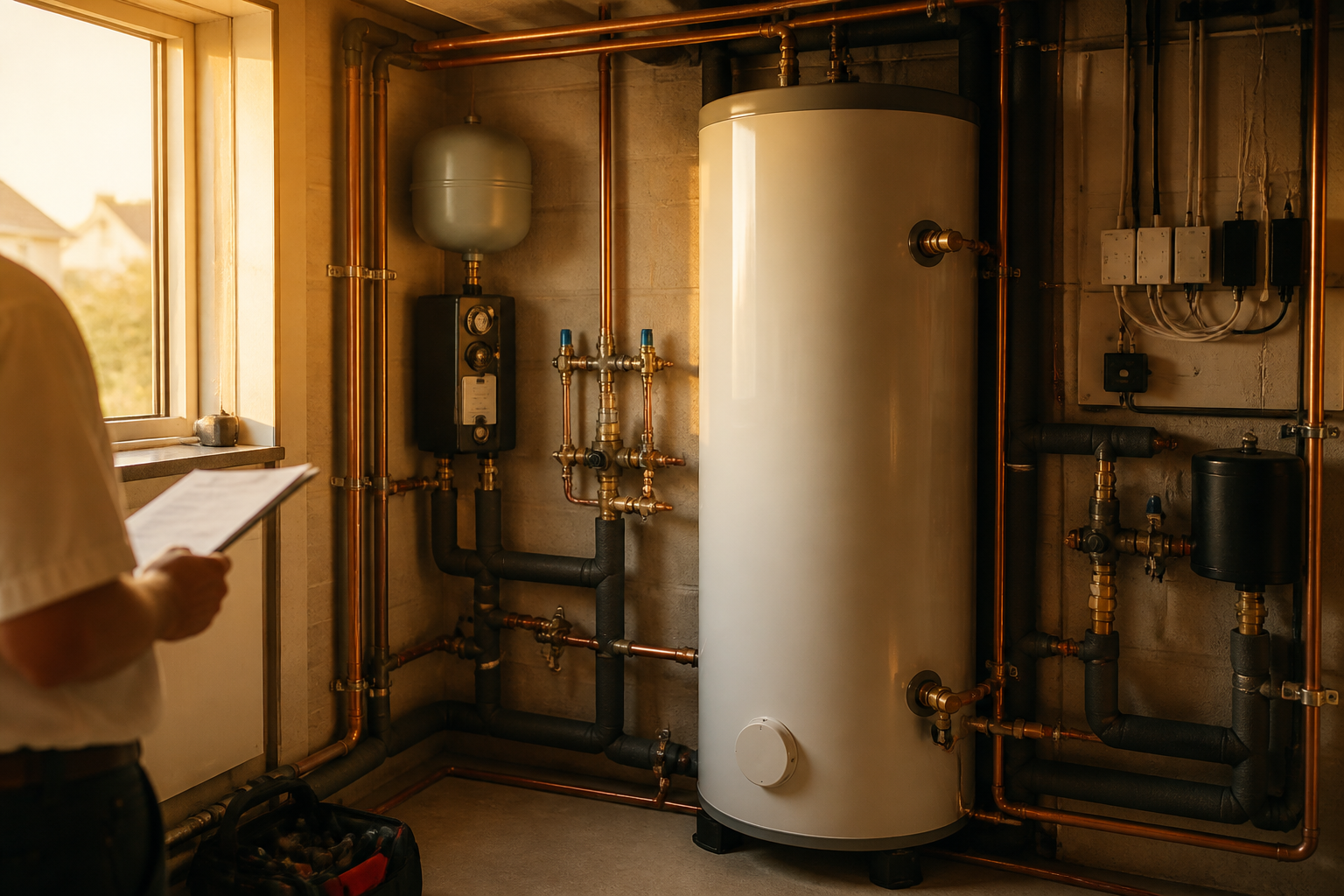
The Microgeneration Certification Scheme (MCS) standard MIS 3005-D governs the design and installation of domestic heat pump systems in Great Britain. MCS standards require installers to configure heat pump controls so that the hot water cylinder undergoes automated anti-legionella cycles.
During a standard heating cycle, the heat pump compressor uses refrigerant gas compression to heat the water inside the cylinder coil. Modern heat pumps using refrigerants such as R32 or R290 (propane) can reach 55°C without auxiliary heat. However, to lift the stored water from 55°C to the required 60°C or 65°C target, the system controller typically engages an integrated electrical immersion heater element.
A standard pasteurisation cycle follows three operational stages:
- Pre-heating by heat pump: The external heat pump unit heats the cylinder to its maximum target temperature, usually 50°C to 55°C, operating at a typical Coefficient of Performance (COP) of 2.2 to 2.8.
- Direct electric boost: The heat pump controller switches on the immersion element (typically rated at 3 kW) to raise the cylinder temperature to 60°C or 65°C.
- Dwell time: The system holds the cylinder temperature at 60°C for a minimum of 60 minutes, or at 65°C for at least 10 minutes, ensuring complete pasteurisation across the entire volume of stored water.
The frequency of these cycles can usually be adjusted within the heat pump controller interface, typically defaulting to once every 7 to 14 days, or following periods where cylinder temperatures have stayed low.
Energy consumption, efficiency, and running costs
Because an immersion heater relies on direct electrical resistance heating, it operates at a COP of 1.0, meaning 1 kWh of electrical energy delivers exactly 1 kWh of thermal energy. In contrast, when the heat pump heats water to 50°C, it delivers roughly 2.5 kWh of thermal energy per 1 kWh of electricity consumed.
To calculate the extra energy required for a weekly anti-legionella cycle, consider a standard 200-litre hot water cylinder:
- Thermal energy required: Raising 200 litres (200 kg) of water from 50°C to 60°C requires a temperature rise of 10°C. Using the specific heat capacity of water (4.184 kJ/kg°C), this process requires approximately 2.33 kWh of thermal energy.
- Electrical input: Delivered via a direct immersion heater (COP 1.0), this adds 2.33 kWh of electricity consumption per cycle, plus minor standing losses during the high-temperature dwell time.
The table below summarizes the theoretical annual energy consumption and direct cost impact of anti-legionella schedules for a 200-litre cylinder, assuming an off-peak electricity price of 15p per kWh and a standard electricity price of 24.5p per kWh based on figures from the Energy Saving Trust.
| Schedule Frequency | Target Temp (°C) | Thermal Energy per Cycle | Annual Electricity Draw | Estimated Annual Cost (Standard Tariff) | Estimated Annual Cost (Off-Peak Tariff) |
|---|---|---|---|---|---|
| Weekly (52 cycles/year) | 60°C | 2.33 kWh | ~121 kWh | ~£29.65 | ~£18.15 |
| Fortnightly (26 cycles/year) | 60°C | 2.33 kWh | ~61 kWh | ~£14.95 | ~£9.15 |
| Weekly (52 cycles/year) | 65°C | 3.49 kWh | ~181 kWh | ~£44.35 | ~£27.15 |
| Fortnightly (26 cycles/year) | 65°C | 3.49 kWh | ~181 kWh | ~£90.50 | ~£13.65 |
Note: Figures assume full cylinder heating from 50°C base temperature without simultaneous hot water draw-off.
How to optimise controls and schedule disinfection safely
While anti-legionella cycles represent a small portion of a home's overall heating bill, careful commissioning ensures maximum efficiency without compromising safety.
Recommended control practices
- Schedule for off-peak hours: Program the heat pump controller to execute the weekly pasteurisation cycle during off-peak electricity tariff windows (such as 02:00 to 05:00) or when solar PV generation is available.
- Set realistic target temperatures: Maintaining 60°C for 60 minutes achieves the same disinfection level as 65°C for 10 minutes, but puts less thermal stress on components and reduces standing losses from the cylinder.
- Ensure thermostatic mixing valves (TMVs) are fitted: Storing water at 60°C or above presents a severe scalding risk. Building Regulations Part G mandates the installation of thermostatic mixing valves (or fail-safe blender valves) at outlets, particularly baths and showers, to mix hot water with cold mains water, limiting outlet temperatures to a safe 38°C to 48°C.
- Avoid disabling the schedule: Disabling anti-legionella cycles to save minor running costs violates safety guidelines published by the HSE and can allow bacteria to build up in low-turnover cylinders.
What this means for you
If you currently own an air source or ground source heat pump, check your system controller to confirm how your anti-legionella cycle is configured.
- Confirm that your cycle is scheduled at least once every 14 days in line with installer documentation.
- Check that the boost duration is set to run overnight if you use a time-of-use electricity tariff.
- Verify that thermostatic mixing valves are fitted near bathrooms to prevent scalding when water is boosted to 60°C or higher.
- Review cylinder insulation to ensure standing heat losses remain under 1.5 kWh per 24 hours as specified by European ERP energy labelling standards.
Householders considering a modern low-carbon heating system can explore installer options through the Net Zero Home Scheme, which connects employees with accredited heating engineers across England, Scotland, and Wales.
Frequently asked questions
Can a heat pump reach 60°C without using an immersion heater?
Some high-temperature heat pumps using natural refrigerants like R290 (propane) or CO2 (R744) can reach 60°C or higher directly via the heat pump compressor. However, running a compressor at these elevated flow temperatures drops its instantaneous COP significantly, so using a short electrical immersion boost often results in similar overall energy consumption while reducing mechanical wear on the compressor.
How often should an anti-legionella cycle run?
Under MCS MIS 3005-D guidance and manufacturer operational standards, domestic thermal disinfection cycles should run once a week or once every fortnight. If a property is left vacant or hot water is unused for several days, running a manual boost cycle before drawing hot water is recommended.
Do point-of-use or instantaneous hot water systems need thermal disinfection?
No. Instantaneous hot water systems, such as direct electric showers or combi boilers that do not store water, do not require anti-legionella cycles. Legionella risk is primarily associated with stored water volumes where water sits between 20°C and 45°C for extended periods.
Sources
- Legionnaires' disease: The control of legionella bacteria in water systems (L8), Health and Safety Executive
- Approved Document G: Sanitation, hot water safety and water efficiency, HM Government
- MCS MIS 3005-D: Heat Pump Systems Standard, Microgeneration Certification Scheme
- Heat Pumps and Hot Water Storage Guide, Energy Saving Trust