Installing a Standalone Hot Water Heat Pump in a UK Home
A step-by-step guide to installing a standalone hot water heat pump cylinder in a UK home, including costs, ducting, building regulations and realistic bill savings.
- Written by
- Net Zero Home Scheme editorial team
- Last updated
- Topic
- heat pumps, energy efficiency, energy bills
Heating domestic hot water accounts for roughly 18% of the average UK household energy footprint according to Energy Saving Trust data. For homeowners who rely on direct electric immersion heaters, oil boilers, or older gas systems, replacing a standard hot water cylinder with a standalone hot water heat pump offers a targeted way to reduce energy consumption without replacing the entire central heating system.
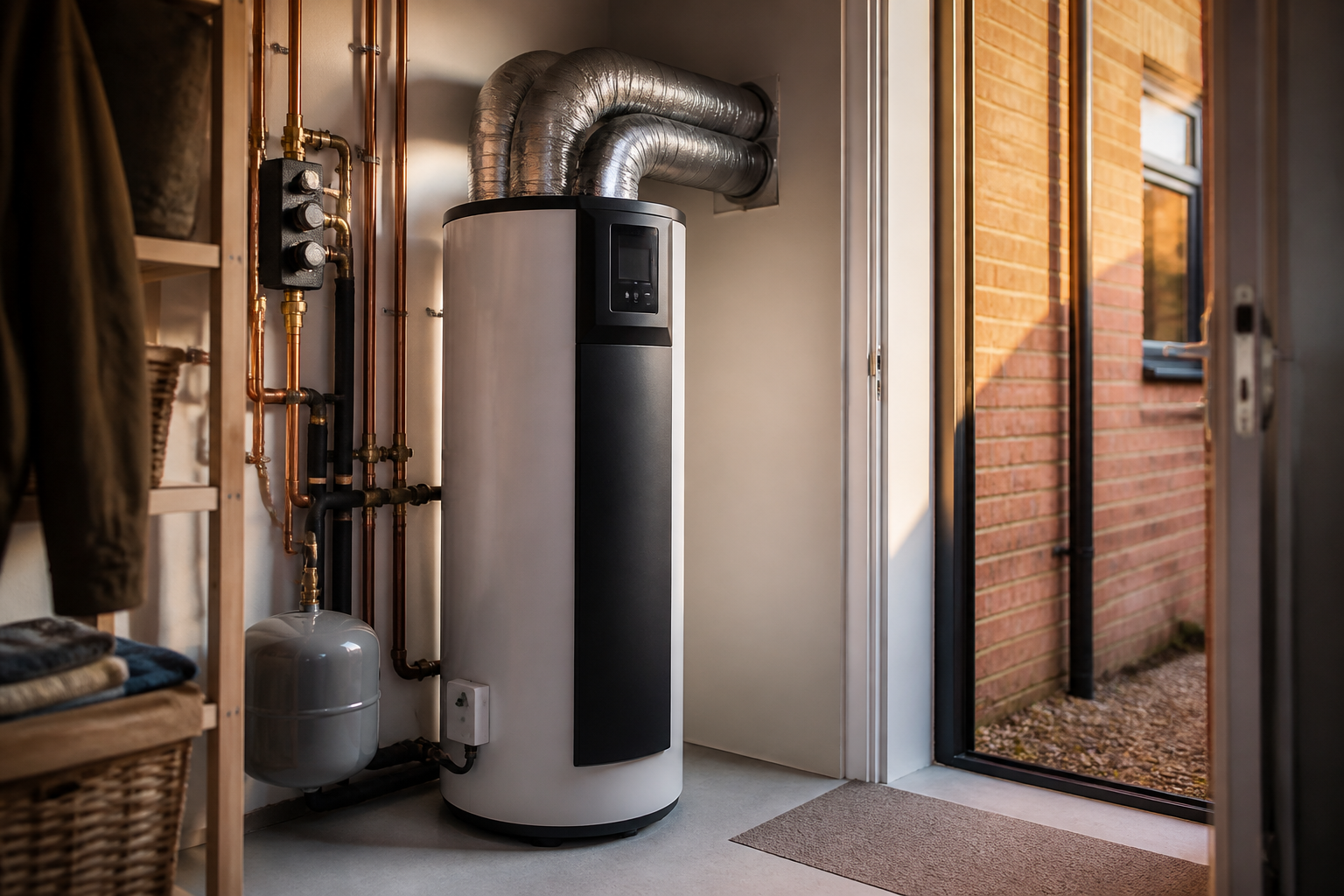
Also known as domestic hot water (DHW) heat pumps or micro-heat pump cylinders, these units integrate a small air-source compressor directly onto the top of an unvented hot water cylinder. They extract heat from surrounding indoor air, loft spaces, or ducted outdoor air to heat water to 55°C or 60°C at roughly one-third of the electrical input of a standard immersion heater. This guide breaks down what you need to check before buying, what installation costs to expect, the key regulations to follow, and the realistic timeline for installation.
What is a standalone hot water heat pump?
Unlike a full space-heating air source heat pump, which supplies hot water to radiators or underfloor loops via a large outdoor monobloc or split unit, a standalone hot water heat pump is designed strictly for domestic taps, showers, and baths.
It consists of a 200-litre to 300-litre unvented stainless steel cylinder topped with an integrated compressor unit. The unit draws air across an evaporator coil, pressurises the refrigerant to raise its temperature, and transfers that heat to the water cylinder through a micro-channel heat exchanger. Most units achieve a Coefficient of Performance (COP) between 2.5 and 3.4 in UK climate conditions, meaning every 1 kWh of electricity consumed yields 2.5 kWh to 3.4 kWh of heat energy in your water tank.
Step 1: Assessing space, airflow and floor loading
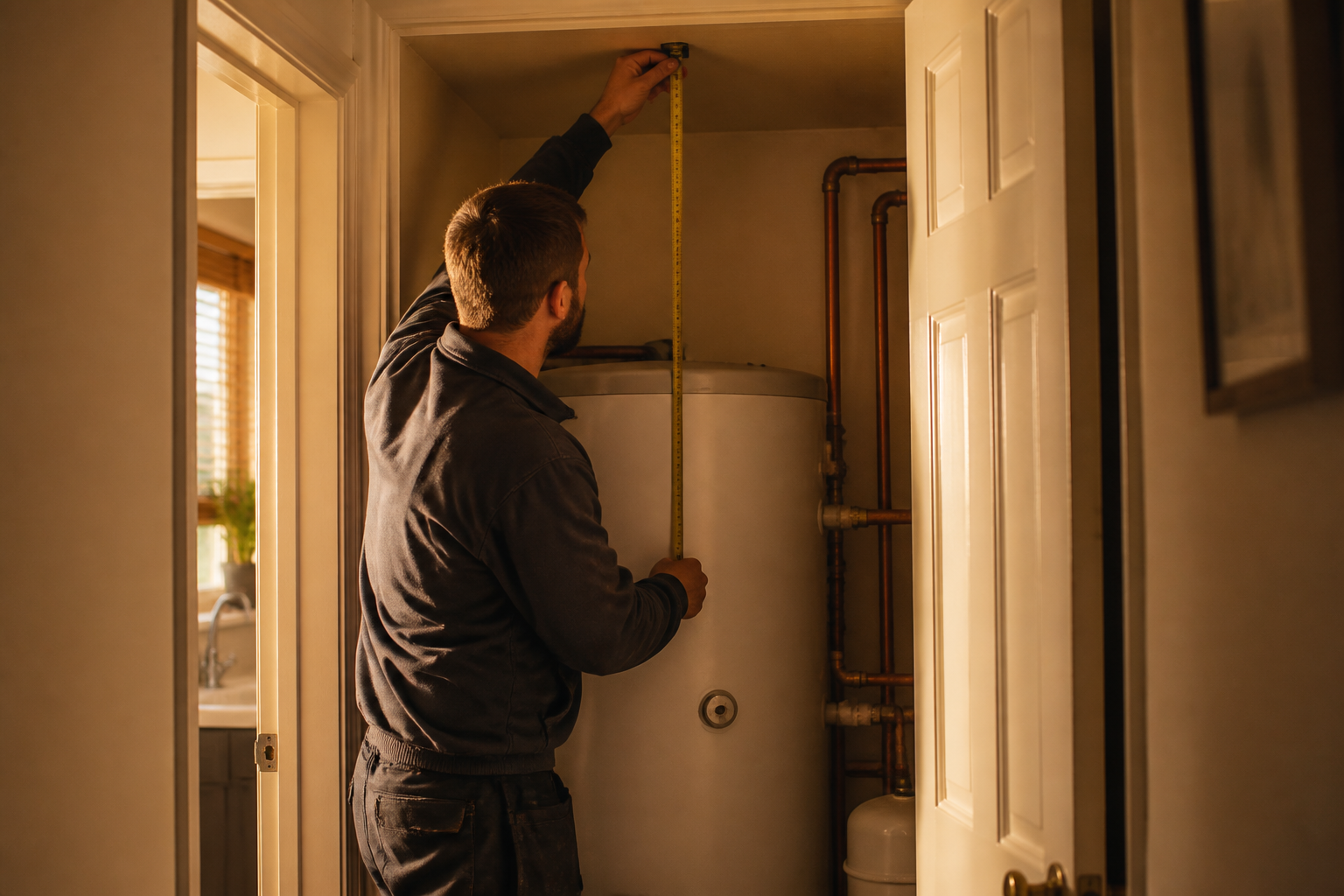
Before booking an installer, inspect the proposed installation location against three physical constraints:
- Vertical clearance: The integrated top compressor adds height. A 200-litre unit typically stands 1.6 to 1.8 metres tall, while a 300-litre model can exceed 2.0 metres. You must leave at least 300mm to 500mm above the unit for air duct connections and maintenance access.
- Floor loading capacity: A 250-litre cylinder weighs around 60kg empty but over 310kg when full. Ground floor concrete slabs present no issue, but installation on suspended timber floorboards requires structural verification to ensure joists can support the concentrated static load.
- Airflow and ducting routes: The compressor requires a steady airflow rate, usually between 200 and 400 cubic metres per hour. If placed in an unvented, unheated utility room without external ducting, the unit will extract warmth from the room and drop its ambient temperature by 3°C to 5°C. To prevent localized cooling during winter, installer best practice is to drill two 150mm or 160mm core holes through an external wall to duct intake and exhaust air directly outside.
Step 2: Understanding costs, savings and grant limitations
A standalone hot water heat pump unit costs between £1,200 and £2,200 for the hardware alone. When adding professional plumbing, core drilling for ducting, electrical connections, and unvented safety pipework, total installation costs typically range from £2,000 to £3,500.
An important trade-off involves grant funding. The UK Government's Boiler Upgrade Scheme (BUS) provides £7,500 grants for full space-heating heat pump installations in England and Wales, but standalone DHW heat pumps are ineligible because they do not replace the primary central heating system. However, upfront costs remain significantly lower than a full central heating heat pump conversion, which averages £11,000 to £13,000 before grant deductions.
For households replacing direct electric immersion heating (consuming electricity at standard flat-rate tariffs of around 24.5p per kWh), a hot water heat pump with a COP of 3.0 can cut water-heating electricity usage from roughly 3,000 kWh per year down to 1,000 kWh per year, delivering annual bill savings of £450 to £500.
Step 3: Finding an accredited installer and verifying regulations
Installing a hot water heat pump cylinder touches three distinct areas of UK building regulations:
- Building Regulations Approved Document G (G3 Unvented): Because these are sealed, pressurised cylinders, the installer must hold a valid G3 Unvented Hot Water qualification. This ensures correct fitting of expansion vessels, temperature and pressure relief valves (TPRV), and tundish discharge pipework terminating safely outdoors.
- BS 7671 Electrical Safety: The heat pump compressor and backup immersion element require a dedicated electrical connection, usually a 13A or 16A fused spur wired back to the consumer unit. The work should be executed by an electrician registered with a competent person scheme such as NICEIC, NAPIT, or SELECT.
- Water Regulations Advisory Scheme (WRAS): Ensure the cylinder model has WRAS approval or equivalent compliance to meet UK wholesome water regulations.
While MCS (Microgeneration Certification Scheme) accreditation is mandatory for claiming BUS grants on space-heating heat pumps, standalone DHW heat pumps do not require MCS registration for grid compliance. However, selecting an MCS or TrustMark accredited heating installer guarantees adherence to formal consumer protection codes such as RECC or HIES.
Step 4: The installation process and realistic timeline
From your initial enquiry to commissioning, a standard installation follows a clear four-phase timeline:
- Phase 1: Technical Site Survey (Day 1): The engineer inspects your electrical consumer unit, measures ceiling heights, checks floor structures, and identifies the shortest ducting route to an exterior wall.
- Phase 2: Equipment Ordering (1 to 2 Weeks): The cylinder, insulated flexi-ducting, external wall grilles, and G3 safety kits are delivered to site.
- Phase 3: Physical Installation (1 to 2 Days): The installer drains and removes the old cylinder, mounts the new heat pump unit, drills 150mm core vents through the external brickwork, runs insulated ducting, and connects cold mains water feeds and hot distribution pipework.
- Phase 4: Electrical Wiring and Commissioning (Half Day): The electrician completes connections, tests earth continuity, sets the legionella disinfection schedule (typically heating water to 60°C once per week via the boost element), and issues a G3 compliance certificate.
Comparing domestic hot water options
| System Type | Typical Installed Cost | Seasonal Efficiency (COP / % ) | Grant Eligibility | Primary Constraint |
|---|---|---|---|---|
| Standalone Hot Water Heat Pump | £2,000 - £3,500 | COP 2.5 - 3.4 (250% - 340%) | Ineligible for BUS | Requires ceiling clearance and external air ducting |
| Standard Electric Immersion Cylinder | £800 - £1,500 | COP 1.0 (100%) | Ineligible | High ongoing running costs on standard tariffs |
| System Boiler with Unvented Cylinder | £2,500 - £4,000 | 80% - 88% thermal efficiency | Ineligible | Requires active gas or oil connection and flue |
| Full ASHP (Space Heating + Water) | £11,000 - £13,000 (gross) | COP 2.8 - 4.0 (280% - 400%) | Eligible (£7,500 BUS grant) | Requires outdoor fan unit and pipework upgrade |
What this means for you
A standalone hot water heat pump is an ideal solution if your space heating system is already settled, for instance if you have modern high-heat retention storage heaters, a working biomass boiler, or a efficient gas system, but want to decarbonise your domestic hot water supply. By isolating hot water generation, you avoid turning on gas boilers during summer months and protect yourself against high peak electricity prices.
If you are evaluating home energy upgrades across your property, the Net Zero Home Scheme gives UK employees access to member pricing on solar PV, battery storage, heat pumps, and plug-in solar installed by accredited installers across England, Scotland, and Wales. Delivered by Net Zero Benefits alongside The Electric Car Scheme, it is completely free for employers and involves no salary sacrifice or payroll deductions.
Frequently asked questions
Can a hot water heat pump heat my radiators?
No. A standalone hot water heat pump is engineered exclusively to supply potable domestic hot water to taps, sinks, and showers. Its small compressor (typically 0.5 kW to 1.0 kW electrical input) lacks the thermal capacity required to heat space heating circuits or underfloor loops.
Do I need an outdoor unit installed on my garden wall?
No. Unlike traditional split or monobloc heat pumps, there is no separate outdoor box. The entire heat pump mechanism sits on top of the indoor cylinder. Air is drawn in and expelled either directly from the room or via small wall-mounted air vents connected by flexible insulated ducting.
How does the system prevent Legionella growth?
Legionella bacteria thrive in stagnant water between 20°C and 45°C. Standalone hot water heat pumps maintain daily storage temperatures around 50°C to 55°C using the heat pump cycle, and automatically activate an integrated electric immersion heater once a week to raise the tank temperature above 60°C, satisfying UK health and safety regulations.