Heat Pump Freeze Protection: Glycol vs Anti-Freeze Valves
Understand the physics, fluid dynamics, and maintenance requirements of glycol anti-freeze versus mechanical anti-freeze valves in UK monobloc heat pump installations.
- Written by
- Net Zero Home Scheme editorial team
- Last updated
- Topic
- heat pumps, energy efficiency, mcs
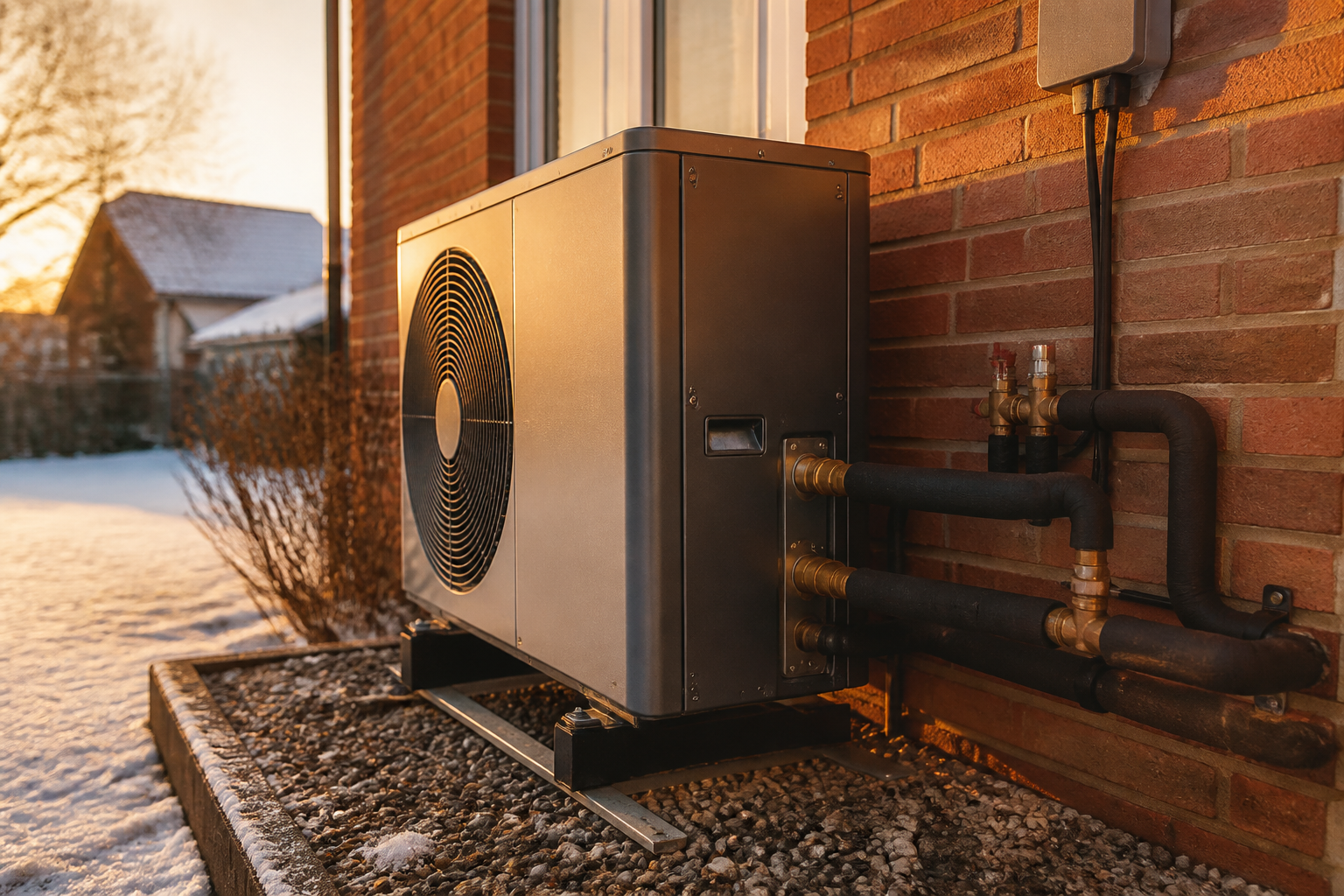
Monobloc air source heat pumps are the most popular heat pump design in Great Britain, combining the compressor, evaporator, and hydraulic components in a single outdoor unit. Unlike split systems, which circulate refrigerant between the outdoor compressor and indoor hydrobox, monobloc systems circulate water or a water-based heat transfer fluid directly through external pipework into the home.
During normal winter operation, continuous circulation and active heating prevent outdoor water from freezing. However, during extended winter power outages, system faults, or prolonged periods where the heat pump is turned off in freezing ambient temperatures, stagnant water in external pipework and the heat exchanger can freeze. Because water expands by approximately 9% as it solidifies into ice, frozen water exerts immense mechanical force, which can rupture copper pipework, crack brass fittings, and destroy the heat pump's plate heat exchanger.
To prevent structural damage, MCS installation standards (MIS 3005-D) require installers to incorporate dedicated freeze protection on all monobloc installations. The two main solutions used across England, Scotland, and Wales are chemical anti-freeze (inhibited propylene glycol) and mechanical anti-freeze valves. Each approach relies on distinct physics, carries different operational trade-offs, and impacts system efficiency in unique ways.
Propylene glycol solutions: Physics and trade-offs
Inhibited propylene glycol is a chemical additive mixed directly into the heating system's water. Unlike ethylene glycol, which is toxic and strictly prohibited in domestic heating circuits, food-grade propylene glycol is safe for home heating systems, provided correct backflow protection is installed.
Thermal capacity and fluid viscosity
Adding propylene glycol to water alters the thermodynamic properties of the heat transfer fluid. Pure water has a high specific heat capacity of approximately 4.18 kilojoules per kilogram kelvin (kJ/kg·K) and a dynamic viscosity of roughly 1.0 mPa·s at 20°C. A 20% to 30% concentration of propylene glycol lowers the freezing point of the mixture to between -8°C and -14°C, which provides robust freeze protection across British winter climates.
However, glycol alters fluid dynamics in two critical ways:
- Reduced specific heat capacity: A 30% glycol solution reduces the specific heat capacity of the fluid to around 3.80 kJ/kg·K. Because the fluid carries less heat energy per litre, the heat pump circulating pump must move a higher volumetric flow rate to deliver the same thermal output to indoor radiators or underfloor heating circuits.
- Increased fluid viscosity: Glycol increases dynamic fluid viscosity, especially at lower system operating temperatures. The higher fluid friction increases pressure drop across the heat exchanger and pipework, forcing the circulating pump to work harder.
These physical changes increase parasitic electrical consumption. According to technical guidance from CIBSE and the Energy Saving Trust, operating a residential heat pump with a 30% glycol mixture reduces overall Seasonal Coefficient of Performance (SCOP) by 2% to 5%, compared to running on pure water.
Regulations and maintenance requirements
Under the Water Supply (Water Fittings) Regulations 1999 in England and Wales, glycol mixtures represent a Fluid Category 3 or Fluid Category 4 hazard, depending on concentration and chemical additives. Mains water top-up connections must feature appropriate backflow prevention, such as a double check valve assembly or a Reduced Pressure Zone (RPZ) valve, to prevent glycol from siphoning into the public drinking water supply.
Furthermore, glycol degrades over time. Exposure to elevated temperatures and oxygen causes glycol to break down into organic acids, which lowers system pH and accelerates metallic corrosion. Under standard BS 7593, glycol systems require annual testing using a refractometer to verify fluid concentration, along with pH testing to ensure the pH remains between 7.5 and 8.5. In standard domestic setups, glycol must be flushed and replaced every three to five years, adding ongoing maintenance costs.
Mechanical anti-freeze valves: Physics and operation
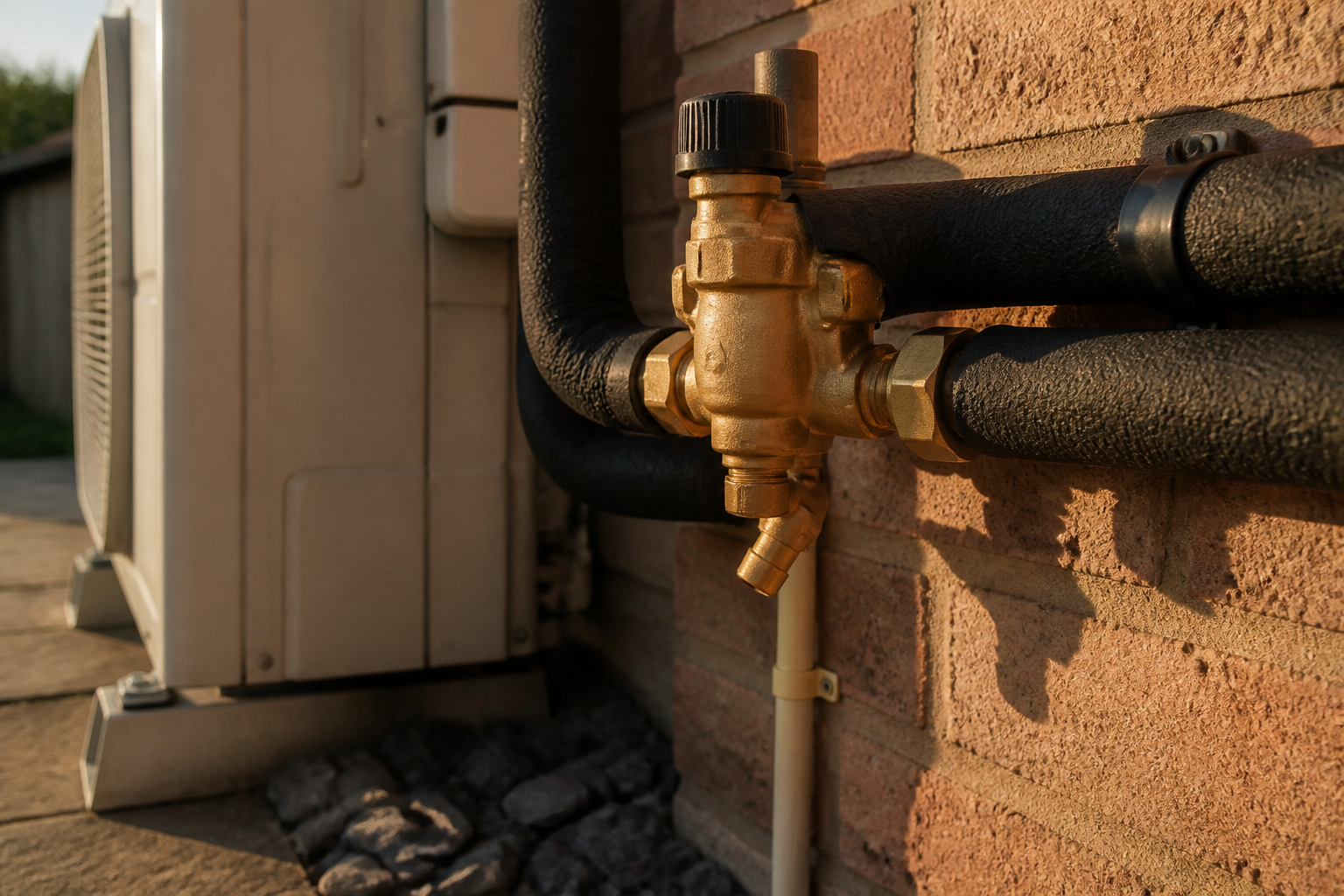
Mechanical anti-freeze valves (often called thermostatic drain-down or freeze protection valves) offer a physical alternative to chemical anti-freeze, allowing the heat pump to run on pure water treated only with standard corrosion inhibitors.
Thermostatic element and vacuum relief
Anti-freeze valves are installed outdoors on both the flow and return pipework, positioned as close as possible to the outdoor monobloc unit at the lowest physical point of the external loop. Each valve contains a precision thermostatic sensor element calibrated to ambient water temperature.
When water flow stops during freezing weather and the fluid temperature inside the valve drops to 3°C, the thermostatic element contracts, opening a small drain port. Cold water trickles out of the valve, reducing internal line pressure. If system water pressure is maintained by an active auto-filling loop or mains pressure, warm water from the indoor circuit flows out to replace the discharged water, raising fluid temperature above 3°C and closing the valve.
If power or water supply is completely interrupted during a deep freeze, the valves continue to discharge water as temperatures drop toward 1°C. To enable complete drainage of the exposed outdoor pipework and heat exchanger, anti-freeze valves are installed alongside air inlet vacuum breakers. The vacuum breaker allows air into the pipework, letting gravity drain all stagnant water out of the outdoor unit before it can freeze and expand.
Operational constraints and discharge management
While mechanical anti-freeze valves allow the heat pump to operate on pure water, maintaining maximum thermal efficiency and low pump electrical draw, they require careful installation design:
- Outdoor drainage path: Discharged water must be directed into an adjacent outdoor drain or a dedicated gravel soakaway. If discharging onto a patio, path, or driveway, the water will freeze into ice, creating a slip hazard.
- Auto-fill and system pressure: If anti-freeze valves open during a brief localized temperature drop, they release water from the sealed heating circuit. Unless an automatic filling loop or pressure maintenance unit is fitted, system pressure will drop, requiring manual repressurisation.
- Thermal insulation rules: Anti-freeze valves must not be covered with thermal pipe insulation, as insulation prevents the internal thermostatic element from accurately sensing ambient air and water conditions.
Comparing freeze protection options
The table below outlines the core technical and operational differences between chemical glycol and mechanical anti-freeze valves for UK monobloc heat pump systems.
| Feature / Metric | Propylene Glycol Solution | Mechanical Anti-Freeze Valves |
|---|---|---|
| Operating Fluid | Water and 20,30% Propylene Glycol | Pure Water with BS 7593 Inhibitor |
| Impact on SCOP Efficiency | 2% to 5% reduction in seasonal efficiency | Zero impact (100% water heat capacity) |
| Circulation Pump Load | Increased due to fluid density and viscosity | Baseline pump electrical consumption |
| Mains Water Protection | Fluid Category 3/4 double check or RPZ valve | Standard Fluid Category 2 double check valve |
| Maintenance Requirements | Annual pH and refractometer check; replace 3,5 yrs | Annual visual inspection and element testing |
| Total Power Outage Safety | Protects continuously down to -14°C | Protects by draining exposed fluid to ground |
| Initial Capital Cost | Lower upfront material cost (£80,£150) | Higher upfront hardware cost (£200,£350) |
Installation standards and regulatory compliance
When specifying freeze protection for a monobloc heat pump installation in Great Britain, installers must comply with multiple regulatory frameworks and technical standards:
- MCS MIS 3005-D: Requires heat pump systems to incorporate explicit freeze protection measures that safeguard external heat exchangers and pipework against frost damage.
- BS 7593: Mandates correct chemical dosing, water filtration, and ongoing water quality monitoring for all central heating circuits. Where glycol is used, inhibitor levels and pH balance must be checked during every annual service.
- Water Supply (Water Fittings) Regulations 1999: Enforces backflow prevention standards on all system filling loops based on the fluid hazard classification.
- Building Regulations Part L: Mandates that external hydronic pipework must be insulated with high-grade, UV-resistant thermal insulation to minimize heat loss, leaving only the thermostatic element of anti-freeze valves exposed to ambient air.
If you are assessing heat pump installation options through the Net Zero Home Scheme, accredited installers will evaluate your local microclimate, pipe lengths, power reliability, and drainage setup to recommend either glycol or anti-freeze valves for your property.
What this means for you
For UK householders choosing an air source heat pump, selecting between glycol and anti-freeze valves involves balancing efficiency, long-term maintenance, and peace of mind.
Choose propylene glycol if your home experiences frequent electrical outages, or if your monobloc outdoor unit cannot be easily drained to a safe soakaway or drain. Glycol provides continuous static protection without releasing water onto the ground.
Choose anti-freeze valves if you want to maximize seasonal efficiency, keep running costs low, and avoid the recurring cost of flushing and replacing chemical glycol every few years. Ensure your installer fits an automatic filling loop and provides suitable drainage.
Regardless of the choice, ensuring your system complies with MCS MIS 3005-D and BS 7593 will protect your heat pump investment against severe winter weather.
Frequently asked questions
Will anti-freeze valves dump my entire central heating water volume onto the ground?
No. Under standard conditions with an active mains supply, anti-freeze valves open momentarily to discharge tiny amounts of cold outdoor water, which is replenished by warm water from indoors. Complete drain-down only occurs during prolonged power failures combined with sub-zero temperatures, where draining the outdoor unit is necessary to prevent pipe burst damage.
How often does propylene glycol need to be replaced in a heat pump?
Propylene glycol degrades under thermal cycling and oxygen exposure, gradually becoming acidic. Heating engineers test glycol concentration and pH annually during routine maintenance. In most domestic heat pump installations, glycol must be flushed and replaced every three to five years to prevent internal system corrosion.
Can I install anti-freeze valves on a monobloc heat pump without an automatic filling loop?
While anti-freeze valves will physically operate without an auto-fill loop, any discharge of water reduces internal system pressure. Without an automatic filling loop to restore system pressure, the heat pump may trigger a low-pressure error code and stop operating until you manually repressurise the heating circuit using the fill loop.
Sources
- MCS MIS 3005-D: Heat Pump Systems Standard, Microgeneration Certification Scheme
- BS 7593 Water Treatment Standard for Heating Systems, British Standards Institution
- Water Supply (Water Fittings) Regulations 1999, Water Regulations Advisory Scheme