Installing Smart TRVs for Room Zoning: A UK Guide
A practical guide to installing smart thermostatic radiator valves in UK homes, covering compatibility, costs, installer questions and realistic timelines.
- Written by
- Net Zero Home Scheme editorial team
- Last updated
- Topic
- energy efficiency, energy bills, home energy
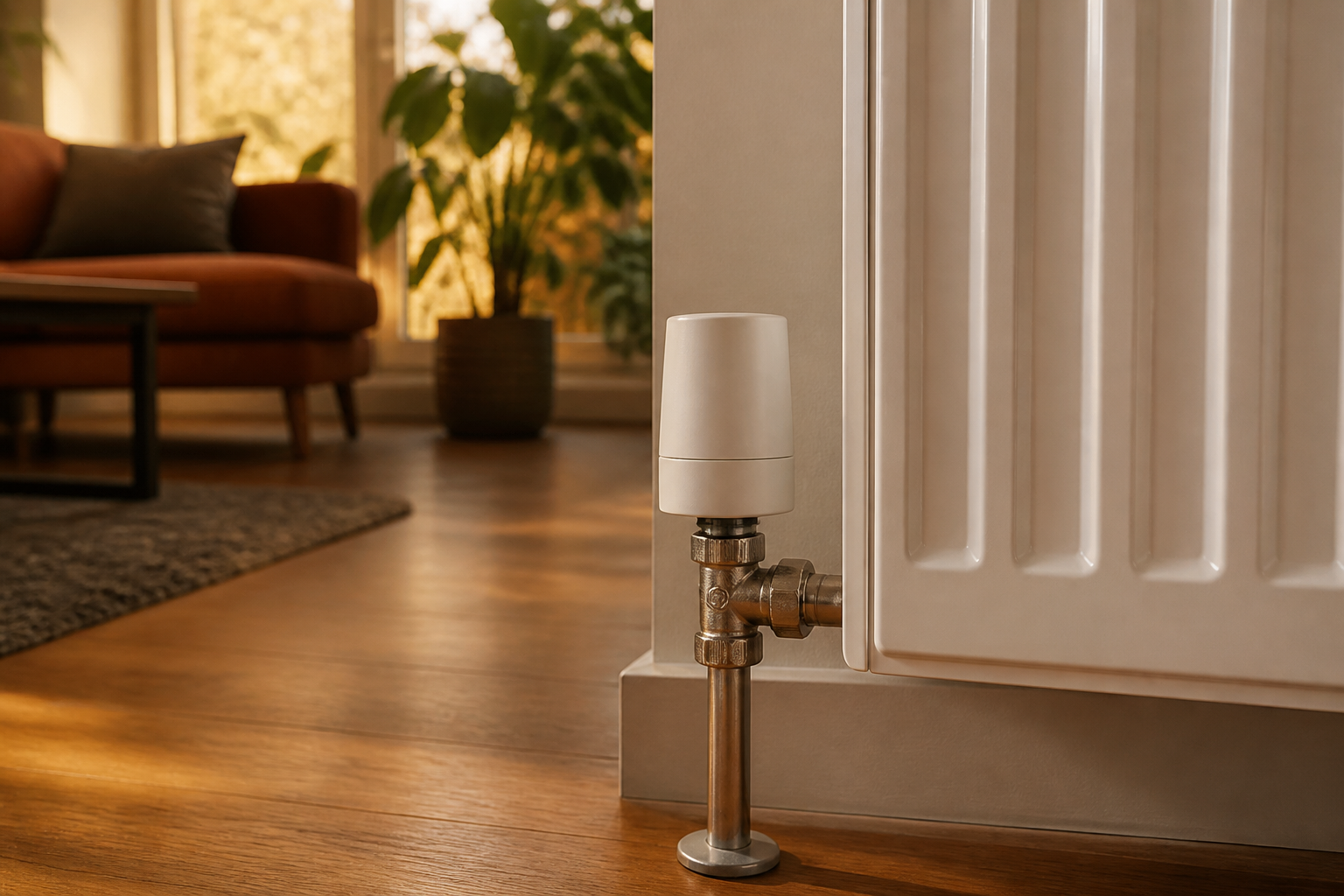
Installing smart thermostatic radiator valves (Smart TRVs) is one of the most effective ways to upgrade a wet central heating system in a UK home. Rather than heating the entire house to a single temperature based on a lone room thermostat, smart TRVs allow you to control individual rooms or zones independently. By turning down unused bedrooms during the day while keeping home offices comfortable, householders can eliminate wasted energy without sacrificing living space comfort.
According to the Energy Saving Trust, installing and properly using heating controls, including room thermostats and thermostatic radiator valves, can reduce home heating consumption noticeably across typical UK property types. However, transitioning from traditional mechanical valves to an interconnected smart system requires key compatibility checks, an understanding of valve hardware, and proper system integration.
Pre-Installation Checks: Valve Types and Compatibility
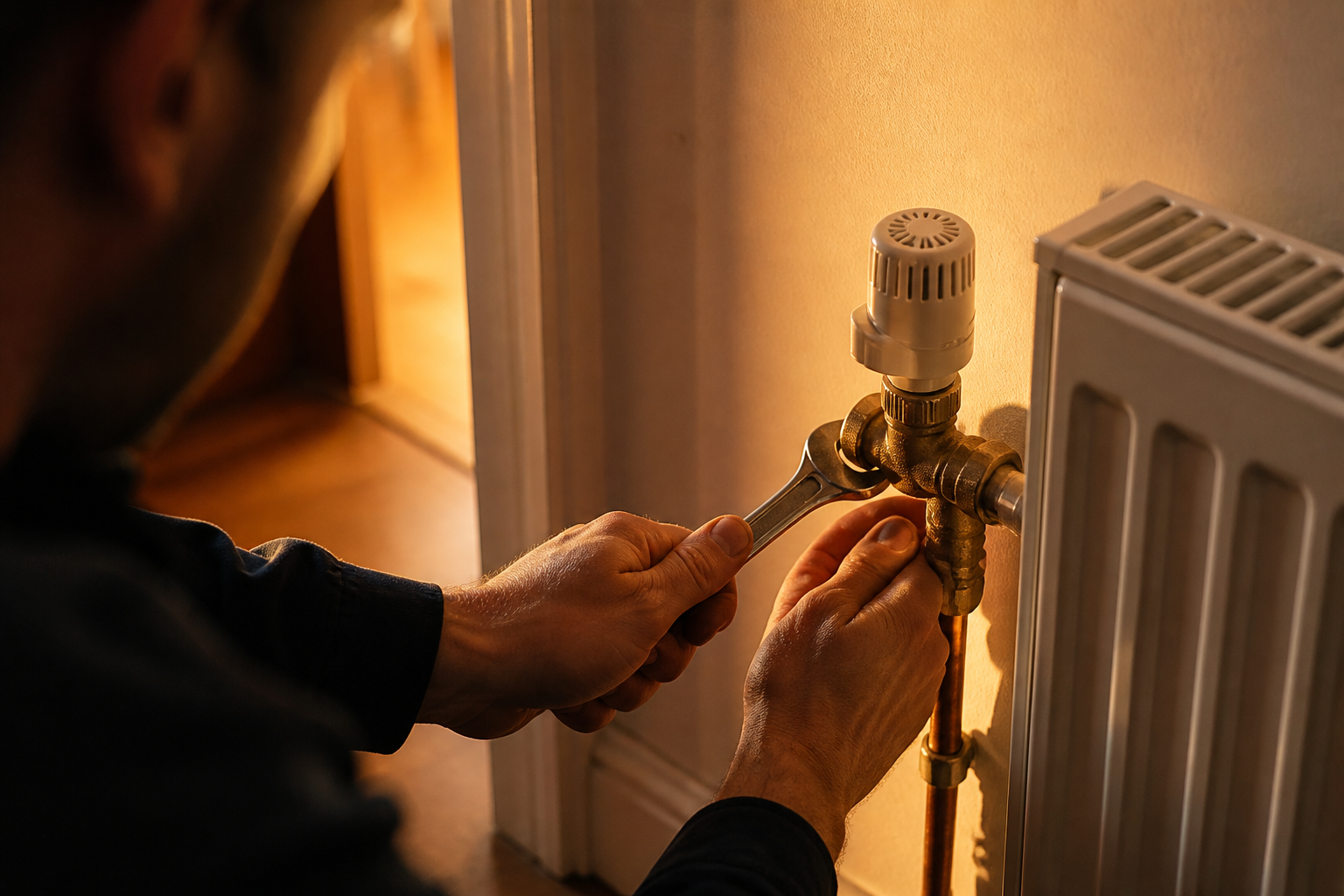
Before buying a smart TRV system, you must assess your existing radiator plumbing and heating control framework.
1. Existing Radiator Valve Bodies
Smart TRV heads replace the plastic control knob on top of a radiator valve, but they require a compatible valve body underneath. Most modern UK radiators feature thermostatic valve bodies with a standard M30 x 1.5 millimetre threaded fitting and a central pin. If your existing valves are already thermostatic, replacing them is usually a straightforward swap that requires no plumbing tools or system draining.
However, if your radiators currently have simple manual wheelhead valves, there is no internal pin mechanism for a smart head to press. In this scenario, a qualified heating engineer must drain the central heating system and replace the manual valve bodies with modern thermostatic valve bodies before smart heads can be fitted.
2. Hub and Wireless Connectivity
Smart TRVs communicate wirelessly with a central bridge or hub using protocols such as Zigbee, Thread, or proprietary sub-gigahertz radio frequencies. The hub connects directly to your home broadband router. Because thick UK brick walls and stone chimneys can attenuate wireless signals, evaluate hub placement carefully. Large or extended properties may require signal repeaters to maintain reliable connection to distant radiators.
3. Heating System and Boiler Controls
Smart TRVs work alongside your boiler or heat pump controls. Systems operating on digital modulation protocols like OpenTherm can adjust boiler flame height based on demand from individual smart TRVs rather than simply switching the boiler on or off. If your boiler only supports basic 230-volt switching, the smart TRV hub will act as a system receiver, triggering the boiler whenever any individual valve demands heat.
Equipment Costs and Professional Installation
The cost of upgrading to smart TRVs depends on the number of radiators and whether existing valve bodies need replacing.
- Smart TRV starter kit (hub and 2 to 4 valves): £150 to £300
- Additional smart TRV heads: £45 to £75 per radiator
- Professional valve body replacement (if required): £40 to £70 per radiator plus plumber call-out fees
- System wiring and hub setup by an electrician or heating engineer: £150 to £300
For a typical three-bedroom UK house with eight radiators where thermostatic valve bodies are already present, hardware costs generally range between £400 and £650 for a self-installed system. If a heating engineer needs to drain the system and replace non-thermostatic valves across all eight radiators, total installation costs typically rise to between £800 and £1,200.
| Control Option | Initial Hardware Cost | Installation Complexity | Control Precision | System Integration |
|---|---|---|---|---|
| Manual Wheelhead | Included in basic build | Plumbing work required | Low (manual flow control) | None |
| Mechanical TRV | £10 to £20 per valve | DIY head fit / Plumber for body | Medium (analog scale 1 to 5) | None |
| Smart TRV System | £45 to £75 per valve | DIY head fit (direct swap) | High (schedule by degree) | OpenTherm, App, Automation |
Step-by-Step Installation Process
Installing a smart TRV system involves distinct electrical, mechanical, and software setup phases.
- Install the central hub: Connect the smart hub to your internet router via Ethernet cable and power it on. Register the device using the manufacturer smartphone app.
- Remove old TRV heads: Unscrew the retaining ring at the base of the existing mechanical TRV head by hand or using water pump pliers. Slide the old head off to expose the valve body pin.
- Fit adapters if necessary: Check whether the valve body thread matches the smart TRV. Most kits include plastic adapters for Danfoss RA, RAV, or RAVL valves.
- Mount and calibrate smart heads: Screw the smart TRV head onto the valve body. Most smart valves execute an automatic calibration sequence, driving the internal motor to measure pin travel and locate off and fully open positions.
- Assign rooms and schedules: Use the app to group valves into room zones and define temperature schedules based on occupancy patterns.
What to Ask Your Heating Engineer
If your project requires replacing valve bodies, modifying boiler controls, or integrating with a low-temperature heat pump, hire a competent professional registered with Gas Safe for gas work, or an MCS accredited installer for heat pumps. Electricians completing hub wiring should be NICEIC or NAPIT registered.
Ask prospective installers the following questions:
- Are my existing radiator valve bodies compatible with smart heads, or will the heating system need draining?
- Will the smart control system connect to my boiler using OpenTherm or relay switching?
- How will the system maintain a bypass circuit to prevent boiler pump overload when all TRVs close?
- Do you offer system hydronic balancing alongside TRV installation?
Realistic Timeline for Installation
For a direct swap of existing mechanical TRV heads, a householder can complete an eight-radiator installation in under two hours.
Where mechanical valve bodies must be replaced, the work requires a qualified heating engineer and typically takes between half a day and one full day. This timeline includes draining the heating circuit, fitting new valve bodies, refilling the system with clean water and fresh corrosion inhibitor in compliance with BS 7593 standards, venting air from all radiators, and calibrating the new smart valve heads.
What this means for you
Installing smart TRVs gives you precise control over home energy consumption by ensuring you only heat occupied spaces to required temperatures. It eliminates the energy waste of heating empty bedrooms during the day or maintaining high temperatures overnight.
If you are evaluating home heating upgrades or combining smart controls with broader zero-carbon technologies, the Net Zero Home Scheme offers UK employees access to accredited installers and member pricing on home energy technologies.
Frequently asked questions
Can smart TRVs be installed on every radiator in the house?
In most central heating setups, at least one radiator should remain without a TRV or smart TRV, usually in the hallway where the main wall thermostat is located, or fitted with an automatic bypass valve. This ensures water can circulate freely when the heating pump runs, protecting the pump from pressure buildup if all smart TRVs close simultaneously.
Do smart TRVs work with heat pumps?
Yes, but they must be configured carefully. Heat pumps operate most efficiently with steady flow temperatures and continuous operation. Oversized or poorly configured zoning with smart TRVs can restrict water volume, causing heat pumps to short-cycle. Working with an MCS accredited heat pump installer ensures control schedules complement heat pump flow dynamics.
What happens if the internet connection goes down?
Smart TRVs retain their programmed temperature schedules on internal memory or communicate directly with the local hub via local radio protocols even if your home broadband fails. You can also manually turn the dial on individual smart heads to adjust temperature settings directly at the radiator.
Sources
- Thermostats and heating controls, Energy Saving Trust
- Saving energy at home, Ofgem