Installing Emergency Power Supply for Home Batteries
A practical UK guide to adding EPS battery backup, including earthing rules, essential load circuits, costs and installation timescales.
- Written by
- Net Zero Home Scheme editorial team
- Last updated
- Topic
- battery storage, home energy, regulation
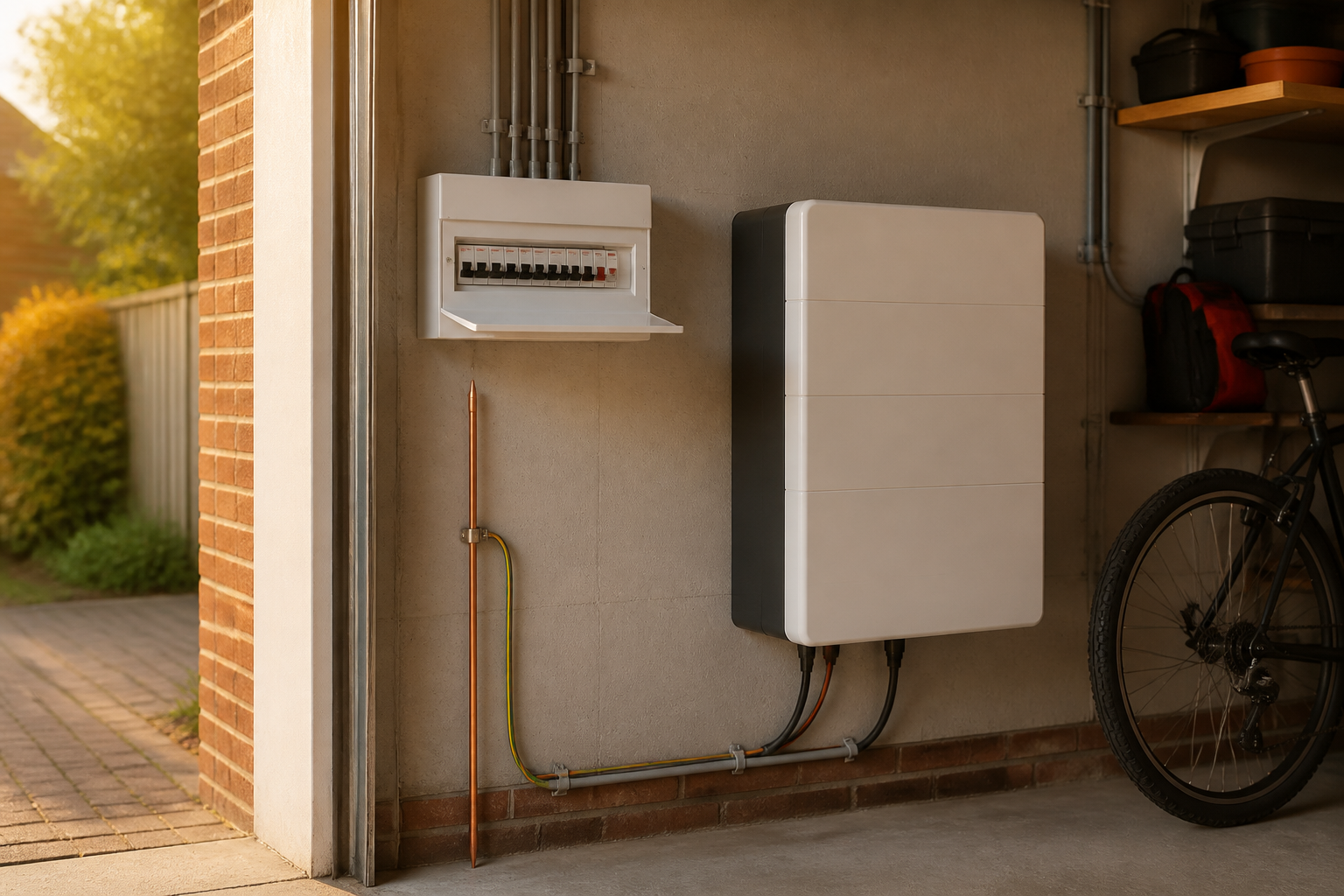
Many UK householders who install home battery storage assume their system will automatically keep the lights on during a blackout. In reality, standard grid-tied battery inverters are designed to shut down instantly during a grid outage. Under UK grid safety standards, specifically Energy Networks Association Engineering Recommendation G98 and G99 and international standard BS EN 62116, grid-tied inverters must feature anti-islanding protection. This mechanism prevents back-feeding electricity into local lines, protecting engineers who may be working on high-voltage power cables.
To run household appliances during a power cut, your battery system requires a dedicated Emergency Power Supply (EPS) feature, also referred to as islanding backup. Adding EPS capability involves specific electrical switchgear, physical isolation controls, and earth bonding safety measures dictated by British Standards.
Why standard home batteries turn off during power cuts
When power from the Distribution Network Operator (DNO) drops out, an ordinary solar and battery inverter disconnects within milliseconds. If an inverter kept pushing 230 volts into external power lines during a neighbourhood power failure, it would create an immediate electrocution hazard for utility engineers.
An EPS system solves this by using an isolation switch or switchgear relay. When a grid failure occurs, the EPS mechanically isolates your domestic installation from the National Grid before energising selected power circuits from the battery. Once grid power returns, the system safely synchronises with the grid voltage and frequency before switching back to standard operational mode.
What to check before adding EPS to your property
Not all battery inverters feature built-in EPS capabilities, and those that do vary significantly in power output and switching speed. Before commissioning an EPS installation, evaluate three core technical limits:
- Inverter continuous discharge rating: A battery might store 10 kWh of total energy, but its inverter may only output 3 kW or 5 kW continuously. An EPS circuit cannot deliver more power than the inverter's maximum continuous rating.
- Essential vs non-essential load separation: Heavy electrical loads, such as 9 kW electric showers, heat pumps, or electric vehicle chargers, will quickly trigger inverter overload protection. EPS installations require splitting your main consumer unit so that only designated essential circuits receive backup power.
- Automatic vs manual changeover: An Automatic Transfer Switch (ATS) restores power to essential loads within milliseconds to seconds. A manual changeover switch requires you to physically walk to the consumer unit and flip a switch during a blackout.
Technical requirements and BS 7671 earthing rules
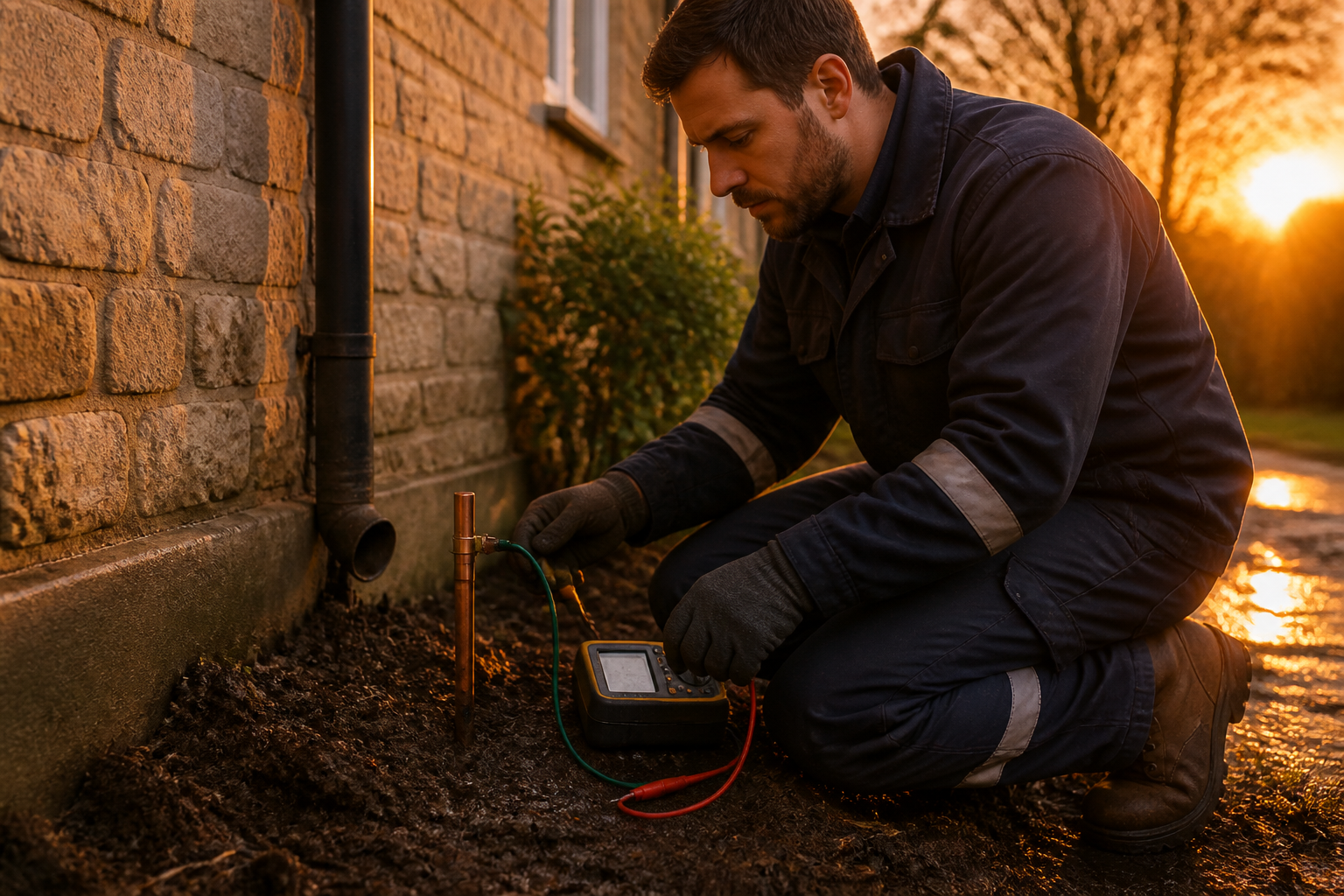
Installing EPS in a UK home is governed by BS 7671 (the IET Wiring Regulations, 18th Edition Amendment 2). The primary safety consideration during islanded operation is proper earthing.
Most UK residential properties use Protective Multiple Earthing (PME), where the neutral and earth conductors are combined in the supply cable from the DNO network. Under BS 7671 Section 712, when an EPS isolates your home from the main grid, you lose access to the grid's protective earth neutral connection. Operating an islanded electrical system without a confirmed earth path creates severe shock risks.
To comply with regulations, the installer must implement two specific safeguards:
- Earth rod installation: An independent earth rod must be driven into the ground outside the property to establish a dedicated TT earthing arrangement during EPS operation.
- Neutral-Earth (N-E) bonding relay: An internal contactor or switching relay must automatically connect the battery system's neutral output to the local earth rod whenever the grid supply is isolated.
Your electrician must verify the earth electrode resistance (RA reading) using specialized testing equipment to guarantee protective devices, such as Residual Current Devices (RCDs), trip instantly under fault conditions.
Costs, accredited standards and installation timeline
Adding EPS to a battery installation increases both equipment and labour requirements. The total cost depends on the complexity of your household wiring and the type of switching mechanism selected.
| EPS Feature Type | Typical Additional Cost | Key Components Included | Typical Switching Time |
|---|---|---|---|
| Single Socket EPS | £250 - £450 | Single dedicated socket, cabling, direct inverter output | Instant / Manual plug |
| Manual Changeover Circuit | £500 - £850 | Manual transfer switch, sub-board, essential loads wiring | Manual (1 to 2 minutes) |
| Automatic Essential Loads | £900 - £1,600 | Automatic Transfer Switch (ATS), sub-board, earth rod, N-E relay | Under 5 seconds |
| Whole-Home Gateway | £2,000 - £3,500 | Smart gateway, high-output inverter, full isolation contactors | Under 100 milliseconds |
Work must be carried out by a qualified electrician registered with a competent person scheme such as NICEIC, NAPIT, or ELECSA. The installer should also hold Microgeneration Certification Scheme (MCS) accreditation for battery storage installations under standard MIS 3012.
From a timeline perspective, installing an EPS system alongside a standard home battery adds roughly 3 to 5 hours of on-site labour. This includes running cabling from the inverter to an essential loads consumer unit, driving and testing the earth rod, configuring the automatic switching contactors, and performing compulsory BS 7671 insulation and loop impedance tests.
What to ask your battery installer
To ensure your backup power setup works reliably when required, ask your accredited installer these specific operational questions before signing off on a quote:
- Which specific circuits will be connected to the essential loads sub-board?
- What is the earth electrode resistance reading recorded for the dedicated earth rod?
- Does the proposed inverter support automatic Neutral-Earth bonding switching internally, or is an external control box required?
- How does the system prevent continuous heavy loads from draining the battery reserve below safe operation thresholds?
What this means for you
Emergency Power Supply gives UK householders peace of mind by maintaining critical energy access during power cuts. By understanding the distinction between standard grid-tied storage and isolated backup power, you can design a circuit that safely powers your lighting, refrigeration, and communications without exceeding inverter ratings or breaching wiring safety standards.
Householders exploring energy storage solutions can access accredited installers through the Net Zero Home Scheme, a free employer benefit delivered by Net Zero Benefits alongside The Electric Car Scheme.
Frequently asked questions
Can an EPS circuit run my entire house during a blackout?
For most standard home battery installations, no. A typical domestic battery inverter provides between 3 kW and 5 kW of power output, which is insufficient for high-draw appliances like electric hobs, tumble dryers, or instant showers running simultaneously. Whole-house backup is technically possible using high-capacity gateways and multi-inverter setups, but essential-load sub-boards are far more cost-effective.
Does adding EPS affect my Smart Export Guarantee payments?
No. EPS operates only when the main power grid fails and your system is isolated from the network. Under standard grid-connected conditions, your solar panels and battery operate normally, allowing you to export surplus power and receive Smart Export Guarantee (SEG) payments according to your energy supplier's contract terms.
Do I need permission from my Distribution Network Operator to install EPS?
Yes. Any generation or storage device capable of islanded operation must be declared to your local Distribution Network Operator (DNO) under ENA Engineering Recommendation G98 or G99. Your installer will manage this notification or prior-approval application as part of the installation process.
Sources
- Microgeneration Certification Scheme (MCS) Battery Standard MIS 3012, MCS
- IET Wiring Regulations BS 7671 Requirements for Electrical Installations, Institution of Engineering and Technology
- Energy Networks Association G98 and G99 Distributed Generation Guidance, Energy Networks Association